Gilang Muhammad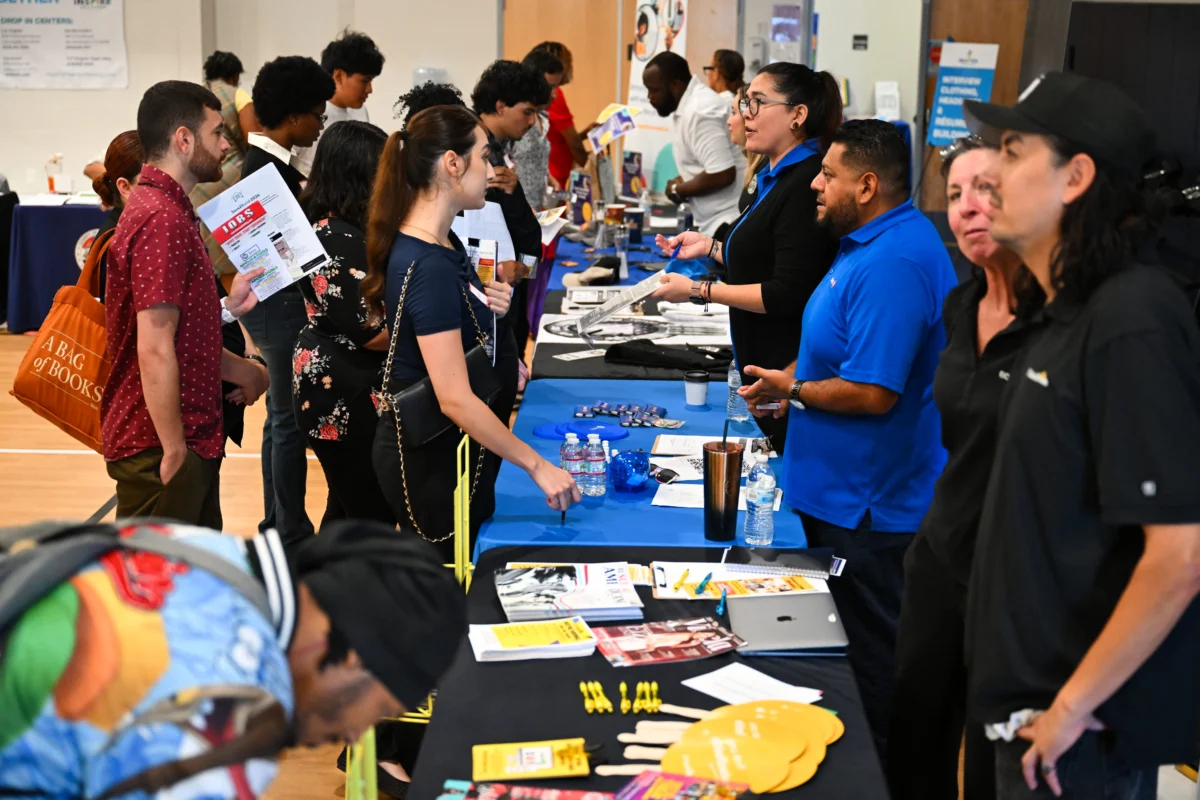
The United States labor market presented a complex and contradictory picture in July, with the Department of Labor reporting an unexpected decline in nonfarm payrolls while simultaneously revealing a decrease in the unemployment rate. This unusual convergence of data points has left economists, investors, and policymakers grappling with mixed signals regarding the health and trajectory of the nation’s economic recovery, particularly as the Federal Reserve weighs its ongoing battle against persistent inflation.
The July jobs report, released on August 4, 2026, indicated that U.S. employers shed an estimated 60,000 jobs during the month, a stark reversal from the prior month’s revised gain of 155,000 and significantly below economists’ consensus expectations of a modest increase of 180,000 jobs. This marked the first contraction in nonfarm payrolls since early 2024, raising immediate concerns about a potential slowdown in economic activity. Concurrently, however, the unemployment rate defied expectations by ticking down to 3.5% from 3.6% in June, nearing pre-pandemic lows and suggesting a continued tightness in the labor pool. The labor force participation rate remained largely stable at 62.6%, indicating no significant shift in the number of individuals entering or leaving the workforce. Average hourly earnings, a key metric for inflation, showed a more subdued increase of 0.2% month-over-month, bringing the year-over-year growth to 4.2%, a deceleration from the previous month’s 4.5%.
The Nuance of the Data: A "Hall of Mirrors"
The seemingly paradoxical nature of the July jobs report immediately prompted cautious analysis from financial experts. Kevin Gordon, head of macro research and strategy at the Schwab Center for Financial Research, encapsulated the sentiment, stating, "This report is like a hall of mirrors, tricking investors with different signals about whether labor’s recovery is stalling." This analogy highlights the difficulty in interpreting a report where fewer people are employed, yet a smaller percentage of the workforce is considered unemployed.
One explanation for this apparent contradiction lies in the methodologies used to compile the two primary components of the report: the establishment survey (which measures nonfarm payrolls) and the household survey (which determines the unemployment rate). The establishment survey polls businesses about their payrolls, while the household survey contacts individuals to determine their employment status. A decline in payrolls from the establishment survey can occur if businesses are cutting staff or reducing new hires, while a drop in the unemployment rate from the household survey might reflect a combination of factors, such as a shrinking labor force (people leaving the job market and therefore no longer counted as unemployed) or a slight increase in self-employment not captured by the establishment survey. In July’s case, the decline in the unemployment rate was likely influenced by a modest decrease in the size of the labor force as measured by the household survey, even as the number of employed persons also declined, albeit at a slower pace than the number of unemployed.
Economic Backdrop and Pre-Report Expectations
The July jobs report arrived at a critical juncture for the U.S. economy, following a prolonged period of elevated inflation and an aggressive monetary tightening campaign by the Federal Reserve. For over a year leading up to July 2026, the Fed had been steadily raising interest rates, with the federal funds rate reaching a range of 5.25%-5.50% by mid-2026. These rate hikes were primarily aimed at cooling an overheating economy and bringing inflation, which had peaked above 9% in mid-2022, back down towards the central bank’s long-term target of 2%.
Economists had largely anticipated a continued moderation in job growth as the cumulative effects of higher interest rates began to ripple through the economy. The previous months had shown a gradual slowdown from the robust job creation seen in 2022 and early 2023. June’s revised gain of 155,000 jobs was considered a healthy but slowing pace. Therefore, the outright contraction in nonfarm payrolls in July was a significant deviation from these expectations, immediately sparking debate about whether the economy was heading towards a "soft landing" – a scenario where inflation cools without a severe recession – or if a more pronounced downturn was imminent.
Prior to the report’s release, the consensus among market participants was that the Federal Reserve would likely implement at least one more 25-basis-point interest rate hike later in the year, possibly in September, to further cement its anti-inflationary stance. A strong jobs report would have reinforced this expectation, while a significantly weaker one could potentially sway the Fed towards a pause. The July report, with its conflicting signals, introduced a layer of ambiguity into this outlook.
Sectoral Shifts and Underlying Trends
A closer examination of the nonfarm payroll data revealed some distinct sectoral trends. The largest job losses were concentrated in the manufacturing sector, which shed 25,000 jobs, reflecting ongoing challenges in supply chains and a slowdown in global demand. Professional and business services also saw a notable decline of 18,000 positions, suggesting that businesses might be tightening their belts on consulting and administrative expenditures. Government employment also experienced a slight dip of 5,000 jobs.
Conversely, some sectors continued to show resilience, albeit with more modest gains than in previous months. Healthcare added 12,000 jobs, continuing its steady growth driven by demographic shifts and ongoing demand for medical services. The leisure and hospitality sector, which had been a strong rebound performer post-pandemic, saw a marginal increase of 8,000 jobs, indicating a potential leveling off in consumer spending on discretionary services. Retail trade remained largely flat. These granular details underscore a shifting landscape within the labor market, where some industries are feeling the pinch of higher interest rates and slowing demand more acutely than others.
The Federal Reserve’s Conundrum
The July jobs report presents a significant challenge for the Federal Reserve, which operates under a dual mandate of achieving maximum employment and price stability. The decline in nonfarm payrolls, coupled with the slowing wage growth, could be interpreted as a sign that the labor market is finally cooling, which would be a welcome development for the inflation fight. A softer labor market typically reduces wage pressures, which in turn can help moderate overall price increases.
However, the continued low unemployment rate suggests that the labor market, while potentially slowing, remains relatively tight. This tightness could still contribute to inflationary pressures if businesses struggle to find workers and are forced to offer higher wages. Aditya Bhave, U.S. economist at Bank of America, acknowledged the dovish implications but maintained a firm stance on future Fed actions. "We agree that the [July] jobs report was a bit dovish on net. But we are sticking with our call that the Fed will hike by 75 [basis points] this year, starting in [September]. The Fed is likely to remain more focused on inflation than labor. The [July] CPI report is a bigger event than today’s jobs numbers." Bhave’s comment highlights the Fed’s primary concern: inflation remains above target, and while labor market cooling is positive, it might not be enough to deter further tightening if inflationary pressures persist.
The Fed’s next policy meeting is scheduled for mid-September, and policymakers will be meticulously scrutinizing all incoming economic data, including the upcoming Consumer Price Index (CPI) report for July, which will be released in mid-August. If the CPI report shows that inflation remains stubbornly high, even a weakening labor market might not prevent the Fed from another rate hike. Conversely, a significant drop in inflation, combined with a cooling labor market, could give the central bank reason to pause its tightening cycle.
Market Response and Investor Sentiment
Financial markets reacted with a mixture of relief and apprehension to the July jobs report. Initially, equity markets rallied as investors interpreted the payroll decline as a "dovish" signal, implying that the Federal Reserve might be less inclined to raise interest rates further. Lower interest rates are generally favorable for stock valuations, particularly for growth companies. The S&P 500 saw an immediate uptick in trading following the report’s release.
However, bond markets reflected a more nuanced view. Treasury yields, which typically fall on expectations of lower interest rates, initially dipped but then stabilized as analysts considered the mixed signals. The U.S. dollar weakened against a basket of major currencies, also on the expectation of a less aggressive Fed.
Peter Graf, chief Investment officer at Amova Asset Management Americas, cautioned against overly optimistic interpretations. "Although the stock market is likely to welcome the dovish implications of the report, investors should be wary of the future growth potential of an economy where fewer people are working." Graf’s statement underscores a fundamental concern: while a slowing economy might deter the Fed from further rate hikes, it also signals potential headwinds for corporate earnings and overall economic expansion. Investors, therefore, face the dilemma of balancing the immediate relief of potentially stalled rate hikes against the longer-term implications of a weakening economic environment.
The Human Element: Impact on Workers and Job Seekers
For everyday Americans, particularly those actively seeking employment, the July jobs report presents a complex outlook. The image of job seekers attending an "Inspire Together" job and resource fair in Los Angeles on July 29, 2026, serves as a poignant reminder of the personal stakes involved in these economic shifts. While the unemployment rate remains low, the unexpected decline in nonfarm payrolls could signal a tightening job market where competition for available positions intensifies.
For those employed, the decelerating wage growth, while potentially good for inflation, means less purchasing power growth, especially if inflation remains elevated. The overall picture suggests that the frenetic pace of hiring and wage increases seen in earlier post-pandemic years is now giving way to a more measured, and potentially more challenging, environment for workers. Job seekers might find fewer new openings, longer hiring processes, and less leverage in salary negotiations compared to previous periods. The "Great Resignation" phenomenon, characterized by workers confidently switching jobs for better pay and conditions, could begin to wane as economic uncertainty grows.
Looking Ahead: CPI and Beyond
The July jobs report has undoubtedly amplified the suspense surrounding the Federal Reserve’s upcoming decisions. All eyes will now turn to the July CPI report, which will offer the next critical piece of the economic puzzle. If inflation shows signs of cooling significantly, the Fed might be able to justify a pause in its rate hikes, potentially engineering the much-desired soft landing. However, if inflation remains sticky, the central bank could be compelled to continue its tightening, even at the risk of further slowing the labor market and increasing the chances of a recession.
Beyond the immediate data, economists will also be closely watching other indicators, such as manufacturing surveys, consumer confidence reports, and retail sales figures, to gain a clearer understanding of the economy’s underlying momentum. The next few months will be crucial in determining whether the U.S. economy can navigate the narrow path between taming inflation and avoiding a significant downturn, or if the "hall of mirrors" will ultimately reveal a more definitive, and potentially less favorable, economic reality.