Gilang Muhammad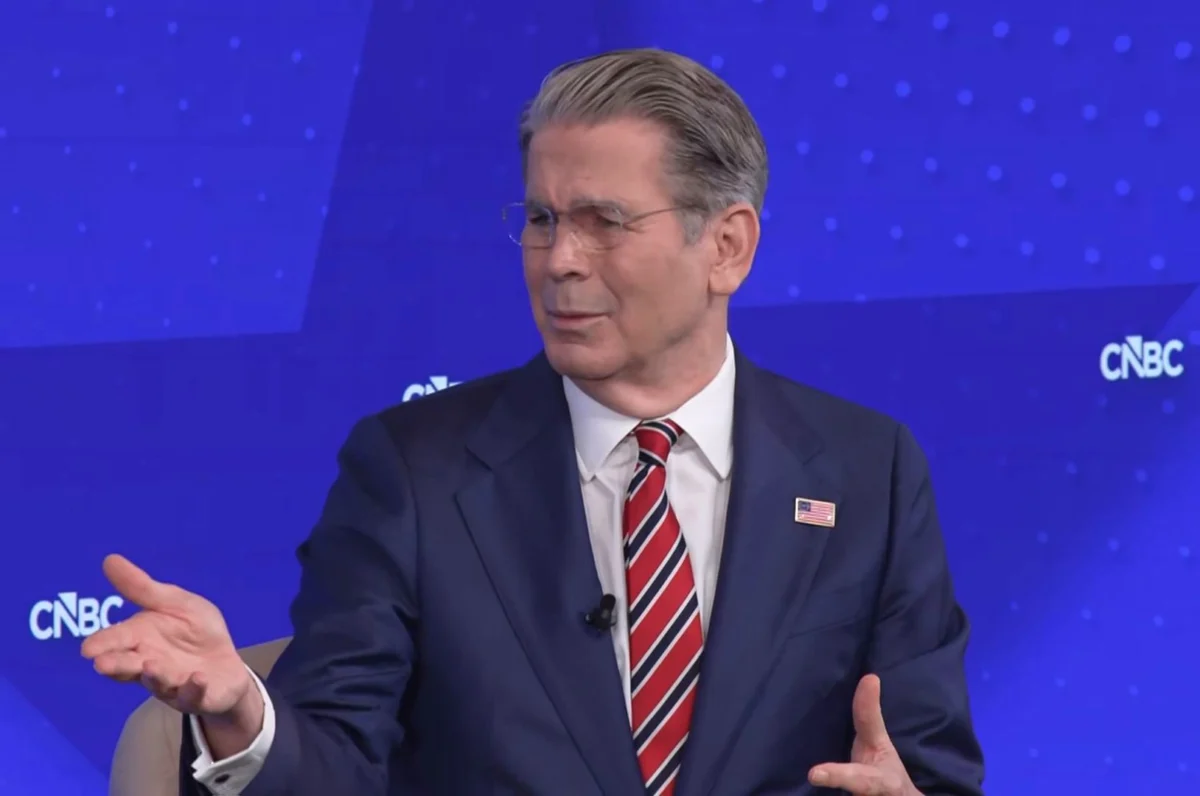
In a week marked by significant maneuvers from the U.S. Treasury Department, global financial markets are exhibiting palpable anxiety, as investors increasingly price in the likelihood of higher inflation. This sentiment, primarily reflected in surging inflation expectations, suggests that the Treasury’s recent efforts to enhance liquidity in the government debt market are inadvertently raising concerns over broader policy implications and the future trajectory of the U.S. economy. The delicate balance between fiscal intervention and monetary policy stability is now under intense scrutiny, setting the stage for a highly anticipated address from Federal Reserve Chair Kevin Warsh.
Breakeven Rates Soar: A Barometer of Inflation Expectations
The most immediate and telling indicator of market sentiment has been the sharp rise in the so-called breakeven rate. This crucial market-based measure, derived by comparing the yields of standard Treasury securities with those of inflation-protected securities (TIPS) of the same maturity, serves as a direct gauge of inflation expectations and the compensation investors demand for bearing inflation risk. Across the curve, breakeven rates have climbed significantly, reaching their highest levels in over two months, signaling a notable shift in investor outlook.
Specifically, the 10-year breakeven rate surged to 2.34% on Thursday, marking its apex since June 10. Similarly, five-year breakevens mirrored this ascent, hitting the same level, a peak not seen since June 16. While these measures, by their nature, can exhibit volatility and do not necessarily imply a market expectation of runaway inflation, their consistent upward trajectory unmistakably indicates a growing undercurrent of inflation worries among investors. This movement is particularly noteworthy given the Federal Reserve’s long-term inflation target of 2%, suggesting that market participants now anticipate inflation to run persistently above this benchmark in the medium term.
Treasury’s Strategic Intervention: Doubling the Debt Buyback
At the heart of this market unease lies the U.S. Treasury Department’s announcement on Wednesday to significantly expand its debt buyback operations. This routine mechanism, which commenced in 2024, typically involves the Treasury repurchasing longer-dated government debt from the market to enhance liquidity and improve the functioning of the secondary market, particularly for less frequently traded long-term issues. Initially a modest operation, the Treasury disclosed its intention to at least double the size of its typical $2 billion buyback, implying an injection of over $4 billion into the market for long-term securities.
Treasury Secretary Scott Bessent, speaking at the CNBC Invest in America Forum in Washington, D.C., on April 15th, 2026, had previously underscored the department’s commitment to maintaining efficient market functioning. While Bessent insisted that this escalated buyback was not an attempt to "tamp down yields" — a statement aimed at assuaging concerns about direct market manipulation — the timing of the announcement immediately drew attention. It followed a period where the yields on 10-year and 30-year Treasurys had soared to levels not witnessed since before the tumultuous global financial crisis of 2008, sparking speculation about the Treasury’s underlying motives and the broader implications for fiscal and monetary policy coordination.
Yields Under Pressure: A Broader Economic Context
The market’s immediate reaction to the buyback announcement was initially a plunge in long-dated Treasury yields on Wednesday, as increased demand from the Treasury itself temporarily pushed prices up. However, this relief proved fleeting. Yields rebounded sharply on Thursday and continued their upward climb on Friday, signaling that the underlying concerns had not been resolved. The benchmark 10-year Treasury yield stood at 4.73% in early afternoon trading, up 3.4 basis points on the day and notably higher than its pre-announcement level. Similarly, the 30-year yield surged by 3.6 basis points to 5.27%, while yields on shorter-dated issues also experienced upward pressure. This phenomenon is partly attributable to the Treasury’s requirement to offset buybacks of long-dated debt by issuing shorter-term bills, thereby increasing the supply of shorter-duration instruments.

This persistent rise in yields is not a monolithic phenomenon but rather a confluence of several interconnected factors. Inflation fears, as evidenced by the breakeven rates, are undeniably prominent. However, they are compounded by a complex global financial landscape. U.S. Treasurys are increasingly forced to compete against higher-yielding government debt offerings in other major economies, particularly in Asia and Europe, which are also contending with their own inflationary pressures and fiscal challenges.
Furthermore, a record-setting surge of issuance from "hyperscalers" – tech giants like Amazon, Microsoft, Google, and Nvidia – heavily investing in artificial intelligence infrastructure, is siphoning significant capital from the market. These companies are issuing vast amounts of corporate debt to fund their ambitious AI projects, creating fierce competition for investor capital that traditionally flowed into government bonds. This unprecedented demand for private sector financing adds another layer of complexity to the Treasury market’s dynamics.
Adding to these pressures is a general rise in term premiums, which represent the extra yield investors demand for holding U.S. debt over longer durations. Term premiums compensate investors for the uncertainties associated with future inflation, interest rate movements, and liquidity risk. Their increase suggests a heightened perception of these risks in the current environment. This multifaceted pressure on yields comes at a critical juncture, as the U.S. government debt recently surpassed the unprecedented $40 trillion mark, raising serious questions about fiscal sustainability and the long-term cost of servicing this colossal debt burden.
The Dollar’s Retreat and Policy Signaling
In tandem with the rising yields, the U.S. dollar has also experienced a notable weakening trend throughout the week, losing nearly 0.9% against a basket of major currencies. This depreciation of the greenback, according to analysts, may not be coincidental but rather a "read-through" of the Treasury’s announcement to the prospect of potentially looser Federal Reserve policies.
Thierry Wizman, Macquarie Group’s global foreign exchange and rates strategist, articulated this connection, noting that "upon the announcement of the buyback increase and the ‘signaling effect’ it mustered, the 10-year breakeven rose by about 6-7 bps — not insignificant. That’s as if to say that something about the announcement was ‘inflationary.’" The market’s interpretation, therefore, suggests that the Treasury’s aggressive stance in managing debt liquidity could be perceived as a precursor or even an implicit signal for the Fed to adopt a more accommodative, or "dovish," monetary policy stance in the future to support the economy amidst rising fiscal costs. A weaker dollar, in turn, can contribute to inflationary pressures by making imports more expensive, creating a feedback loop that further complicates the inflation outlook.
Anticipation Builds for Jackson Hole: Fed Chair Kevin Warsh’s Crucial Address
All eyes are now turning to Federal Reserve Chairman Kevin Warsh, who is scheduled to deliver his highly anticipated keynote address on August 28 at the central bank’s annual symposium in Jackson Hole, Wyoming. This prestigious gathering of central bankers, economists, and financial leaders has historically served as a critical platform for the Fed Chair to signal shifts in monetary policy or offer profound insights into the economic outlook.
Prior statements by Warsh, in which he consistently endorsed a reduced role for the Fed in direct market interventions and a more constrained balance sheet, have been widely interpreted by markets as fundamentally dovish on inflation. His emphasis on market-led price discovery and limited quantitative easing has set expectations for a cautious approach to monetary stimulus.
However, the current market dynamics present Warsh with a significant dilemma. As Wizman highlighted, "were Warsh to signal that he would stay ‘dovish’ indefinitely, it could be self-defeating for him and the Treasury, since inflation breakevens would rise further, perhaps undoing the stability in the nominal long-term yields that [Treasury Secretary] Scott Bessent is trying to achieve." This suggests a precarious tightrope walk for Warsh: a too-dovish stance could exacerbate inflation expectations and undermine the Treasury’s efforts to manage debt, while a too-hawkish stance could risk stifling economic growth already facing headwinds from higher rates. The market will be scrutinizing every word for clues on how the Fed intends to navigate this complex interplay of fiscal policy, inflation, and economic growth.

Diverse Perspectives on Market Health and Future Trajectory
Despite the palpable anxiety and rising inflation concerns, not all market participants view the recent yield spike as an immediate cause for alarm. Diverse perspectives offer a more nuanced understanding of the current financial landscape.
David Zervos, chief market strategist at Jefferies, offered a more sanguine view during a CNBC interview, pointing out that despite the recent movements, the 10-year Treasury note remains within "one of the tightest ranges" it has seen in 20 years. "It’s not running away from anybody," Zervos asserted, suggesting that the market is not in a state of uncontrolled panic. He characterized the Treasury’s actions as indicative of a "different kind of Treasury secretary, someone who’s willing to come in and be more tactical, and that is something new for the market, and the market’s going to have to adjust to that." Zervos implies that Bessent’s proactive approach, while new and potentially unsettling, is a strategic evolution rather than a desperate measure.
Similarly, Van Hesser, chief strategist at KBRA, a prominent credit and bond rating agency, echoed this sentiment of normalization. Hesser posited that the current yield levels, particularly a 4% to 5% range for the 10-year Treasury, are more in keeping with historical norms, marking a significant departure from the prolonged period in which the Federal Reserve utilized its monetary policy tools, such as quantitative easing, to keep rates artificially low. "A 4 to 5% 10-year is a very constructive level of rates in a thriving economy," Hesser contended. "I think a 4 to 5% tenure is a very healthy rate that allows interest rates to do what interest rates are supposed to do, and that is moderate capital flows through the economy." From this perspective, the current market adjustments are less a sign of distress and more a return to a healthier, more organic functioning of capital markets, where interest rates accurately reflect the cost of capital and serve as an efficient mechanism for allocating resources.
Implications for the Economy and Future Policy
The unfolding situation presents significant implications for the broader economy and the future direction of U.S. fiscal and monetary policy. The rising inflation expectations, if sustained, could translate into higher borrowing costs for consumers and businesses, potentially dampening investment and consumption. This would put pressure on the Fed to respond, possibly by maintaining a tighter monetary policy stance for longer, even if it risks slowing economic growth.
The Treasury’s active role in managing debt liquidity, while potentially beneficial for market functioning, also introduces a new element of government intervention that markets are still digesting. It raises questions about the long-term division of labor between fiscal and monetary authorities and whether such interventions could inadvertently create moral hazard or distort price signals. The escalating national debt, now exceeding $40 trillion, further complicates this picture, as higher interest rates translate into substantially increased debt servicing costs, potentially crowding out other critical government spending.
As the financial world awaits Chairman Warsh’s pronouncements at Jackson Hole, the market remains in a state of heightened anticipation. The interplay between the Treasury’s innovative fiscal tactics, persistent inflationary pressures, and the Fed’s imminent policy signals will undoubtedly shape the trajectory of the U.S. economy for the foreseeable future. The coming weeks will reveal whether the current market anxieties are merely growing pains of a market adjusting to new realities or harbingers of more profound economic shifts.