Lina Wu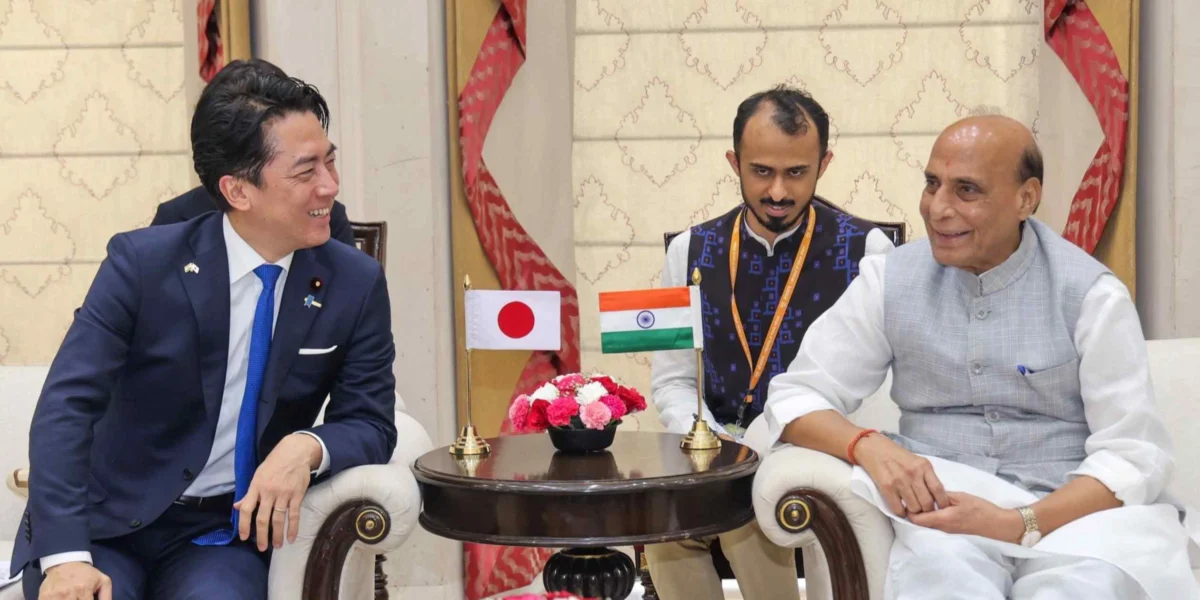
NEW DELHI – India and Japan have solidified their strategic partnership with the signing of a landmark agreement aimed at significantly bolstering maritime security cooperation and deepening collaborative efforts in cutting-edge defense technology research and development. The pact, inked on Thursday, August 20, 2026, in New Delhi, underscores the shared commitment of both nations to navigating the increasingly complex geopolitical landscape of the Indo-Pacific region and reinforces their dedication to maintaining a free and open international order.
The agreement, the culmination of extensive deliberations and prior engagements between defense officials from both countries, was formally exchanged between Indian Defence Minister Rajnath Singh and his Japanese counterpart, Shinjiro Koizumi. The meeting, held against the backdrop of escalating regional security concerns, signals a proactive approach by New Delhi and Tokyo to enhance their capabilities and interoperability in critical defense domains. This pact represents a significant step forward from existing defense cooperation frameworks, moving beyond dialogue to concrete joint initiatives in areas of mutual strategic interest.
Historical Context and Evolving Partnership
The burgeoning defense relationship between India and Japan is rooted in a shared appreciation for democratic values, a commitment to multilateralism, and a growing convergence of strategic interests, particularly in the Indo-Pacific. Over the past decade, the bilateral defense ties have witnessed a steady and impressive evolution. This trajectory began with increased joint military exercises, such as the annual Malabar naval exercise, which has expanded to include other like-minded nations, demonstrating a collective resolve to address maritime security challenges.
The strategic dialogue between India and Japan was elevated to the "2+2" ministerial format in 2019, involving the foreign and defense ministers of both countries. This format has served as a crucial platform for discussing a wide array of security issues and identifying areas for enhanced cooperation. The recent pact can be seen as a natural progression of these high-level engagements, translating strategic alignment into tangible collaborative actions. The signing of this agreement signifies a deepening of trust and a mutual recognition of the need for advanced technological capabilities to address contemporary security threats, including traditional maritime security concerns, cyber warfare, and the development of next-generation defense systems.
Key Pillars of the New Defense Pact
The core of the newly signed agreement rests on two primary pillars: enhanced maritime security and collaborative defense technology research and development.
1. Bolstering Maritime Security Cooperation:
The pact aims to strengthen India and Japan’s ability to jointly address maritime security challenges in the Indo-Pacific. This includes, but is not limited to:
- Information Sharing and Intelligence Exchange: A more robust framework for sharing real-time maritime domain awareness information, intelligence on maritime activities, and early warning systems is expected. This will be crucial for monitoring and responding to activities such as illegal fishing, piracy, and the proliferation of illicit goods.
- Joint Patrols and Exercises: While joint exercises are already a feature of the bilateral relationship, the agreement is likely to pave the way for more frequent and complex joint patrols and exercises. This could involve coordinated operations in critical sea lanes, search and rescue missions, and humanitarian assistance and disaster relief (HADR) operations.
- Capacity Building and Training: Japan is expected to enhance its support for India’s maritime capabilities through training programs, joint development of maritime surveillance technologies, and potentially the transfer of relevant expertise. This aligns with India’s broader vision of ‘Act East’ and its efforts to enhance the maritime security of its neighboring countries.
- Interoperability: A key focus will be on improving the interoperability of the Indian and Japanese navies, enabling seamless coordination during joint operations. This involves standardizing communication protocols, joint training on shared platforms, and interoperable equipment.
The significance of this enhanced maritime security cooperation cannot be overstated, especially in a region where maritime trade routes are vital for global economic stability. The Indo-Pacific, with its vast maritime expanse, faces increasing assertiveness and security challenges, making coordinated responses by like-minded nations imperative.
2. Deepening Defense Technology R&D Collaboration:
The second, and perhaps more forward-looking, aspect of the pact focuses on joint research and development in state-of-the-art defense technologies. This ambitious undertaking signifies a commitment to:
- Joint Research Initiatives: The agreement is expected to facilitate joint research projects in areas such as artificial intelligence (AI) in defense, unmanned systems (UAVs, UUVs), advanced sensor technologies, electronic warfare, cybersecurity, and potentially even hypersonic technologies.
- Technology Transfer and Co-production: While specific details remain to be elaborated, the pact likely opens avenues for technology transfer and, in the long term, co-production of defense equipment. This would not only enhance the technological capabilities of both nations but also foster a more integrated defense industrial base.
- Innovation Ecosystem Development: The collaboration may extend to fostering innovation ecosystems in both countries, encouraging collaboration between defense research institutions, universities, and private sector companies to drive cutting-edge defense technology development.
- Cybersecurity and Space Security: Given the growing importance of these domains, the agreement is expected to include provisions for enhanced cooperation in cybersecurity, including intelligence sharing on cyber threats and joint development of defensive capabilities. Cooperation in space security, focusing on the use of space for defense and monitoring purposes, is also likely to be a component.
This R&D collaboration is particularly significant as it moves beyond the traditional supplier-buyer relationship and aims to create a symbiotic partnership where both nations contribute their unique strengths to the development of future defense capabilities. This approach is crucial for maintaining a technological edge in an era of rapid military modernization.
Official Statements and Reactions
While the official joint statement released after the signing ceremony provided a high-level overview, the sentiments expressed by both ministers during their interactions in New Delhi offered further insight. Indian Defence Minister Rajnath Singh, speaking at the event, emphasized the shared vision of a "free, open, and inclusive Indo-Pacific" and highlighted that the pact would "further deepen our strategic partnership and contribute to regional and global peace and stability." He further stated, "Our collaboration in defense technology will pave the way for indigenous development and production of critical systems, enhancing our self-reliance."
His Japanese counterpart, Shinjiro Koizumi, echoed these sentiments, noting that the agreement "marks a new chapter in our defense cooperation" and "underscores our unwavering commitment to jointly addressing emerging security challenges." He specifically pointed out the importance of "leveraging each other’s strengths in R&D to develop next-generation defense capabilities." The presence of both ministers for the signing underscored the high priority both governments place on this deepening security nexus.
Supporting Data and Broader Implications
The rationale behind this enhanced pact is underscored by several factors:
- Regional Security Dynamics: The Indo-Pacific region is experiencing significant geopolitical shifts, with increased assertiveness from certain powers and a growing need for collective security mechanisms. The pact directly addresses these concerns by strengthening the capabilities of two major Indo-Pacific democracies.
- Economic Interdependence: India and Japan share a substantial economic relationship, with robust trade and investment ties. The security of maritime trade routes, which are vital for both economies, is therefore a common interest. The pact aims to safeguard these critical arteries of commerce.
- Technological Advancement: The global defense landscape is rapidly evolving, with technological superiority becoming a critical determinant of military effectiveness. Both India and Japan recognize the need to invest in and collaborate on advanced defense technologies to maintain a strategic advantage. India’s "Make in India" initiative and Japan’s advanced technological base present a synergistic opportunity.
- Multilateralism and Rule of Law: The agreement reinforces the commitment of both nations to upholding international law and the rules-based international order. By working together, they aim to deter aggression and promote stability, contributing to a more predictable and secure global environment.
The implications of this pact are far-reaching. For India, it provides access to advanced Japanese technologies and a partner in developing indigenous defense capabilities, aligning with its ambition to become a major defense manufacturing hub. For Japan, it strengthens its security architecture in the Indo-Pacific and deepens its engagement with a key strategic partner.
Timeline of Engagements Leading to the Pact
- 2019: The India-Japan Strategic Dialogue is elevated to the "2+2" ministerial format, marking a significant step in institutionalizing defense and foreign policy coordination.
- 2020 onwards: Amidst rising regional tensions, discussions on enhancing defense cooperation, particularly in maritime security and technology, intensify through various official channels and defense dialogues.
- Early 2026: Preliminary drafts and key areas of the proposed pact are finalized during high-level defense exchanges.
- August 20, 2026: Indian Defence Minister Rajnath Singh and Japanese counterpart Shinjiro Koizumi formally sign the agreement in New Delhi, solidifying a new era of bilateral defense collaboration.
Future Outlook
The signing of this pact is not an end in itself but rather a significant beginning. The successful implementation of the agreed-upon initiatives will require sustained political will, dedicated resources, and effective coordination between defense ministries, research institutions, and defense industries of both nations. The coming years will be crucial in translating the ambitions of this agreement into tangible outcomes that enhance the security and stability of the Indo-Pacific and contribute to global peace. The focus will now shift to the specific projects, joint ventures, and technology-sharing mechanisms that will operationalize this strategic partnership. This agreement positions India and Japan as key architects of regional security, demonstrating the power of bilateral cooperation in addressing complex global challenges.