Farhan Pambudi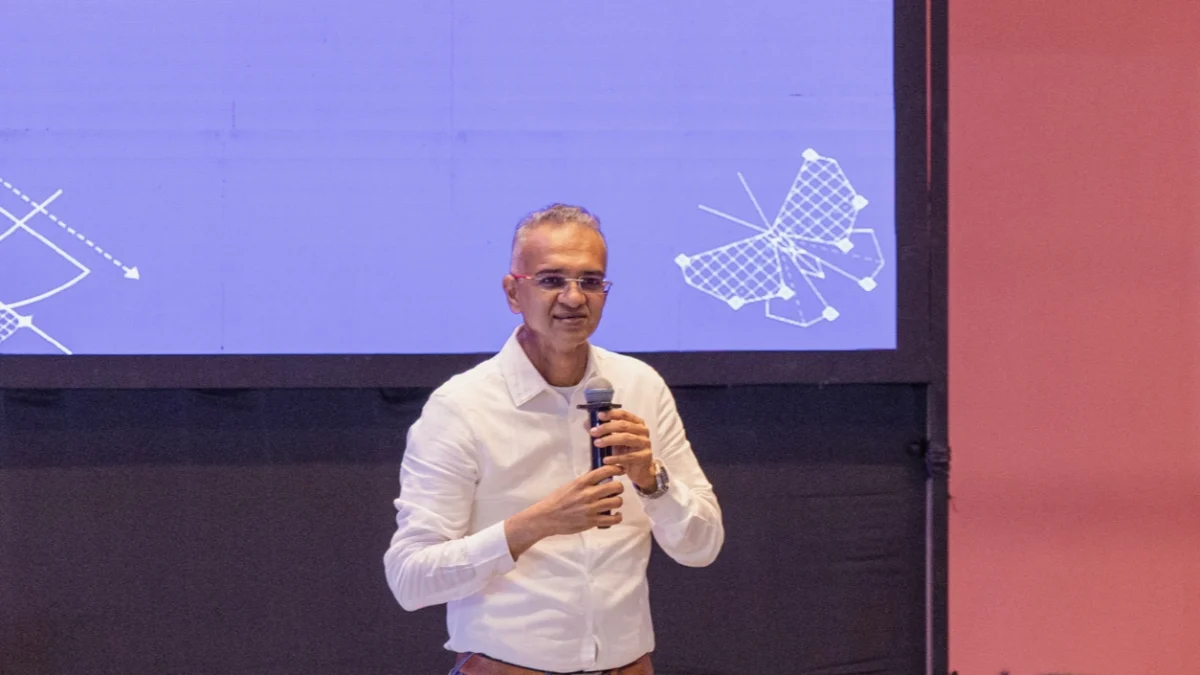
The National Payments Corporation of India (NPCI) is preparing for a transformative shift in the digital payments landscape, positioning artificial intelligence as the primary engine for the next phase of the Unified Payments Interface (UPI) evolution. Dilip Asbe, the Managing Director and CEO of NPCI, recently detailed a strategic roadmap that leverages AI to scale UPI from its current 750 million daily transactions to a milestone of over one billion. Speaking at Mumbai Tech Week (MTW) 2026, Asbe emphasized that the integration of advanced machine learning and language models will be critical in expanding user adoption, fortifying fraud prevention mechanisms, and democratizing credit distribution across the Indian subcontinent.
As the architect of India’s digital payment infrastructure, NPCI oversees a system that has become a global benchmark for real-time retail payments. However, reaching the next 500 million users presents unique challenges, including linguistic barriers, varying levels of digital literacy, and the need for robust security in an increasingly sophisticated cyber-threat environment. Asbe’s vision suggests that AI will not merely be a peripheral tool but the core infrastructure that enables UPI to penetrate deeper into rural and semi-urban markets while maintaining the integrity of the financial ecosystem.
The Strategic Pillar of Artificial Intelligence in Digital Finance
The deployment of AI within the UPI ecosystem is intended to address four primary domains: user acquisition, security, credit access, and interface simplification. According to Asbe, the collaboration between NPCI, the Reserve Bank of India (RBI), and the central government is essential to ensuring that AI-driven solutions are both inclusive and secure.
A significant portion of the projected growth is expected to come from "agentic" solutions—AI systems capable of making decisions or executing tasks on behalf of users based on specific instructions. While the United States has seen a surge in AI-driven financial advice and trading through platforms like Coinbase and OpenAI, India’s approach is focused on high-volume, low-value retail transactions. Asbe noted that AI must be used effectively to identify "money mules"—accounts used to launder or move illicit funds—and to detect fraudulent patterns in real-time before transactions are finalized.
Furthermore, the "digital footprint" generated by millions of small-scale merchants and individual users provides a rich dataset for AI-based credit scoring. By analyzing transaction history and behavioral data, NPCI aims to facilitate the distribution of formal credit to populations that have traditionally been excluded from the banking sector due to a lack of collateral or formal credit history.
Chronology of UPI Development and the AI Pivot
To understand the current trajectory, it is necessary to look at the timeline of India’s digital payment revolution. Launched in 2016 with 21 member banks, UPI was initially a project to simplify peer-to-peer (P2P) transfers. By 2020, the platform saw an exponential surge in person-to-merchant (P2M) transactions, spurred by the global pandemic and the government’s push for a "cashless" economy.
In 2023, NPCI took its first major step toward AI integration with the launch of "Hello UPI," a voice-assistant-based interactive system designed to allow users to make payments through natural language commands. While Asbe admitted that adoption of voice-based payments has been gradual, he maintained that the technology is in its "early days." The accuracy of voice models for regional Indian dialects remains a hurdle that NPCI is actively working to overcome.
The year 2024 marked another milestone when NPCI launched "FIMI," a specialized AI language model tailored for the payments industry. Currently, FIMI is utilized by over a million users to resolve transaction disputes, cancel mandates, and navigate the complexities of the payment interface. Asbe indicated that FIMI is scaling rapidly, proving that niche, task-specific AI can be more effective in finance than general-purpose large language models (LLMs).
Supporting Data: The Scale of the UPI Ecosystem
The sheer volume of data handled by NPCI provides a competitive advantage in training financial AI. UPI transactions have consistently broken records, with monthly volumes exceeding 13 billion transactions and values surpassing ₹18 trillion (approximately $215 billion).
The following data points highlight the current state of the ecosystem:
- Daily Transactions: Currently averaging 750 million, with a target of 1 billion by 2027.
- Market Concentration: Two major players, PhonePe (owned by Walmart) and Google Pay, currently command over 80% of the total transaction volume.
- Merchant Base: Over 300 million QR code points are active across India, providing a massive surface area for AI-driven merchant services.
- Dispute Resolution: The FIMI model has reduced the average resolution time for user grievances by nearly 40% since its pilot phase.
Asbe argued that the richness of this dataset allows Indian fintechs to develop "Small Language Models" (SLMs). Unlike LLMs that require massive computational power and broad datasets, SLMs are designed to be sharp, deterministic, and highly accurate within a specific domain—in this case, Indian finance and retail commerce.
Regulatory Frameworks and User Protection
A recurring theme in Asbe’s address was the necessity of a robust regulatory framework to govern AI in finance. As agentic AI begins to take instructions from users—such as "pay my electricity bill if it’s under ₹2,000"—the system must maintain a clear audit trail.
"The system should be able to look at the instructions and consent given by the user to an agent," Asbe stated, highlighting the importance of transparency. The RBI has been cautious but proactive in setting guidelines for digital lending and data privacy. NPCI’s strategy involves building safety nets that can mitigate the risks of "hallucinations" in AI models, where the system might provide incorrect information or execute unintended transactions.
Industry experts suggest that India may adopt a "sandbox" approach for agentic commerce, allowing companies to test AI-led payment systems in a controlled environment before a full-scale public rollout. This follows a 2025 pilot where NPCI demonstrated agentic commerce capabilities in partnership with Razorpay, utilizing models from OpenAI, Google (Gemini), and Anthropic (Claude).
Addressing the Market Share Imbalance
One of the most contentious issues facing NPCI is the market dominance of PhonePe and Google Pay. For several years, the regulator has expressed concern over "concentration risk," where the failure or technical glitch of a single dominant app could paralyze the national payment infrastructure.
NPCI has proposed a 30% market share cap for any single Third-Party App Provider (TPAP). The deadline for compliance has been deferred multiple times and is currently set for December 31, 2026. Asbe noted that the lack of a "viable commercial model" for newer players is a primary reason for the current duopoly. Because UPI is a zero-MDR (Merchant Discount Rate) platform—meaning merchants are not charged for accepting payments—apps struggle to find profitability purely through transaction volume.
To counter this, NPCI spun off the BHIM (Bharat Interface for Money) app into a separate subsidiary in 2024. While BHIM’s current market share is a modest 1%, Asbe clarified that the goal is not necessarily to compete for the top spot but to provide a "sovereign and secure alternative" that ensures the system remains resilient. He believes that as AI reduces the cost of customer acquisition and as credit-linked products become more integrated into UPI, newer players will find the commercial incentive to invest and challenge the incumbents.
Broader Impact and Global Implications
The evolution of UPI into an AI-first platform has significant implications for the global digital economy. Several countries, including Singapore, the UAE, France, and several nations in Africa and Southeast Asia, have already signed agreements to adopt or link with the UPI architecture.
By integrating AI for fraud detection and multilingual support, India is creating a "Digital Public Infrastructure" (DPI) template that can be exported to other developing nations. The transition from a simple payment gateway to a comprehensive financial ecosystem—incorporating credit, insurance, and dispute resolution—positions India as a leader in fintech innovation.
As the December 2026 deadline for market share caps approaches, the industry expects a surge in investment from global tech giants and domestic conglomerates looking to capture a piece of the billion-transaction-a-day pie. The success of this transition will depend on whether NPCI can balance the rapid pace of AI innovation with the conservative requirements of financial stability and user trust.
In conclusion, Dilip Asbe’s remarks at Mumbai Tech Week 2026 signal a shift in focus from "connectivity" to "intelligence." With the foundational infrastructure of UPI now firmly established, the next chapter of India’s digital journey will be defined by how effectively it can harness data to make financial services more intuitive, secure, and accessible for every citizen. The road to one billion daily transactions is paved with algorithms, and NPCI appears determined to lead the way.