Lina Wu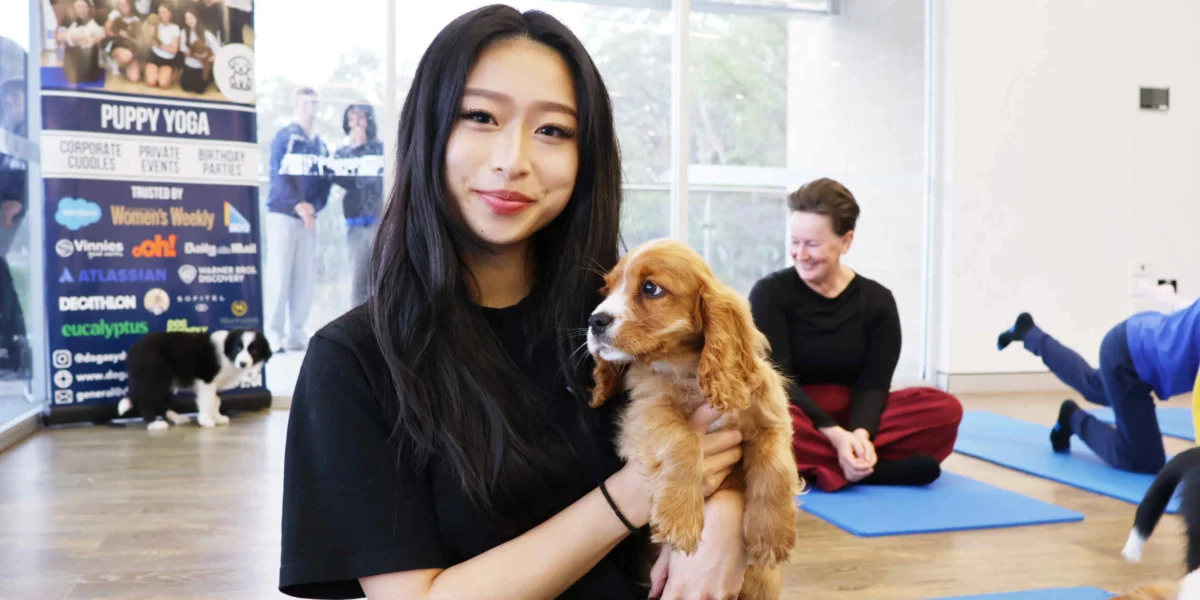
SYDNEY — In a city increasingly embracing holistic wellness and innovative approaches to animal care, a unique yoga studio in Sydney is capturing attention by integrating energetic puppies into its vinyasa flows and restorative poses. Doga Sydney, founded by Victor Nguyen, offers a distinct yoga experience where participants not only find their zen but also contribute to the socialization and potential adoption of young dogs. This trend, while seemingly novel, taps into a growing demand for activities that blend personal well-being with philanthropic engagement, particularly within the urban landscape.
The concept of "puppy yoga" has been steadily gaining traction globally, with studios in cities like London, Los Angeles, and New York offering similar experiences. Doga Sydney positions itself as a pioneer in the Australian market, aiming to provide a dual benefit: a stress-relieving activity for humans and a crucial developmental opportunity for puppies. Lily Wang, co-founder of Doga Sydney, emphasizes the core mission behind the classes. "Our puppy yoga sessions are designed to be a win-win," Wang stated in a recent interview. "For our human participants, it’s a deeply engaging and joyful way to de-stress and connect with animals. For the puppies, it’s an invaluable early socialization experience that significantly improves their chances of finding loving forever homes."
The genesis of Doga Sydney can be traced back to a confluence of evolving pet ownership trends and a burgeoning wellness industry. In recent years, there has been a marked increase in the humanization of pets, with owners viewing their animals as integral family members. This has fueled demand for premium pet services, from specialized nutrition to elaborate pet-friendly accommodations and, now, even shared wellness activities. Concurrently, the yoga and mindfulness sector has witnessed exponential growth, with individuals seeking more than just physical exercise, but also mental clarity and emotional balance. Puppy yoga emerged as a natural intersection of these two powerful trends.
A Typical Session: More Than Just Poses
A typical Doga Sydney session unfolds in a manner that is both familiar to yoga practitioners and delightfully unpredictable due to the presence of its four-legged participants. The class begins, as many yoga sessions do, with grounding breathing exercises, encouraging participants to settle into the present moment. However, this initial stillness is often punctuated by the soft pitter-patter of paws and the occasional happy yip. As participants transition into foundational yoga poses, such as downward-facing dog (a pose that takes on a literal interpretation in this context), puppies freely roam the studio. They may playfully nudge hands, curl up on laps, or engage in gentle wrestling matches amongst the yoga mats.
"It’s controlled chaos, but in the best possible way," commented one participant, Sarah Chen, after a recent session. "You’re trying to hold a warrior pose, and suddenly a little ball of fluff is trying to climb up your leg for a cuddle. It forces you to stay present and laugh at the unexpected. It’s incredibly grounding."
The sessions are carefully structured to ensure the well-being of both the animals and the humans. The puppies are typically sourced from local animal shelters and rescue organizations, providing a vital service to these often-overburdened institutions. Wang explains the protocol: "We work closely with our shelter partners to select puppies that are healthy, vaccinated, and have temperaments suitable for interacting with new people. The sessions are kept to a manageable duration, usually around 45-60 minutes, to prevent overstimulation for the puppies. We also have dedicated handlers present at all times to monitor the animals and ensure their comfort and safety."
The Socialization Imperative: Building Confident Canines
The core educational and welfare benefit of Doga Sydney lies in its emphasis on early puppy socialization. This critical developmental period, typically between 3 and 16 weeks of age, is when puppies learn to navigate the world, interact with different environments, and develop social skills with both other animals and humans. Insufficient or improper socialization is a leading cause of behavioral problems in adult dogs, which can include fearfulness, aggression, and anxiety, often leading to relinquishment to shelters.
"The positive interactions these puppies have during our classes are incredibly beneficial," stated Dr. Emily Carter, a veterinarian and animal behaviorist who has consulted with Doga Sydney. "Exposure to a variety of sights, sounds, and gentle human touch in a controlled and positive environment helps build their confidence. They learn that new people are not to be feared, but are a source of affection and play. This early foundation is crucial for them to grow into well-adjusted companions."
Data from the American Society for the Prevention of Cruelty to Animals (ASPCA) consistently highlights that a significant percentage of dogs entering shelters are there due to behavioral issues, many of which are preventable through proper socialization and training. By providing these structured, positive social interactions, Doga Sydney directly addresses this challenge. The organization reports that a notable percentage of the puppies that participate in their sessions go on to be adopted directly from their partner shelters, often with a more confident and adaptable disposition that makes them more appealing to potential adopters.
A Growing Trend: Data and Demand
The popularity of Doga Sydney is not an isolated phenomenon. Across the globe, the "pet humanization" trend is driving a multi-billion dollar industry. In the United States alone, pet owners spent an estimated $136.8 billion on their pets in 2022, according to the American Pet Products Association (APPA). This includes spending on food, supplies, veterinary care, and a rapidly growing segment of services like grooming, boarding, and training.
Within this broader market, wellness-focused pet activities are carving out a niche. Reports from market research firms indicate a growing consumer interest in experiences that offer both personal enrichment and a positive impact on animal welfare. This aligns with broader societal shifts towards ethical consumerism and a desire to engage in activities that have a tangible social good.
The timeline of this trend shows a steady acceleration. While animal-assisted therapy has been recognized for decades, the concept of recreational "puppy yoga" began gaining significant traction in the mid-to-late 2010s, with a notable surge in popularity post-2020. The increased time spent at home during global lockdowns led many to adopt pets, further fueling the demand for pet-related services and activities. Doga Sydney, established in the early 2020s, capitalized on this emerging market in Australia.
Official Responses and Future Implications
Animal welfare organizations and veterinary professionals have largely reacted positively to initiatives like Doga Sydney, provided they are implemented with the animals’ welfare as the paramount concern. Representatives from local animal shelters that partner with Doga Sydney have expressed gratitude for the support. "These sessions provide an invaluable service to us," said a spokesperson for the Sydney Animal Shelter Network. "Not only do they help us socialize puppies that might otherwise be overlooked, but the exposure and awareness generated by these classes can also lead to increased adoption rates and donations. It’s a creative and effective partnership."
However, ethical considerations and potential risks are always part of the conversation. Experts caution that the success of such programs hinges on rigorous standards. "It is crucial that these studios prioritize the health, safety, and emotional well-being of the animals above all else," advised Dr. Carter. "This includes proper veterinary care, appropriate class sizes, adequate rest periods for the puppies, and careful screening of both the animals and the human participants to ensure a positive experience for everyone involved."
The implications of Doga Sydney’s success extend beyond the immediate benefits to the puppies and their human participants. It highlights a broader shift in how urban populations are seeking connection, stress relief, and a sense of purpose. As cities become denser and opportunities for natural engagement diminish, activities that foster interspecies connection and contribute to community well-being are likely to become increasingly sought after.
The model also presents opportunities for expansion. Beyond yoga, similar concepts could be applied to other wellness activities, such as meditation sessions with kittens or "doggy discos" designed for canine socialization and owner interaction. The key will be to maintain a strong ethical framework and a commitment to animal welfare as these trends evolve.
In conclusion, Doga Sydney represents more than just a quirky new fitness class. It is a microcosm of evolving urban lifestyles, reflecting a growing desire for experiences that are simultaneously personally enriching and socially responsible. By skillfully blending the ancient practice of yoga with the urgent need for animal socialization and adoption support, Doga Sydney is not just stretching bodies; it’s fostering compassion, building confidence, and wagging tails towards brighter futures. The success of this initiative underscores the potential for innovative approaches to address societal needs while tapping into burgeoning market trends, proving that sometimes, the most profound moments of wellness can be found in the joyful, uninhibited embrace of a puppy.