Gilang Muhammad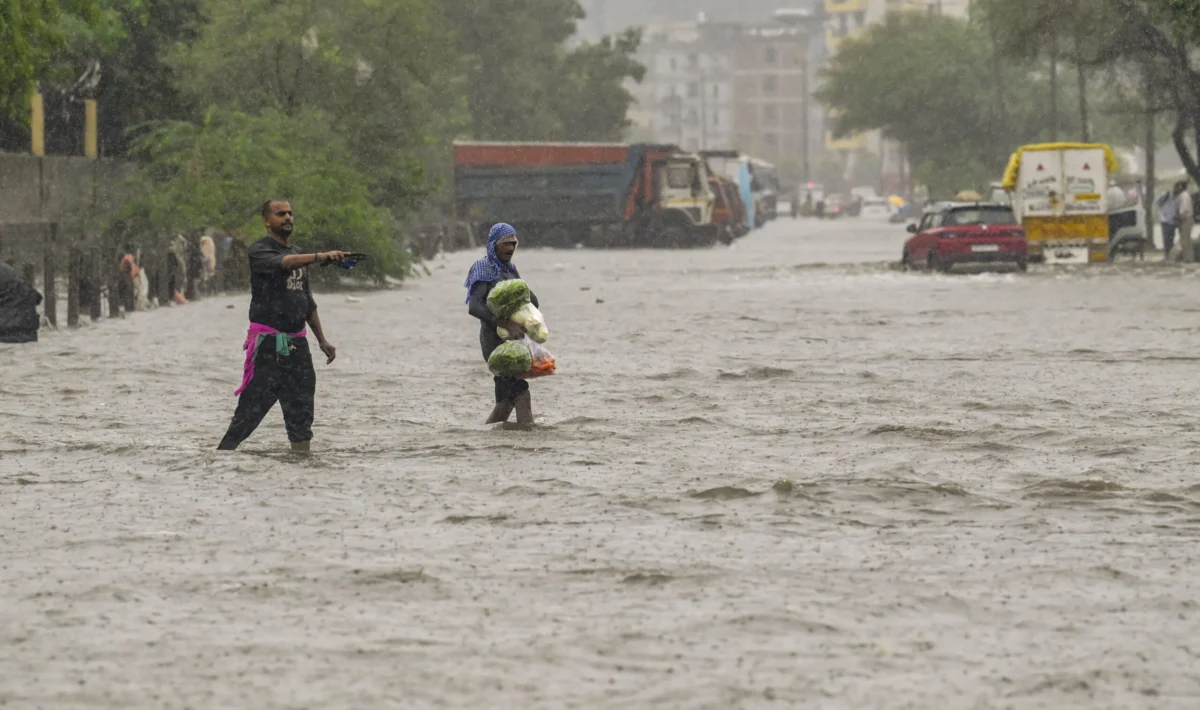
NEW DELHI, INDIA – India’s consumer price inflation surged to 4.38% in June 2026, marking a significant acceleration from 3.93% recorded in May, as a confluence of global geopolitical turmoil and domestic climatic volatility exerted substantial upward pressure on food and fuel prices. The inflation figure, released by India’s Ministry of Statistics and Program Implementation (MoSPI) on Monday, surpassed economists’ expectations of a 4.30% rise, according to a Reuters poll, signaling deepening economic concerns for the world’s fastest-growing major economy.
The sharp uptick in the Consumer Price Index (CPI) is primarily attributed to the renewed hostilities in the U.S.-Iran conflict, which has sent global crude oil prices spiraling, and the looming threat of an erratic monsoon season exacerbated by the El Niño phenomenon. These external and internal shocks are compounding cost pressures across various sectors, threatening to erode consumer purchasing power and potentially temper economic growth projections.
Unpacking the Inflation Data: Food and Fuel at the Forefront
The headline inflation number of 4.38% for June 2026 reflects a broad-based increase, with specific segments experiencing even more pronounced jumps. The year-on-year inflation rate based on the All India Consumer Food Price Index (CFPI) escalated to 5.32% in June, a notable increase that directly impacts household budgets, particularly for lower-income groups. This rise in food inflation is a critical metric for a country where food constitutes a substantial portion of average household expenditure, and its volatility often dictates public sentiment and economic stability. Staples such as cereals, pulses, vegetables, and edible oils have seen price hikes, partly due to anticipated supply constraints stemming from weather disruptions.
Adding to the inflationary woes, transport inflation witnessed a sharp acceleration, rising by 4.3% in June, a significant leap from the 1.75% increase observed in May. This surge is a direct consequence of escalating global crude oil prices, which translate into higher domestic fuel costs. Given that transportation is an integral component of the supply chain for almost all goods and services, an increase here invariably leads to a cascading effect, pushing up costs for manufacturers, distributors, and ultimately, consumers. From agricultural produce moving from farms to markets to manufactured goods being delivered to retail outlets, every stage of the economic process becomes more expensive, contributing to overall inflationary pressures.
The Geopolitical Storm: U.S.-Iran Conflict and Energy Supply
The primary external catalyst for India’s rising inflation is the re-escalation of the U.S.-Iran conflict. After a brief period of de-escalation and a fragile ceasefire in June, hostilities between the two nations resumed last week, sending shockwaves through global energy markets. The immediate consequence has been a significant increase in global oil prices, driven by anxieties over the security of energy supplies from the Middle East.
At the heart of this concern is the Strait of Hormuz, a narrow maritime choke point that serves as one of the most vital trade routes for global energy supplies. Approximately one-fifth of the world’s total petroleum consumption and a substantial portion of global liquefied natural gas (LNG) pass through this strait daily. The ongoing contest for control and influence over this strategic waterway between the U.S. and Iran directly threatens the stability of energy flows. Any disruption, perceived or real, triggers a rapid upward movement in crude oil benchmarks like Brent and WTI, which then filter down to national economies.
India, a burgeoning economic powerhouse, is acutely vulnerable to such supply disruptions. The South Asian nation imports nearly 85% of its crude oil requirements, making it one of the world’s largest net importers of energy. A staggering 50% of India’s crude imports, 60% of its liquefied natural gas (LNG), and almost all of its liquefied petroleum gas (LPG) supplies transit through the Strait of Hormuz. This heavy reliance means that any instability in the region or threat to the Strait’s navigability translates almost immediately into higher import bills, increased domestic fuel prices, and a strain on the national exchequer. The economic implications are far-reaching, impacting everything from the cost of daily commutes to the operational expenses of industries heavily dependent on energy, such as manufacturing, logistics, and aviation.
The Climatic Conundrum: Monsoon Variability and El Niño Threat
Domestically, India faces a significant challenge from an unpredictable monsoon season, compounded by the persistent threat of El Niño. The monsoon, which typically spans from June to September, is the lifeblood of India’s agricultural sector, contributing to over 70% of the country’s annual rainfall. A robust and well-distributed monsoon is crucial for kharif (summer) crop sowing, ensuring adequate water for irrigation, replenishing reservoirs, and supporting rural incomes. Conversely, a deficient or erratic monsoon can devastate agricultural output, leading to crop failures, food price spikes, and rural distress.
The current year has presented a particularly challenging scenario. Following a "parched June," which saw a significant rainfall deficit across many regions, the monsoon advanced rapidly in the first week of July. This rapid progression helped reduce the all-India rainfall deficit from a concerning 40% to 15% as of July 8, offering a brief respite. However, the India Meteorological Department (IMD) has tempered expectations, forecasting that July rainfall will still come in at 6% below the long-period average. This prediction raises concerns about the overall health of the monsoon season.
Moreover, the country is grappling with the pervasive influence of El Niño, a periodic climate pattern characterized by the warming of ocean surface temperatures in the central and eastern tropical Pacific Ocean. El Niño events are historically linked to weaker monsoons and drier conditions in India, posing a direct threat to agricultural productivity. The current El Niño cycle, which began earlier this year, has already raised alarms among climate scientists and policymakers worldwide about potential disruptions to global food supplies.
As highlighted by Crisil, an S&P Global-owned Indian research and rating firm, the swings between rainfall scarcity and surplus – a common feature of El Niño-influenced monsoons – can be as disruptive to agriculture as a weak monsoon itself. Such volatility profoundly influences crucial farming decisions, including crop selection, sowing schedules, and the application of fertilizers. It also impacts crop health, leading to lower yields and, consequently, reduced rural incomes. Specific crops like rice, pulses, and oilseeds, which are heavily dependent on monsoon rains, are particularly vulnerable. A shortfall in these staple crops not only pushes up food inflation but also reduces the purchasing power of the vast rural population, which in turn dampens overall economic demand.
The Central Bank’s Stance: Navigating Inflationary Headwinds
Against this backdrop of dual inflationary pressures, India’s central bank, the Reserve Bank of India (RBI), finds itself in a precarious position. In its last monetary policy committee meeting in June, the RBI opted to keep interest rates unchanged, a decision aimed at balancing the need to control inflation with the imperative of supporting economic growth. However, the central bank issued a cautious outlook, explicitly stating its expectation for inflation to rise and growth to temper in the financial year ending March 2027.
The RBI’s projections underscore the severity of the current challenges. It forecasts headline inflation to shoot up to 5.1% for the current fiscal year, a significant increase that reflects the anticipated impact of higher fuel prices and potential crop shortages. Furthermore, the central bank pegged core inflation – which excludes volatile food and fuel components – at 4.7% for the same period. While core inflation has historically been a key focus for the RBI, indicating demand-side pressures and underlying price stickiness, the current scenario presents a unique challenge. Prolonged periods of elevated energy and food prices invariably begin to feed into core inflation through what economists call "second-order effects." Higher input costs for industries, increased transportation expenses, and rising operational expenditures for businesses eventually force them to pass on these costs to consumers, leading to a broader increase in prices across goods and services.
RBI Governor Shaktikanta Das has repeatedly emphasized the central bank’s commitment to maintaining price stability while supporting growth. However, the current environment presents a difficult trade-off. Aggressive interest rate hikes to curb inflation might stifle nascent economic recovery, while a dovish stance risks allowing inflation to become entrenched, leading to more severe consequences down the line. The RBI’s current strategy appears to be one of watchful waiting, ready to intervene if inflationary pressures become more pervasive and persistent.
Broader Economic Implications and Expert Reactions
The combination of geopolitical strife and climatic unpredictability carries significant broader implications for India’s economy and its citizens. For consumers, the immediate impact is a reduction in real income and purchasing power. Essential goods become more expensive, forcing households to cut back on discretionary spending, which can slow down overall consumption and economic activity. Small and medium enterprises (SMEs) are particularly vulnerable, as they often have limited buffers to absorb rising input and operational costs.
From a fiscal perspective, the government faces increased pressure. Higher crude oil prices inflate the import bill, widening the current account deficit and potentially weakening the Indian rupee. This, in turn, makes imports even more expensive, creating a vicious cycle. The government may also face calls for subsidies or other support measures to cushion the impact on vulnerable populations, which could strain public finances.
Industry experts have begun to voice their concerns. Dr. Anjali Sharma, Chief Economist at Zenith Capital, noted, "The current inflation trajectory is deeply worrying. The dual shock from global oil prices and a potentially weak monsoon creates a perfect storm for cost-push inflation. While the RBI has maintained a cautious stance, the risk of inflation becoming more entrenched, even in core components, is growing. We anticipate significant pressure on corporate margins and consumer demand in the coming quarters."
A senior official from the Ministry of Finance, speaking on background, acknowledged the challenges. "We are closely monitoring both the global geopolitical situation and the monsoon’s progress. Our focus remains on ensuring supply chain stability and exploring all possible avenues to mitigate the impact of rising costs on our citizens and industries. Dialogue with oil-producing nations and domestic measures to support agriculture are high on our agenda."
The Confederation of Indian Industry (CII) issued a statement urging the government to consider measures to stabilize fuel prices and support agricultural infrastructure. "Businesses are facing unprecedented cost pressures," said the CII President. "Timely interventions are crucial to maintain competitiveness and prevent a slowdown in investment and job creation."
The Road Ahead: Vigilance and Adaptive Policies
As India navigates these turbulent waters, the coming months will be crucial. The trajectory of the U.S.-Iran conflict and its impact on global oil markets will remain a key determinant of energy prices. Simultaneously, the performance of the monsoon in July and August will largely dictate the outlook for agricultural output and food inflation. Any further escalation in geopolitical tensions or a significant shortfall in rainfall could push inflation well beyond the RBI’s comfort zone, potentially necessitating more aggressive monetary policy actions.
The government and the RBI will need to maintain a high degree of vigilance and flexibility in their policy responses. This could involve exploring alternative energy supply routes, strategically utilizing crude oil reserves, implementing targeted fiscal measures to support vulnerable sectors, and enhancing agricultural resilience through improved irrigation and storage infrastructure. The current economic climate underscores the interconnectedness of global events and domestic factors, demanding a comprehensive and adaptive approach to safeguard India’s economic stability and growth trajectory. The sight of citizens navigating waterlogged roads in Delhi, a vivid reminder of the monsoon’s unpredictable force, serves as a poignant backdrop to the complex economic challenges confronting the nation in mid-2026.