Ella Zulfa
The Toledo Museum of Art (TMA) in Ohio has demonstrated that even venerable cultural institutions can become innovators in corporate safety and revenue generation. For the past decade, the museum has been cultivating its business venture, the Center of Visual Expertise (COVE). This unique enterprise leverages the principles of visual literacy, honed through the study and appreciation of art, to train employees across various industries in identifying and mitigating workplace hazards. The initiative not only addresses the critical need for enhanced safety protocols but has also become a significant revenue stream for the museum, particularly during a challenging period for arts organizations.
In 2024, workplace safety remains a paramount concern for businesses and regulatory bodies. According to the U.S. Bureau of Labor Statistics, recent data indicates that employers reported approximately 2.5 million nonfatal workplace injuries and illnesses in private industry. Furthermore, over 5,000 fatal work-related injuries occurred across all sectors. These statistics underscore the persistent risks inherent in many work environments and highlight the urgent need for effective preventative measures. COVE’s innovative approach offers a compelling solution by equipping individuals with the perceptual skills to foresee and avert potential dangers.
The dual benefits of COVE are profound. On one hand, the program demonstrably contributes to a reduction in workplace incidents, leading to fewer injuries, lost workdays, and associated costs for businesses. On the other hand, COVE has generated millions of dollars for the Toledo Museum of Art over the past several years. This financial success is particularly noteworthy given the broader challenges faced by museums, including financial pressures and declining attendance, as highlighted by national surveys from organizations like the American Alliance of Museums.
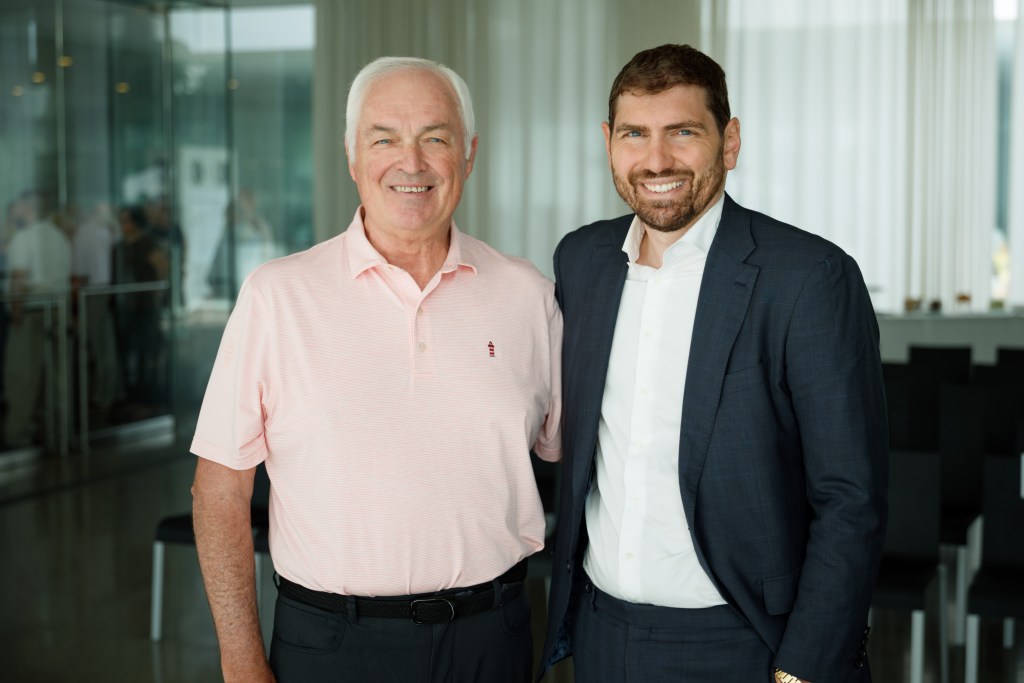
Adam M. Levine, Director of the Toledo Museum of Art, articulated the strategic vision behind COVE. "We were attracted not just to the revenue potential, but to the idea that art historical expertise could be productized in a way that keeps people safer and saves lives," Levine stated. He further emphasized the profound impact of their work, adding, "As art historians, we are helping people go home in the same position they come to work, [and that’s] sort of magic." This sentiment encapsulates the transformative power of applying specialized knowledge from seemingly disparate fields to solve critical real-world problems.
The Genesis of COVE: A Decade-Long Vision
The conceptualization of COVE began to take shape around 2015, building upon a foundation laid by Levine’s predecessor, Brian Kennedy, who had prioritized the development of visual literacy skills within the museum’s educational framework. The pivotal moment, however, arrived when Mike Thaman, then CEO of the Fortune 500 company Owens Corning and a member of the Toledo Museum of Art’s board, recognized the potential application of visual literacy in enhancing workplace safety. Thaman’s insight sparked a crucial dialogue about how the meticulous observational skills cultivated in art appreciation could be translated into tangible improvements in industrial safety practices.
This idea resonated deeply with Doug Pontsler, who at the time served as the vice president of operations, sustainability, and environmental health and safety (EHS) at Owens Corning. Pontsler brought to the table a wealth of experience in corporate safety and a strong commitment to operational excellence. Owens Corning itself boasts an impressive safety record, having received the prestigious Green Cross for Safety award from the National Safety Council (NSC). Furthermore, Pontsler’s leadership roles, including his presidency of the NSC’s Campbell Institute—an organization dedicated to sharing best practices for improving workplace safety and operational performance—provided him with a unique perspective on the persistent challenges in the EHS field.
Pontsler reflected on the continuous pursuit of improvement in safety protocols. "In the EHS space, the challenge is, how do you continue to get better?" he explained. "Because if you’re not making progress in all aspects of environmental health and safety, you’re going backwards. You can’t just tread water." This sentiment underscores the dynamic nature of safety management, where stagnation can lead to increased risk.
From Nonprofit to Profit: COVE’s Financial Success
The logical extension of applying TMA’s visual literacy expertise to the realm of workplace hazards was a strategic business decision. The museum’s team developed a comprehensive business plan, secured board approval, and officially launched COVE in 2017. While, like many startups, COVE operated at a small loss during its initial year, it has consistently generated positive returns for the museum in the years since.
Director Levine clarified the operational philosophy of the museum’s venture. "We are a nonprofit, but nonprofit doesn’t mean for loss," he stated. "If you are a nonprofit that has fixed assets, then you must run a structural surplus, or else you are deferring maintenance. Sure, you could say that that’s what a capital campaign is for, but it would be nice to grow the organization rather than bail the organization out." This pragmatic approach highlights the importance of financial sustainability for cultural institutions, enabling them to invest in their mission and infrastructure rather than solely relying on external funding for essential operations.
COVE’s client roster has grown to include a diverse range of organizations, from publicly traded corporations to privately held companies. Notable clients include Owens Corning, PENTA Building Group, American Axle & Manufacturing, and DTE Energy, among many others. This broad adoption across different sectors attests to the universal applicability and effectiveness of COVE’s safety training methodologies.
The Workshop Model: Cultivating Hazard Identification
A key challenge in translating the intellectual property of art appreciation into practical workplace safety solutions was determining the most effective delivery method. Doug Pontsler noted that the initial hurdle was "how to convert the intellectual property within an art context to one that would be useful for a frontline worker." COVE addressed this by adopting a dynamic workshop model, primarily hosted within museum settings and facilitated by experienced EHS professionals from major corporations.
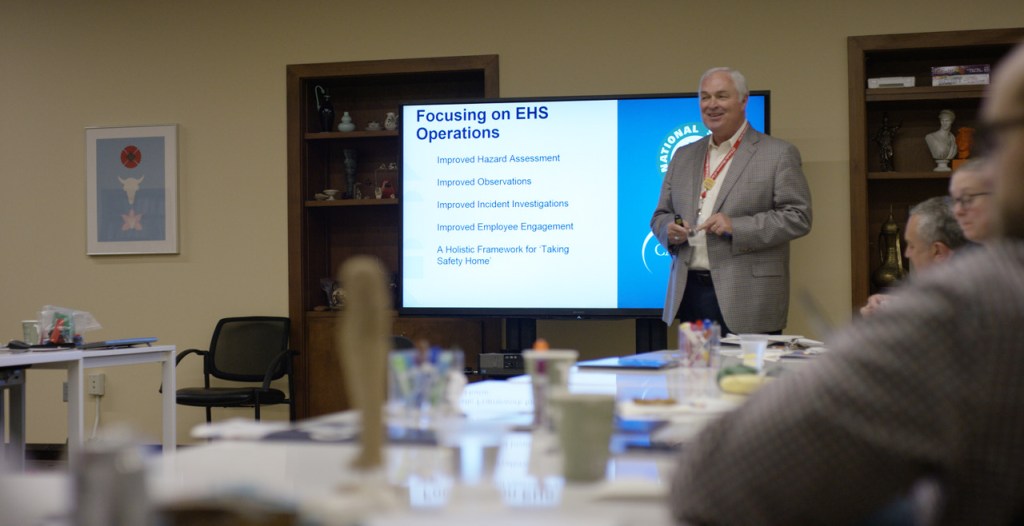
Beyond in-person workshops, COVE also offers licensing agreements and train-the-trainer modules, empowering organizations to disseminate safety awareness effectively across their various teams and locations. The initiative further extends its reach through strategic speaking engagements at industry conferences and events.
Currently, COVE conducts approximately 10 to 12 workshops annually. These sessions are open to employees from a wide array of companies, in addition to customized workshops tailored to the specific needs of individual clients. The flagship workshop, "Seeing Safety: Foundations of Hazard Identification," is designed to introduce participants to the core concepts of visual literacy and its significance on a personal level. It then systematically explores the direct correlation between these perceptual skills and effective EHS practices in the workplace.
Pontsler explained the fundamental principle behind this training: "We do become habituated to our environment. We’re ‘around something so much that we just no longer see it. So we want to make the work environment fresh and new all the time." This concept of overcoming ingrained perceptions is central to COVE’s methodology, encouraging participants to view their surroundings with a renewed sense of scrutiny.
The workshops ingeniously blend lecture-based instruction with interactive components, mirroring the structured analytical approaches employed by art historians when examining artworks. These methods are then adapted to identify potential hazards in the workplace. For instance, just as artists utilize the fundamental elements of art—line, shape, color, value, and texture—to construct a visual composition, COVE employs these elements as a framework for deconstructing the work environment. By prompting participants to actively search for specific visual cues, such as stray electrical cords (lines) or precariously stacked materials (shapes), COVE trains them to notice details that might otherwise be overlooked.

Levine elaborated on this technique, stating, "When you’re used to seeing stairs, you look, and you see stairs. When you’re used to looking for texture, you see that the tread’s worn. So in some ways it’s as simple as giving someone an alternate framework to scan their environment." This approach transforms routine observation into a more deliberate and analytical process, significantly enhancing hazard detection capabilities.
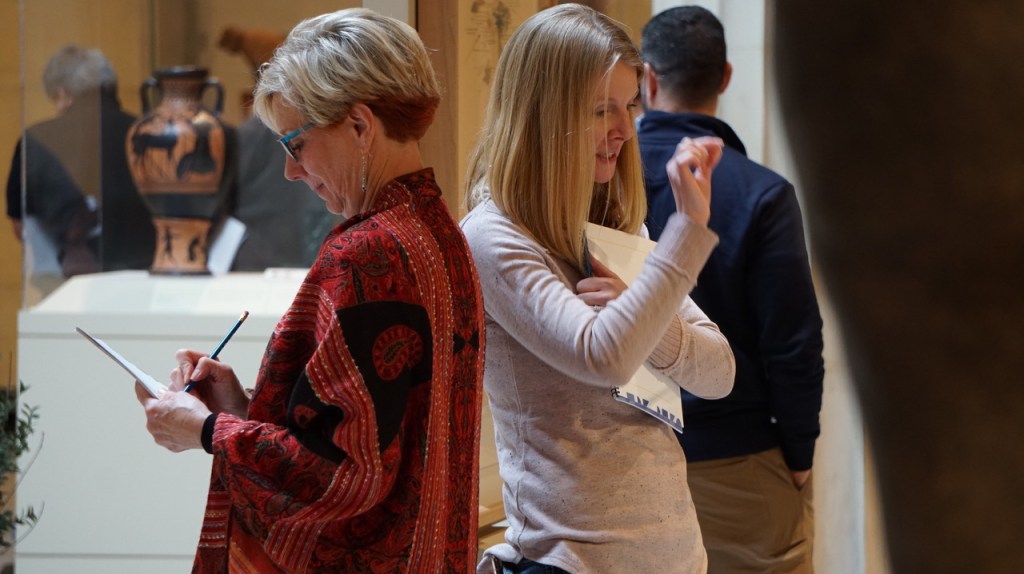
A unique and engaging exercise integrated into every COVE workshop involves a paired drawing activity. In this exercise, one participant describes an object within the museum setting to their partner, who then attempts to sketch it without seeing the actual object. Pontsler noted that while participants are initially intimidated by the drawing aspect, the exercise’s true purpose is communication. "It’s really not a drawing exercise," he clarified. "It’s a communication exercise. And once people realize that, they get a big kick out of it." This activity fosters active listening, clear articulation, and a deeper understanding of how descriptive language impacts perception—skills directly transferable to effective communication in safety-related contexts.
The pricing structure for COVE’s workshops and modules is adaptable, typically determined by the size and specific requirements of the client organization. The ultimate measure of success for these programs, according to Levine, is a demonstrable increase in the number of reported hazards and a corresponding decrease in workplace incidents. He cited an early client that reported a doubling of the hazards identified by its employees following participation in a COVE workshop, illustrating the program’s tangible impact.
Bridging Art and Business: A Forward-Looking Perspective
COVE’s influence has expanded significantly, now reaching across North America, Europe, and Australia, with ongoing plans for continued global growth. As a leader in the thought leadership space, one of the primary challenges for COVE, as articulated by Pontsler, is fostering sustained engagement and effectively educating a broader audience about its unique mission.
"It’s not a product someone can order from Amazon that shows up at their desk, and they can do something with," Pontsler explained. "We’re building human capacity to be better critical thinkers, problem-solvers and communicators." This highlights the deeply human-centric nature of COVE’s approach, focusing on developing intrinsic skills rather than providing a superficial solution.
To address this, COVE continually refines its communication strategies, analyzing which messages resonate most effectively with potential clients and stakeholders. Pontsler, drawing on nearly four decades of experience in Fortune 500 companies, values COVE’s agility and its capacity for rapid adaptation and improvement.
He concluded by drawing a parallel between artistic interpretation and business strategy: "There’s a lot in the arts about reflecting on the past and what it’s taught us, and taking it and drawing interpretation from that in terms of what it might mean for our future. And that’s what we’re trying to do in business. We’re just trying to learn and get better. Or at least understand where we are and why." This philosophical underpinning underscores COVE’s commitment to continuous learning and improvement, demonstrating that valuable insights for enhancing safety and operational efficiency can indeed be found at the intersection of art and commerce.