
 Gilang Muhammad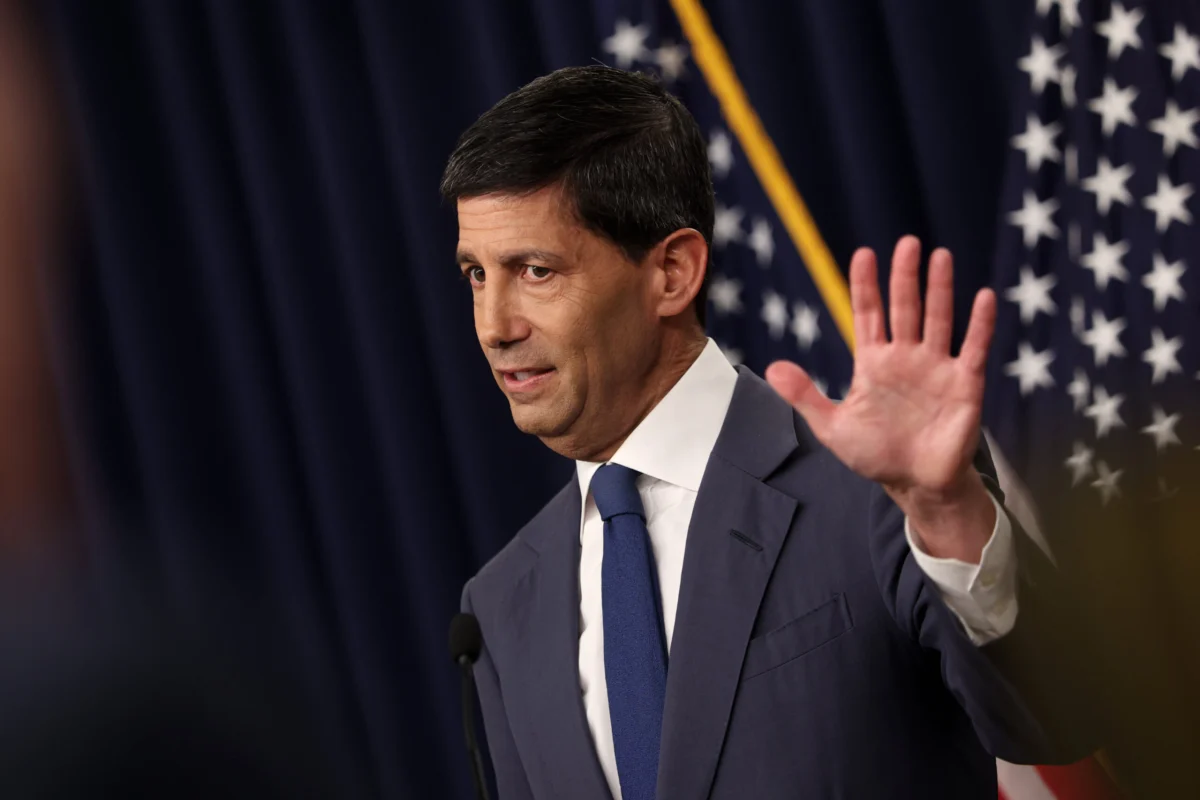
Wall Street has unequivocally interpreted this week’s Federal Reserve decision as a clear harbinger of an imminent interest rate hike, with the central bank reaffirming its staunch commitment to taming persistent inflation. Despite opting to hold interest rates steady at Chairman Kevin Warsh’s second Federal Open Market Committee (FOMC) meeting on July 29, 2026, the underlying rhetoric and a notable surge in dissenting votes have galvanized investor confidence that the Fed’s next strategic move will be an increase, likely as early as September. This "hawkish hold" has sent tremors through financial markets, prompting a significant risk-off sentiment and a re-evaluation of monetary policy trajectories under the new leadership.
The July 2026 Decision: A Deep Dive into the "Hawkish Hold"
The Federal Reserve’s decision to maintain the benchmark federal funds rate at its current target range, a move widely anticipated by market participants, masked a profound shift in internal sentiment. A significant development was the emergence of three policymakers who broke ranks with the committee’s majority, advocating for an immediate interest rate increase. This dissenting coalition represents the highest number of members pushing for tighter monetary policy since September 2016, signaling growing impatience within the Fed to address inflationary pressures more aggressively.
Chairman Kevin Warsh, in his post-meeting news conference at Federal Reserve Headquarters in Washington, reiterated the central bank’s unwavering focus on achieving its long-term price stability mandate. "You’ve heard this before, but we will deliver price stability," Warsh stated, underscoring the urgency of guiding inflation back down to its preferred annual rate of 2% after several years of elevated readings. His commentary, coupled with the vocal dissent, painted a picture of a central bank grappling with internal divisions but ultimately leaning towards a more restrictive policy stance in the near future. The market’s immediate interpretation was that while the majority sided with Warsh in holding rates for now, the path ahead is undeniably upward.
A Chairman’s Mandate: Warsh’s Inflation Battle
Kevin Warsh assumed the chairmanship of the Federal Reserve earlier this year, stepping into a complex economic environment marked by sustained inflationary pressures that had proved stubbornly resistant to previous policy interventions. His appointment was widely seen as a pivot towards a more hawkish stance, given his historical advocacy for a disciplined approach to monetary policy and a strong emphasis on inflation control. Warsh’s tenure began with the formidable task of restoring the Fed’s credibility on price stability, a challenge exacerbated by a global economic landscape fraught with supply chain disruptions, geopolitical tensions, and an "ongoing energy price shock."
The "years of hotter readings" Warsh alluded to are a critical piece of context. Following the unprecedented fiscal and monetary stimulus deployed during the early 2020s, inflation had surged, reaching multi-decade highs and consistently overshooting the Fed’s 2% target. While some economists argued these pressures were transitory, by 2026, it had become clear that underlying demand, combined with structural supply issues and external shocks, had embedded inflation into the economic fabric. This persistent inflation had eroded consumer purchasing power, complicated business investment decisions, and created a pervasive sense of economic uncertainty. Warsh’s leadership is now defined by this singular, overriding objective: to anchor inflation expectations and restore stability, even if it entails policy tightening that might temper economic growth.
Echoes of 2016: Dissent and Precedent
The three dissenting votes at the July 2026 meeting immediately drew comparisons to the Federal Reserve’s September 2016 FOMC meeting. Back then, two policymakers had dissented, arguing for an immediate rate hike at a time when the Fed was cautiously navigating its post-financial crisis normalization path. Following that September meeting, the Fed opted to keep rates unchanged in November, but by December 2016, the committee unanimously voted for a 25-basis-point increase. This historical parallel provides a potent roadmap for investors, suggesting that the current wave of dissent could indeed precede a hike in the immediate term.
Ian Lygen, head of U.S. rates strategy at BMO Capital Markets, highlighted this historical context, noting, "We’re reading this as a Committee with vocal hawks but the majority is siding with Warsh." The implication is clear: while the current chairman might prefer a more measured approach, the increasing pressure from within the committee, coupled with sustained inflationary data, makes a near-term hike almost inevitable. The 2016 precedent serves as a powerful reminder that dissenting voices, when they reach a critical mass, often signal a broader shift in the committee’s consensus, albeit with a slight lag.
The Economic Backdrop: Pressures on the Central Bank
The Federal Reserve’s dual mandate requires it to foster maximum employment and stable prices. In mid-2026, the challenge lies in balancing these objectives when inflation remains elevated, even as other economic indicators present a mixed picture. While the labor market has shown resilience, with unemployment rates hovering at historically low levels, the persistent "energy price shock" threatens to inject further inflationary impulses into the economy. Global oil prices, driven by geopolitical tensions in Eastern Europe and the Middle East, coupled with underinvestment in traditional energy infrastructure, have seen a sustained upward trajectory throughout 2025 and into 2026. This has translated directly into higher costs for transportation, manufacturing, and consumer goods, exerting significant upward pressure on the Consumer Price Index (CPI) and Personal Consumption Expenditures (PCE) inflation metrics.
Beyond energy, supply chain bottlenecks, though eased from their pandemic-era peaks, continue to plague specific sectors, contributing to higher input costs for businesses. Wage growth, while beneficial for workers, has also been a factor, as firms pass on increased labor costs to consumers. The latest CPI report, released just weeks before the FOMC meeting, showed headline inflation at 4.1% year-over-year, significantly above the Fed’s 2% target. Core inflation, which strips out volatile food and energy components, also remained elevated at 3.5%. These figures provide a stark economic reality that strengthens the hand of the committee’s hawkish members and reinforces Warsh’s public commitment to price stability.
Wall Street’s Verdict: A Market in Flux
The financial markets reacted swiftly and decisively to the Fed’s "hawkish hold," registering a palpable sense of unease about the prospect of tighter monetary policy on the horizon. Equity markets experienced a broad sell-off, reflecting investor apprehension about higher borrowing costs impacting corporate earnings and economic growth. The S&P 500 tumbled 1.5% in Wednesday’s session, marking the worst "Fed day" performance for a new chief’s second meeting in recent history, according to analysis from Bespoke Investment Group. The blue-chip Dow Jones Industrial Average suffered an even sharper decline, dropping more than 2%, its largest daily percentage decrease since April 2025, when President Donald Trump’s renewed tariff policies sent ripples of uncertainty through global trade.
Technology stocks, particularly sensitive to rising interest rates due to their future earnings growth being discounted at higher rates, bore the brunt of the sell-off. The Nasdaq Composite slid, pushing the index more than 10% off its all-time high and marking its sixth consecutive losing session – a streak not seen since 2024. Josh Jamner, senior investment strategy analyst at ClearBridge Investments, observed this increased price volatility under Chairman Warsh, describing it as "more of a feature than a bug," suggesting that markets should anticipate greater fluctuations as the new leadership navigates complex economic currents.
The bond market, often seen as a more direct barometer of monetary policy expectations, also showed significant movement. The yield on the benchmark 10-year Treasury note climbed above the key 4.6% level, reflecting heightened expectations for future rate increases. More dramatically, the 30-year Treasury yield surged by more than 10 basis points, reaching its highest level since July 2007, a period preceding the global financial crisis. This move signals long-term investor concerns about inflation and the required compensation for holding debt over extended periods. Conversely, shorter-dated yields pulled back slightly, indicating that while the market anticipates a hike, it also perceived the Fed’s current hold as a willingness to wait for further data, potentially offering a temporary reprieve for short-term borrowers.
The Bond Market’s Warning: Vigilantes Sound the Alarm
The notable jump in long-term Treasury yields after the Fed’s announcement was particularly significant, interpreted by many as a direct challenge from the bond market to the central bank’s inflation rhetoric. Legendary investor Jeffrey Gundlach, CEO of DoubleLine Capital, articulated this sentiment clearly, stating, "If you really want to get to 2%, I think you have to raise interest rates." He went further, characterizing the bond market’s reaction as a message from "bond market vigilantes" demanding action. "The long bond yield went up significantly after the press conference," Gundlach said on CNBC’s "Closing Bell." "The bond market vigilantes are saying, ‘If you really want us to believe your rhetoric, you’ve got to start acting.’"
This concept of "bond market vigilantes" refers to bond investors who, by selling off long-term bonds and driving up yields, effectively pressure central banks and governments to adopt more fiscally and monetarily conservative policies. Their message is that if the Fed truly intends to bring inflation down to its target, mere rhetoric will not suffice; concrete policy action in the form of rate hikes is necessary to validate its commitment and prevent inflation expectations from becoming unanchored.
Looking Ahead: The September Conundrum and Beyond
The immediate focus for investors and economists now shifts to the Federal Reserve’s September meeting. Fed funds futures trading, a key indicator of market expectations, now suggests a more than 57% likelihood of a quarter-point increase at that meeting, according to CME’s FedWatch tool. Similarly, about 53% of Kalshi traders predict a rate hike, compared with 43% betting on another hold. This reinforces the view that a September hike is now the baseline expectation. Ellen Zentner, chief economic strategist for Morgan Stanley Wealth Management, encapsulated this sentiment, saying, "For now, it’s likely that market pricing for a hike has simply been pushed forward. September remains a live meeting."
However, not all analysts are convinced that the next move will be a hike. Stephen Douglass, chief economist at NISA Investment Advisors, while acknowledging the "hawkish hold," still expressed a contrarian view, stating he expected the Fed’s next move to be a rate cut in March of next year. Such differing opinions highlight the inherent uncertainty in forecasting monetary policy, especially in an environment where economic data can shift rapidly.
The path forward will be dictated by upcoming inflation reports, labor market data, and indicators of economic growth. The Fed will be meticulously scrutinizing the Consumer Price Index (CPI), Personal Consumption Expenditures (PCE), and wage growth figures in the intervening weeks. Any signs of inflation cooling would provide Chairman Warsh and the majority with more breathing room, while persistent hot readings would almost certainly solidify the case for a September hike, potentially even larger than 25 basis points if the situation warrants. The central bank’s credibility, and Warsh’s legacy, now hinge on its ability to navigate these treacherous economic waters and deliver on its promise of price stability.
Broader Economic and Political Ramifications
The Federal Reserve’s tightening cycle carries significant ramifications across the domestic and global economies. For American consumers, higher interest rates translate into increased borrowing costs for mortgages, auto loans, and credit card debt, potentially dampening consumer spending, which is a major driver of economic growth. Businesses will face a higher cost of capital, potentially leading to a slowdown in investment, hiring, and expansion plans. Small and medium-sized enterprises (SMEs) are particularly vulnerable to such shifts, as their access to financing becomes more expensive.
On the international front, a tightening Fed policy often strengthens the U.S. dollar, making American exports more expensive and imports cheaper. This can create headwinds for U.S. multinational corporations and impact global trade dynamics. Furthermore, a stronger dollar and higher U.S. interest rates can put pressure on emerging market economies, particularly those with significant dollar-denominated debt, by making their debt servicing more expensive and potentially triggering capital outflows.
Politically, the Fed’s actions will inevitably draw scrutiny. With President Donald Trump in office in 2026, and a presidential election on the horizon in 2028, monetary policy decisions can become politically charged. A slowing economy or rising unemployment resulting from aggressive rate hikes could invite criticism from the administration, even as the Fed strives to maintain its independence. Warsh’s challenge is not only to achieve his mandate but to do so while navigating a complex interplay of economic realities, market expectations, and political pressures, solidifying his position as a critical figure in global finance.








