Farhan Pambudi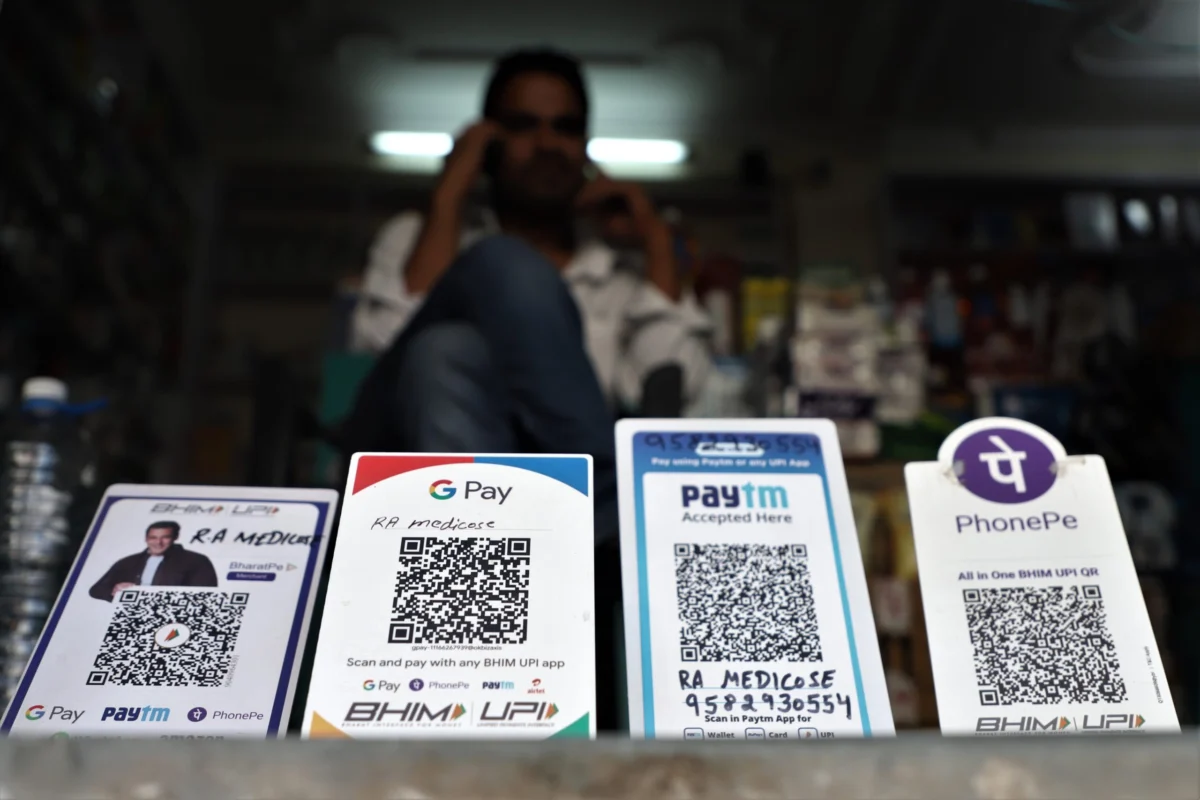
India is taking definitive steps to overhaul the economic framework of its Unified Payments Interface (UPI), the world’s largest real-time payments ecosystem, through new legislation that establishes the legal groundwork for reintroducing merchant charges. This legislative move signals a potential end to the "zero-merchant-discount-rate" (MDR) regime that has characterized the platform since early 2020. By introducing a mechanism for fees, the Indian government aims to address long-standing concerns regarding the financial sustainability of the digital payments infrastructure, which has seen astronomical growth in transaction volumes without a corresponding revenue model for the banks and fintech companies that power it.
The proposed legislation does not immediately impose specific fees but creates the necessary legal architecture for the government and the Reserve Bank of India (RBI) to mandate charges on certain classes of transactions. This shift comes at a critical juncture for India’s digital economy, as UPI continues to break records, processing 23.66 billion transactions in July 2024 alone, with a total value of ₹29.88 trillion (approximately $313.4 billion). As the network matures, the focus is shifting from pure user acquisition to the long-term viability of the underlying technology and the security of the vast amounts of capital moving through the system.
The Evolution of the Zero-MDR Regime
To understand the significance of the new legislation, it is necessary to look back at the policy trajectory of the last several years. The Unified Payments Interface was launched in 2016 by the National Payments Corporation of India (NPCI) as a revolutionary interoperable system. However, its adoption was supercharged in January 2020 when the Indian government mandated a zero-MDR policy for UPI and RuPay debit card transactions.
Under this policy, merchants were not required to pay any fees to accept digital payments, a move designed to incentivize small businesses to move away from cash. To compensate for the loss of revenue, the government introduced annual state incentives to support banks and payment service providers. While this strategy successfully drove UPI to become a ubiquitous part of daily life in India—from street vendors to luxury retailers—it created a significant financial burden on the private sector.
Fintech firms and traditional banks have argued for years that the cost of maintaining servers, preventing fraud, and innovating new features cannot be indefinitely covered by government subsidies alone. The new legislation acknowledges these grievances, suggesting that the "growth phase" of free payments may be transitioning into a "sustainable phase" where the industry can recoup its operational investments.
Strategic Shift Toward Large Merchants and High-Value Transactions
Market analysts and industry insiders suggest that any reintroduction of fees will likely be surgical rather than universal. Reports indicate that the government is considering a tiered approach that protects small-scale vendors and individual consumers while targeting larger commercial entities.
Recent data from brokerage firm Bernstein highlights the logic behind this targeted approach. While transactions above ₹2,000 (roughly $21) account for only 4% of the total transaction volume on the UPI network, they represent nearly 70% of the total transaction value. By applying a Merchant Discount Rate to these higher-value transactions at large retail chains or e-commerce platforms, the government could generate substantial revenue without discouraging the millions of micro-transactions that take place at small "kirana" (neighborhood) stores.
Jefferies, a global investment banking firm, estimated in a recent report that introducing a fee of 15 to 30 basis points (0.15% to 0.30%) on high-value transactions could generate between ₹50 billion and ₹100 billion ($525 million to $1.05 billion) in annual revenue for the payments industry by the 2028 fiscal year. This revenue would be distributed among the "issuer" banks, the "acquirer" banks, and the third-party application providers (TPAPs) like PhonePe and Google Pay.
Industry Reactions and the Sustainability Argument
The fintech community has largely welcomed the legislative proposal, viewing it as a necessary evolution for the sector. Amrish Rau, CEO of Pine Labs, a leading merchant commerce platform, stated that for India to achieve 90% digital payment penetration and successfully export the UPI model globally, the industry requires consistent funding. Rau emphasized that investments in IT infrastructure, cybersecurity, and continuous innovation are essential to maintain the integrity of the network.
"Allowing the industry to recover part of those investments from merchants while keeping consumer and peer-to-peer (P2P) payments free would put UPI on a more sustainable footing," Rau noted.
The sentiment is shared by many banking executives who have seen their margins squeezed by the costs of processing billions of free transactions. The current system relies on the government’s annual budgetary allocation—often around ₹2,000 crore ($240 million)—to incentivize digital payments. However, as the volume of transactions continues to grow at a double-digit rate, these subsidies are increasingly viewed as a "band-aid" solution for a structural revenue problem.
Impact on Market Leaders: PhonePe and Google Pay
The legislation will have profound implications for the dominant players in the Indian digital payments market. Currently, Walmart-backed PhonePe and Alphabet’s Google Pay control approximately 80% of the UPI transaction volume. Despite their massive user bases, these companies have struggled to monetize their core payment services due to the zero-MDR policy, often relying on selling insurance, loans, or advertising to generate revenue.
If merchant fees are reintroduced, these companies could see a significant boost to their bottom lines. However, the exact benefit will depend on the "interchange" rules set by the NPCI and the RBI. In traditional card networks like Visa or Mastercard, the fee is split between the merchant’s bank, the customer’s bank, and the network operator. In the UPI ecosystem, the distribution of these new fees will be a subject of intense negotiation between fintech apps and the traditional banks that provide the underlying accounts.
Furthermore, there is the ongoing regulatory discussion regarding market share caps. The NPCI has previously proposed a 30% cap on the market share of any single TPAP to prevent a duopoly and ensure system resilience. While the implementation of this cap has been delayed multiple times, a move toward a fee-based model might renew calls for a more competitive and diversified landscape.
Global Context and Cross-Border Expansion
The timing of this legislation is also tied to India’s ambitions to take UPI global. The payment system is already live or in various stages of implementation in countries such as Singapore, the United Arab Emirates, France, Nepal, and Sri Lanka. For these international partnerships to be viable, there must be a clear understanding of the commercial model.
Foreign banks and payment aggregators are often hesitant to adopt a zero-revenue model. By establishing a legal framework for fees within India, the government provides a blueprint that other nations can adapt. A standardized commercial structure makes it easier for UPI to integrate with international systems like Singapore’s PayNow or the UAE’s AANI, facilitating cheaper and faster cross-border remittances and merchant payments for Indian tourists abroad.
Potential Challenges and Economic Implications
While the move toward sustainability is logically sound, it is not without risks. The primary concern remains the potential for "digital regression." If merchants find the fees too high, they may revert to cash-only transactions, undermining the government’s long-term goal of a "less-cash" society. To mitigate this, the RBI is expected to keep the proposed MDR significantly lower than that of traditional credit cards, which often range from 1% to 3%.
There is also the question of "convenience fees." If merchants pass the cost of the MDR onto consumers, it could dampen the enthusiasm for digital payments. The legislation will likely need to include consumer protection clauses to ensure that the core promise of UPI—fast, easy, and free for the common citizen—remains intact.
Conclusion: A New Era for Indian Fintech
The introduction of this legislation marks the beginning of "UPI 2.0"—an era where the network moves from government-subsidized hyper-growth to a commercially viable utility. By creating a legal path for merchant fees, India is attempting to balance the needs of its burgeoning fintech industry with the requirements of its vast merchant base and consumer population.
The success of this transition will depend on the fine print: the specific transaction thresholds, the percentage of the fees, and the transparency of the distribution model. If handled correctly, the move could provide the capital necessary to secure India’s digital future, funding the next generation of cybersecurity defenses and technological innovations that will keep UPI at the forefront of global financial technology. As the world watches, India is once again proving that it is not just a consumer of digital technology, but a sophisticated architect of the legal and economic frameworks that govern it.