Putri Inara
The Psychology of Subscription and the Anticipation Gap
The decision to click a "subscribe" button or join an email newsletter is a forward-looking action. When a reader engages with a blog post, they are evaluating the creator’s authority, tone, and utility. However, the act of subscribing is an investment in the "yet-to-be-created." This creates what behavioral psychologists often refer to as an anticipation gap—the space between a user’s current satisfaction and their desire for future gratification.
To bridge this gap, publishers must demonstrate a consistent track record. In the professional blogging sphere, the most effective advertisement for future content is the catalog of past work. If a reader finds a current post helpful, entertaining, or informative, their brain naturally projects that experience onto future interactions. Therefore, the strategic highlighting of high-quality archives is not just an exercise in increasing page views; it is a foundational tactic for building a sustainable subscriber base.
Strategic Framework: Highlighting Quality Content
The strategy for building anticipation rests on two primary pillars: the consistent production of high-value content and the intentional placement of that content within the user’s line of sight. While the first pillar is a matter of editorial discipline, the second is a matter of user experience (UX) design and information architecture.
1. The Implementation of "Sneeze Pages"
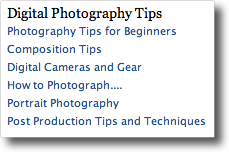
A "Sneeze Page" is a specialized internal landing page designed to "spray" readers deeper into a blog’s archives. Unlike a standard category page that lists posts in reverse chronological order, a Sneeze Page is curated. It organizes the "best of" or "most essential" content regarding a specific theme into a coherent, easily digestible format.
Data from major digital publishing platforms suggests that subscription rates from users who land on curated Sneeze Pages are significantly higher than those who land on standard homepages. These pages serve as a "proof of concept" for the blog. By presenting a comprehensive overview of a topic, the creator establishes immediate authority. For example, a photography blog might feature a Sneeze Page titled "The Essential Guide to Night Photography," linking to ten of its most impactful tutorials on the subject. This breadth of information signals to the reader that the creator is a deep well of knowledge, fostering the belief that future content will be equally substantial.
2. "Best Of" Sections and Visual Cues
Another critical component of creating anticipation is the use of "Best Of" or "Popular Posts" sections in high-visibility areas such as sidebars or the header of a homepage. These sections act as social proof and quality indicators.
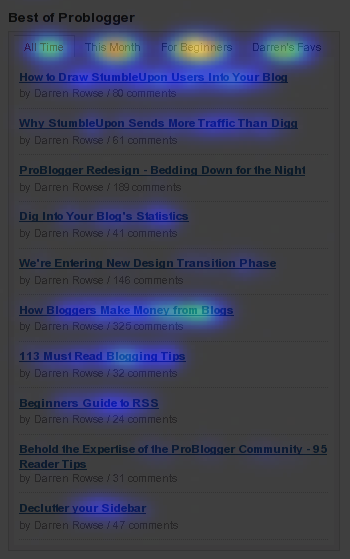
Heatmap analysis, conducted by tools such as CrazyEgg, has historically shown that these curated sections are among the most clicked elements on a webpage. This indicates a high level of user interest in "vetted" content. When a new visitor sees a list of posts that have garnered significant engagement or have been designated as "essential reading" by the author, they are more likely to perceive the blog as a premium resource. This perception of quality is the primary catalyst for the anticipation required to trigger a subscription.
3. Contextual Landing Pages and Search Intent
Modern content strategy utilizes plugins and scripts to detect a user’s origin. If a reader arrives via a search engine query for a specific term, a contextual landing page can display other relevant high-quality posts on that same topic. This creates a personalized experience that reinforces the blog’s value proposition.
By showing a reader that the blog has multiple deep-dives into their specific area of interest, the publisher increases the "perception of comprehensiveness." The reader concludes that because the blog has been a reliable source for their current query, it will continue to be a reliable source for future queries, thus justifying a subscription.
4. The Role of Internal Interlinking
Professional journalistic standards often emphasize the importance of internal linking, not just for Search Engine Optimization (SEO), but for narrative continuity. By regularly linking to previous high-quality work within new articles, creators keep their best assets in constant rotation. This "interweaving" of the old and the new creates a web of value that makes it difficult for a reader to leave without wanting more.
Chronology of Evolution: From RSS to the Subscriber Economy
The methods for building anticipation have evolved alongside the technology of the internet. In the mid-to-late 2000s, the primary goal was to increase RSS (Really Simple Syndication) feed subscribers. During this era, the "Sneeze Page" and "Best Of" sidebar were revolutionary tactics developed by pioneers like Darren Rowse of ProBlogger to manage the growing "noise" of the blogosphere.
By the 2010s, the focus shifted toward email marketing and social media follows. The "Sneeze Page" evolved into the "Lead Magnet" or "Start Here" page, which is now a standard feature on most professional service and content websites. Today, in the era of the "Passion Economy" and platforms like Substack, the principle remains identical: the archive is the engine that drives the subscription.
- Phase 1 (2004–2009): The rise of chronological blogging. Readers discovered content via blogrolls. The need for curation emerged as archives grew unmanageable.
- Phase 2 (2010–2015): The "Landing Page" era. Bloggers began using data-driven insights to create specific entry points for different audience segments.
- Phase 3 (2016–Present): The "Value-First" era. High-quality curation is no longer a luxury but a requirement to compete with algorithmic feeds on social media.
Supporting Data and Performance Metrics
The effectiveness of these anticipation-building strategies is supported by industry benchmarks in conversion rate optimization (CRO). Websites that implement curated "pathways" (such as Sneeze Pages or "Start Here" guides) typically see:
- A 15–25% decrease in bounce rate: Visitors stay longer because they are presented with a clear map of high-quality content.
- A 2x increase in pages per session: Curated links encourage deeper exploration than chronological lists.
- A 30% higher conversion rate for newsletters: Readers who consume three or more pieces of "pillar content" are statistically more likely to subscribe than those who read only the most recent post.
Furthermore, heatmap data consistently shows that "Popular Content" widgets in sidebars receive a "hot" rating, often outperforming the primary navigation menu in terms of click-through rate (CTR). This suggests that users are actively looking for the "best" a site has to offer rather than just the "newest."
Industry Reactions and Expert Analysis
Digital marketing experts have long maintained that "content is king," but modern analysis suggests that "context is queen." Content strategist Jay Baer has noted that the goal of modern marketing is to be "so useful that people would pay for it." Building anticipation is the process of proving that utility before the transaction (the subscription) takes place.
Critics of the chronological blog format argue that it punishes the creator’s best work by burying it under the weight of newer, potentially less significant updates. By adopting the "Sneeze Page" and "Best Of" models, creators are essentially fighting against the "decay" of their intellectual property. Industry consensus suggests that a blog’s value is cumulative; however, that value is only realized if the user can easily access the most impactful parts of the collection.
Broader Impact and Implications
The shift toward intentional anticipation-building has broader implications for the digital economy. It moves the relationship between creator and consumer away from a transactional, one-off interaction toward a long-term, brand-based relationship.
In a landscape where artificial intelligence and automated content generation are increasing the volume of available information, the "curated archive" becomes a mark of human authority and trustworthiness. Publishers who can successfully build a sense of anticipation are better positioned to monetize their audiences through memberships, digital products, and premium subscriptions.
The core takeaway for digital publishers is clear: do not leave the reader’s future interest to chance. By aggressively highlighting the quality of what has already been achieved, a creator provides the necessary evidence for the reader to believe in what is yet to come. This strategic use of the past is the most reliable way to secure a blog’s future in an increasingly crowded and distracted digital world. In the end, anticipation is not just a feeling; it is a measurable metric of brand health and audience loyalty.