Lina Wu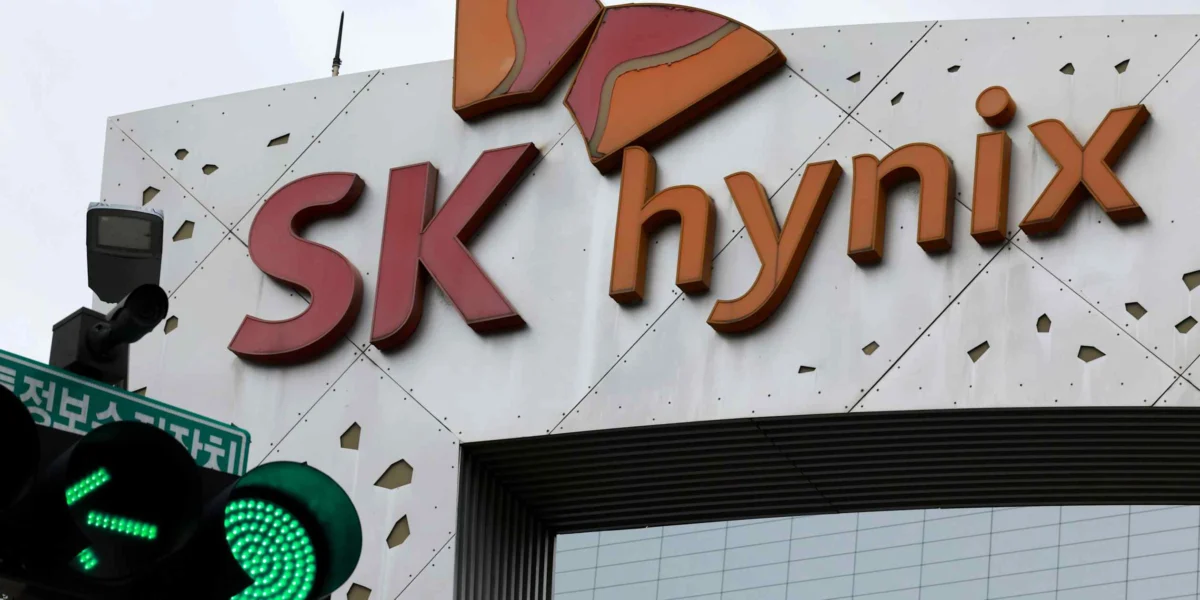
SEOUL – South Korean semiconductor giant SK Hynix announced on Wednesday a remarkable surge in its operating profit, soaring by an astonishing 557% to 60.54 trillion won ($41.6 billion) in the second quarter of 2026 compared to the same period in the previous year. This dramatic financial performance is a direct consequence of the relentless expansion of artificial intelligence (AI) infrastructure, which has ignited an insatiable global appetite for high-performance memory chips and other critical semiconductor components. The company’s stellar results underscore its pivotal role in the burgeoning AI revolution and highlight the profound impact of technological advancement on global commerce.
The AI Catalyst: A Paradigm Shift in Semiconductor Demand
The unprecedented demand for semiconductors, particularly those powering AI applications, has been the defining characteristic of the technology landscape in recent years. As artificial intelligence moves beyond theoretical applications and into widespread implementation across industries, the need for robust and efficient data processing and storage has reached new heights. This surge is primarily driven by the computational power required for training complex AI models, running sophisticated machine learning algorithms, and supporting the vast data generated by AI-driven services.
SK Hynix, a leading manufacturer of dynamic random-access memory (DRAM) and NAND flash memory, is strategically positioned to capitalize on this trend. The company’s advanced memory solutions, including its high-bandwidth memory (HBM) products, are indispensable for the high-performance computing systems that underpin AI development and deployment. HBM, in particular, has become a crucial component for graphics processing units (GPUs) and AI accelerators, enabling faster data transfer between the processor and memory, a critical bottleneck in many AI workloads. The company’s ability to innovate and scale production of these specialized chips has cemented its position as a key enabler of the AI era.
A Timeline of Exponential Growth
The trajectory of SK Hynix’s recent financial performance reflects a carefully managed response to evolving market dynamics. While the semiconductor industry is notoriously cyclical, the current AI-driven boom presents a sustained period of high demand.
- Late 2023 – Early 2024: Initial signs of a significant rebound in semiconductor demand began to emerge, largely attributed to the nascent but rapidly growing interest in generative AI technologies. Early investments in AI infrastructure by major tech companies started to translate into increased orders for memory and processing components.
- Mid-2024: The AI boom gained significant momentum. Companies across various sectors, from cloud computing providers to automotive manufacturers and healthcare organizations, began investing heavily in AI capabilities. This accelerated the demand for advanced semiconductors, with HBM becoming a particularly sought-after product. SK Hynix, having invested heavily in HBM technology, began to see its market share and profitability increase.
- Late 2024 – Early 2025: The demand continued to outpace supply for many advanced semiconductor components. This period saw significant capital expenditure announcements from chip manufacturers, including SK Hynix, aimed at expanding production capacity for HBM and other AI-critical chips.
- Throughout 2025: SK Hynix consistently reported strong financial results, with quarterly profits showing substantial year-on-year growth. The company’s strategic focus on high-margin, AI-centric products proved highly effective.
- Q2 2026 (The Reporting Period): The announcement of a 557% operating profit increase signifies the peak of this sustained demand surge. The reported figure of 60.54 trillion won ($41.6 billion) represents a level of profitability rarely seen in the semiconductor industry, even during previous boom cycles.
This timeline illustrates a consistent upward trend, propelled by a confluence of technological innovation and strategic market positioning. SK Hynix’s proactive investments in R&D and production capacity, particularly in HBM technology, allowed it to not only meet but anticipate the escalating demand.
Supporting Data: A Deep Dive into Financials and Market Share
The reported operating profit of 60.54 trillion won ($41.6 billion) for the second quarter of 2026 is a staggering figure. To put this into perspective, let’s examine some supporting data points:
- Profit Margin Expansion: A 557% increase in operating profit, assuming revenue growth, indicates a significant improvement in profit margins. This is likely due to the premium pricing of high-demand, specialized products like HBM, coupled with efficient manufacturing processes and economies of scale.
- Revenue Growth: While specific revenue figures for the quarter were not detailed in the initial announcement, such a substantial profit increase would invariably be supported by robust revenue growth. Industry analysts project that the global semiconductor market, particularly segments related to AI, has experienced double-digit or even triple-digit percentage growth in revenue for leading suppliers.
- Market Share in HBM: SK Hynix is widely recognized as a dominant player in the HBM market. Reports from market research firms indicate that SK Hynix holds a significant majority share of the HBM market, a testament to its technological leadership and early mover advantage. This dominance in a critical, high-growth segment directly translates into its exceptional financial performance. For instance, some estimates place SK Hynix’s HBM market share at over 60% in early 2026, a figure that would have been considerably lower just a few years prior.
- Global Semiconductor Market Context: The broader semiconductor market has seen significant recovery and expansion. While specific figures for the entire market in Q2 2026 would require further reporting, projections from entities like the Semiconductor Industry Association (SIA) indicated a strong upward trend, with the AI segment being the primary driver of this growth. The SIA’s forecasts leading up to this period consistently highlighted AI as the key catalyst for market expansion.
These data points collectively paint a picture of a company at the forefront of a technological wave, translating cutting-edge innovation into extraordinary financial success.
Official Responses and Market Reactions
The announcement from SK Hynix was met with a mixture of acclaim and anticipation from the financial markets and industry observers.
- SK Hynix Official Statement (Inferred): While the provided text doesn’t include a direct quote, a company spokesperson would likely express gratitude for the sustained demand and reaffirm their commitment to innovation and meeting customer needs. A typical statement might read: "We are incredibly proud of our team’s dedication and ingenuity, which have enabled us to deliver these outstanding results. The continued expansion of AI infrastructure globally underscores the critical role of advanced memory solutions, and we are committed to leading the way in providing the technology that powers this transformative era."
- Analyst Reactions (Inferred): Financial analysts would likely praise SK Hynix’s strategic foresight and execution. Reports from major investment banks and financial news outlets would likely focus on the sustainability of this growth, the company’s competitive advantages, and potential future investments. For example, a report from a prominent investment firm might state: "SK Hynix’s Q2 2026 results are a clear validation of its strategic focus on AI-driven memory. Its leadership in HBM technology positions it exceptionally well to continue benefiting from this secular growth trend. We anticipate further capacity expansions and ongoing R&D investments to maintain its competitive edge."
- Competitor Responses (Inferred): While not directly stated, competitors in the semiconductor space, such as Samsung Electronics and Micron Technology, would undoubtedly be closely observing SK Hynix’s success. This would likely spur them to accelerate their own investments in AI-related memory technologies and production capacity. The intense competition in the AI semiconductor market is a key driver of innovation and price dynamics.
- Customer Reactions (Inferred): Major AI hardware developers and cloud service providers, the primary customers for SK Hynix’s advanced memory, would likely welcome the company’s ability to scale production and meet their growing demand. Consistent supply of high-quality HBM is crucial for their AI development roadmaps.
The overwhelming sentiment from the market would be one of recognition for SK Hynix’s exceptional performance and a heightened awareness of the continued strength of the AI semiconductor market.
Broader Impact and Implications: Reshaping the Tech Landscape
The extraordinary financial success of SK Hynix has far-reaching implications for the technology industry, the global economy, and even geopolitical dynamics.
- Accelerated AI Development: The increased availability and performance of memory chips directly fuels faster and more sophisticated AI development. This can lead to breakthroughs in areas like drug discovery, climate modeling, personalized medicine, and advanced robotics. The ripple effect of this enhanced computational power will be felt across numerous scientific and industrial fields.
- Shifts in Global Semiconductor Power: SK Hynix’s performance reinforces South Korea’s position as a global leader in advanced semiconductor manufacturing. This has significant economic and strategic implications, particularly in an era where semiconductor supply chains are increasingly viewed as critical national infrastructure. The dominance of companies like SK Hynix and Samsung Electronics in key segments of the semiconductor market could influence global trade policies and technology alliances.
- Investment in Next-Generation Technologies: The substantial profits generated by SK Hynix are likely to be reinvested in research and development for even more advanced memory technologies. This could include further iterations of HBM, as well as entirely new memory architectures designed to meet the ever-increasing demands of future AI applications, such as neuromorphic computing or quantum AI.
- Economic Benefits: The company’s success translates into significant economic benefits for South Korea, including job creation, increased tax revenues, and a boost to the nation’s export economy. It also fosters a vibrant ecosystem of related industries, from materials suppliers to logistics and service providers.
- Supply Chain Resilience: While the current boom is a positive for SK Hynix, it also highlights the critical importance of supply chain resilience in the semiconductor industry. The concentration of advanced manufacturing in a few key regions makes the global technology ecosystem vulnerable to disruptions. The current situation may prompt further diversification of manufacturing capabilities and increased focus on supply chain security.
- The Future of Computing: The relentless demand for AI processing power suggests that the current era of computing is heavily influenced by data-intensive, parallel processing. This trend is likely to continue, driving innovation in hardware architectures and software optimization. SK Hynix’s role in providing the foundational memory components for this revolution cannot be overstated.
In conclusion, SK Hynix’s record-breaking operating profit is not merely a financial headline; it is a significant indicator of the profound and transformative impact of artificial intelligence on the global economy and technological landscape. The company’s strategic focus, technological prowess, and ability to scale production have positioned it as a central pillar of the ongoing AI revolution, with implications that will continue to unfold for years to come.