Lina Wu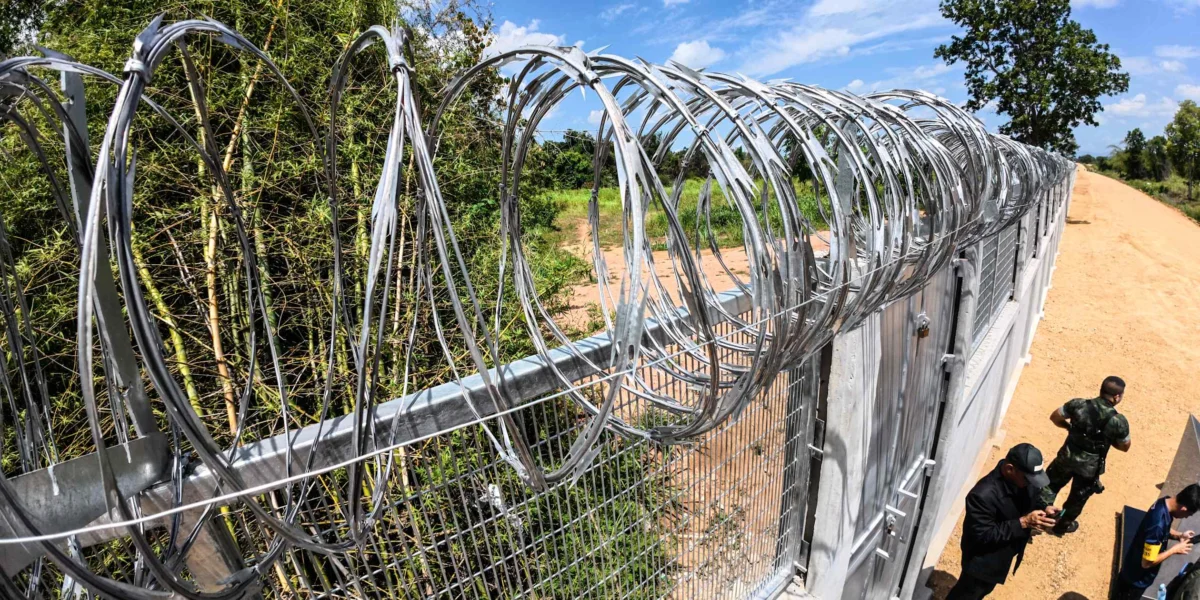
CHANTHABURI, Thailand — The guns have fallen silent along the Thai-Cambodian border for seven months, a fragile lull following a year of renewed conflict. However, the absence of gunfire does not signal an impending era of lasting peace. Instead, Thailand is visibly preparing for a protracted standoff, erecting a fortified wall topped with barbed wire along significant stretches of the contested frontier. This assertive construction project has ignited apprehension in Phnom Penh, with Cambodian officials voicing concerns that Thailand may be pursuing territorial ambitions. The prospect of renewed negotiations to resolve the long-standing border dispute appears distant, leaving communities along the frontier grappling with the severe economic consequences of closed crossings and disrupted livelihoods.
A History of Contention: The Roots of the Thai-Cambodian Border Dispute
The current tensions are a manifestation of a complex and deeply rooted territorial dispute that has simmered for decades between Thailand and Cambodia. The precise demarcation of the border, particularly in the region surrounding the Preah Vihear Temple, a UNESCO World Heritage site of immense historical and cultural significance, has been a recurring flashpoint. The temple itself, perched atop a cliff overlooking the Cambodian plains, has been a focal point of national pride and historical claims for both nations.
The origins of the dispute can be traced back to colonial-era maps and agreements, which subsequent governments on both sides have interpreted differently. In 1962, the International Court of Justice (ICJ) ruled in favor of Cambodia regarding the sovereignty of the area immediately surrounding Preah Vihear, a decision that Thailand officially accepted but has continued to contest in practical terms, especially concerning adjacent territories.
The dispute re-ignited with significant violence in 2008, leading to several deadly clashes. These confrontations often involved artillery fire, small arms engagements, and troop movements, resulting in casualties and displacement of civilian populations. The intermittent flare-ups have been fueled by nationalist sentiments, domestic political considerations in both countries, and the perceived strategic importance of the border region.
Escalation and Intervention: The Events of the Past Year
The most recent period of intense fighting erupted approximately one year ago, marking a significant escalation of the long-standing dispute. The clashes were concentrated in areas near the Preah Vihear Temple and other disputed territories, characterized by prolonged exchanges of artillery fire and ground skirmishes. The conflict saw both armies deploy substantial forces to the border, raising international alarm about a wider regional destabilization.
The fighting caused considerable destruction and loss of life. While precise figures are often difficult to verify independently, reports indicated dozens of fatalities on both sides, including both military personnel and civilians. Thousands of residents were displaced from their homes, seeking refuge in more secure areas away from the front lines.
The international community, including the Association of Southeast Asian Nations (ASEAN) and the United Nations, urged both countries to exercise restraint and pursue diplomatic solutions. However, mediation efforts proved challenging, with both sides often adhering to firm negotiating stances. The conflict eventually subsided, not through a comprehensive peace agreement, but through a gradual de-escalation, reportedly influenced by regional pressure and a mutual desire to avoid further casualties and economic damage.
Thailand’s Fortification: A Symbol of Entrenchment
The construction of a fortified wall along parts of the Thai-Cambodian border, as observed by Supreme Military Commander Gen. Ukrit Boontanon, represents a significant shift in Thailand’s approach. Described as a striking edifice topped with barbed wire, the wall is intended to enhance security and deter any further incursions. Gen. Boontanon articulated the rationale behind this measure, stating, "The safety and security of our people and the protection of Thailand’s sovereignty remain our highest priority."
This construction project is not merely a defensive measure; it is also a potent symbol of Thailand’s determination to assert its territorial claims and to create a more defined and controlled border. The scale of the fortification suggests a long-term strategy, indicating that Bangkok anticipates a prolonged period of unresolved dispute. The use of barbed wire and reinforced structures underscores a commitment to preventing unauthorized crossings and potential provocations.
Cambodian Concerns: Fears of Land Grabbing
The Thai fortification efforts have not gone unnoticed in Phnom Penh. Cambodian officials have expressed significant disquiet, interpreting the construction as a potential prelude to land grabbing. The fear is that Thailand, by physically altering the border landscape and creating a more entrenched presence, might be attempting to unilaterally solidify its territorial claims.
"This construction is unilateral and does not reflect any agreed-upon border demarcation," stated a Cambodian foreign ministry official who requested anonymity. "We are concerned that this action could prejudice ongoing efforts to find a peaceful resolution and may lead to further misunderstandings and tensions."
Cambodia has consistently advocated for the full implementation of the 1962 ICJ ruling and has emphasized the importance of bilateral negotiations based on established international legal frameworks. The physical entrenchment by Thailand is seen as a potential impediment to such a process, creating a fait accompli on the ground that would be difficult to reverse.
The Economic Toll: Livelihoods on the Line
Beyond the geopolitical implications, the ongoing dispute and border closures have inflicted severe economic hardship on the communities living in the frontier regions of both Thailand and Cambodia. For generations, these border areas have been hubs of cross-border trade, with local economies heavily reliant on the movement of goods and people.
The closure of border crossings, a direct consequence of the security concerns and diplomatic tensions, has brought much of this economic activity to a standstill. Small businesses, vendors, farmers, and daily wage laborers who depended on cross-border commerce are now struggling to make ends meet.
In Chanthaburi, Thailand, a province known for its agricultural exports, border closures have disrupted the flow of produce to Cambodian markets. Similarly, in Cambodia, border towns that thrived on trade with Thailand are experiencing a sharp downturn. "We used to sell our vegetables and fruits to Thai traders every day," said a Cambodian farmer near the border, who identified herself only as Srey. "Now, the gates are closed, and our goods are rotting. We don’t know how we will feed our families."
Data from local chambers of commerce in border provinces indicate a significant decline in trade volumes. While exact figures are still being compiled, anecdotal evidence suggests a drop of over 50% in cross-border commerce in some affected areas since the escalation of tensions. This economic strain adds another layer of complexity to the dispute, potentially exacerbating social unrest and creating further challenges for long-term stability.
The Diplomatic Stalemate: A Future Uncertain
Despite the military posturing and the construction of fortifications, there is currently no clear indication that negotiations aimed at a permanent settlement of the border dispute will resume anytime soon. The positions of both nations remain entrenched, with a fundamental disagreement over the interpretation of historical treaties and the precise alignment of the border.
Thailand’s emphasis on national security and territorial integrity, as demonstrated by its fortification efforts, is met by Cambodia’s insistence on adhering to international legal rulings and pursuing a resolution through established diplomatic channels. This divergence in approach creates a diplomatic stalemate, where progress is hampered by mutual distrust and differing priorities.
The role of regional organizations like ASEAN remains critical in facilitating dialogue. However, ASEAN’s effectiveness is often contingent on the willingness of member states to engage constructively and to cede some ground for the sake of regional harmony. Without a renewed commitment from both Bangkok and Phnom Penh to de-escalate tensions and engage in good-faith negotiations, the prospect of a lasting resolution remains elusive.
Broader Implications for Regional Stability
The unresolved Thai-Cambodian border dispute has broader implications for regional stability in Southeast Asia. While the immediate conflict has subsided, the underlying tensions and the physical manifestations of entrenchment, like the fortified border wall, contribute to an atmosphere of unease.
A protracted dispute can deter foreign investment in the border regions, hindering economic development and exacerbating poverty. Furthermore, it can serve as a rallying point for nationalist sentiments, potentially fueling future confrontations and undermining regional integration efforts. The lack of a definitive resolution also creates a vacuum that could be exploited by non-state actors or lead to increased militarization, thereby raising the risk of unintended escalation.
The international community continues to monitor the situation closely, urging both sides to prioritize dialogue and to seek a peaceful and mutually acceptable solution. The path forward will likely require significant diplomatic effort, a willingness to compromise, and a renewed focus on the shared interests of both nations and the wider region in achieving lasting peace and prosperity. Until then, the imposing wall along the Thai-Cambodian border stands as a stark reminder of the enduring challenges to stability in this corner of Southeast Asia.