Lina Wu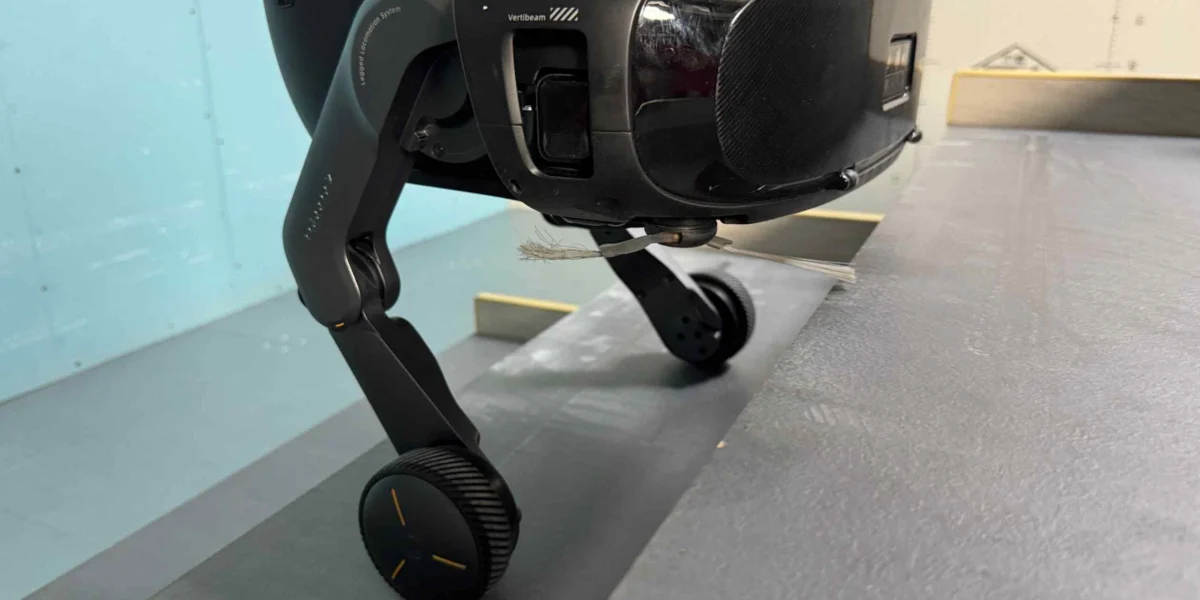
DALIAN, China — Chinese manufacturers of household cleaning robots are solidifying their grip on the global market, with the nation’s top five players now commanding an impressive 70% share. This ascendance is marked by a strategic shift from price competition to a fervent pursuit of groundbreaking features, signaling a maturation of the industry and a testament to China’s evolving manufacturing prowess. The once-nascent sector, which has seen exponential growth in the last decade, is now characterized by a relentless drive for innovation, pushing the boundaries of what consumers can expect from automated home assistance.
The current market landscape, dominated by companies like Roborock, Ecovacs, Dreame, and others, reflects a significant leap from the early days of robotic vacuums. Initially, the market was characterized by relatively basic models offering simple floor cleaning. However, as consumer demand increased and technological advancements accelerated, a fierce competition emerged. For a period, price wars were a dominant strategy, allowing Chinese manufacturers to quickly capture market share by offering more affordable alternatives to established Western brands. This period, roughly from the mid-2010s to the early 2020s, saw a rapid proliferation of brands and models, making robotic cleaning more accessible to a wider demographic.
However, the narrative is now shifting. The increasing market concentration among a few major Chinese players indicates a consolidation phase, where companies are investing heavily in research and development to differentiate themselves. This strategy is evident in the ambitious projects currently underway, such as Roborock’s "Saros Rover," a prototype cleaning robot designed to ascend stairs. This development, if successful, would represent a monumental leap in home robotics, addressing a significant limitation of current models and potentially opening up entirely new market segments. The ability to navigate multi-story homes autonomously would redefine convenience and independence for many households, particularly for the elderly or those with mobility challenges.
The Rise of Intelligent Automation: From Vacuuming to Comprehensive Home Care
The journey of Chinese cleaning robot manufacturers to global leadership is a compelling case study in rapid industrial development and strategic market penetration. In the early 2010s, the market was largely dominated by a few Western companies. However, China’s robust manufacturing infrastructure, coupled with a growing domestic market and a government push for technological innovation, created fertile ground for local players. Companies like Ecovacs Robotics, founded in 1998, began to emerge, initially focusing on OEM production before launching their own brands. Roborock, established in 2014 with backing from Xiaomi, quickly followed, distinguishing itself through advanced navigation and cleaning technologies.
The timeline of this dominance can be broadly segmented:
- Early 2010s: Nascent market, dominated by Western brands, basic vacuuming functionalities.
- Mid-2010s to Early 2020s: Rapid market expansion driven by Chinese manufacturers offering cost-effective solutions. Price wars and feature parity become common.
- Early 2020s onwards: Consolidation and innovation. Major Chinese players begin to differentiate through advanced features, AI integration, and unique functionalities. Market share becomes concentrated among the top players.
The current focus on unique features is not merely about adding bells and whistles; it’s about addressing practical consumer pain points and expanding the utility of these devices. Beyond stair-climbing capabilities, innovations are emerging in areas such as:
- Advanced Navigation and Mapping: LiDAR and vSLAM (Visual Simultaneous Localization and Mapping) technologies have become standard, enabling robots to create detailed maps of homes, avoid obstacles with greater precision, and plan efficient cleaning routes.
- Self-Emptying and Self-Washing Docks: Many premium models now come with docking stations that can automatically empty the robot’s dustbin, refill its water tank for mopping, and even wash and dry the mop pads. This significantly reduces user intervention.
- AI-Powered Object Recognition: Robots are increasingly equipped with AI to identify and avoid specific obstacles like pet waste, cables, and shoes, preventing common cleaning mishaps.
- Multi-functional Cleaning: The integration of vacuuming and mopping capabilities in a single unit, often with intelligent water flow control and pressure adjustment, has become a significant selling point.
- Voice Control and Smart Home Integration: Seamless integration with voice assistants like Google Assistant and Amazon Alexa, and compatibility with broader smart home ecosystems, enhance user convenience.
Supporting Data: Market Share and Growth Projections
The figures supporting the dominance of Chinese manufacturers are stark. According to various market research reports from firms like Statista, Mordor Intelligence, and the International Data Corporation (IDC), Chinese brands collectively hold over 70% of the global market share for robot vacuums. This figure has been steadily increasing over the past five years.
For instance, reports from 2023 and early 2024 indicated that within the global robot vacuum market, estimated to be worth upwards of $7 billion and projected to grow at a compound annual growth rate (CAGR) of 15-20% over the next five years, Chinese companies accounted for the vast majority of shipments and revenue. The top five Chinese brands – Roborock, Ecovacs, Dreame, Narwal, and Xiaomi (through its ecosystem products) – are consistently ranked among the top global vendors, often holding the top four or five positions.
This growth is fueled by several factors:
- Affordability and Value: While innovation is now the differentiator, Chinese manufacturers still offer a strong value proposition, delivering advanced features at competitive price points compared to some Western counterparts.
- Rapid Product Development Cycles: The agile nature of Chinese manufacturing allows for quicker iteration and development of new models, responding rapidly to market trends and consumer feedback.
- Strong Domestic Market: China’s vast and tech-savvy population provides a significant domestic market that serves as a testing ground and launchpad for new products, enabling economies of scale.
- Government Support: Policies encouraging technological innovation and advanced manufacturing have provided a conducive environment for companies to invest in R&D and expand globally.
The "Saros Rover" and the Future of Stair-Climbing Robotics
The development of Roborock’s "Saros Rover" represents a pivotal moment, moving beyond incremental improvements to a genuinely disruptive capability. While the company has not released specific timelines for market availability or detailed technical specifications, the very announcement of such a project underscores the ambitious trajectory of Chinese robotics innovation. This development has the potential to address a significant unmet need in the market. Current stair-climbing robots are either conceptual or extremely rudimentary, often relying on complex external mechanisms or manual assistance. A truly autonomous, capable stair-climbing cleaning robot would be a game-changer.
The implications of such technology are far-reaching:
- Enhanced Accessibility: Individuals with limited mobility, the elderly, and those in multi-level homes would gain significantly increased independence and convenience.
- New Market Segments: This capability could open up markets beyond residential homes, potentially including small offices, retail spaces, and assisted living facilities.
- Increased Robot Utility: The home robot would transition from a floor-cleaning device to a more versatile home assistant, capable of tackling a broader range of tasks across different levels of a dwelling.
Industry Reactions and Expert Analysis
While direct public statements from competing companies regarding specific innovations like the Saros Rover are rare, the general sentiment within the industry is one of intense competition and a shared focus on technological advancement. Analysts observing the sector have highlighted the strategic importance of such breakthroughs.
"The Chinese cleaning robot market has matured incredibly rapidly," commented Ms. Li Wei, a senior analyst at TechInsight Consulting. "What we’re seeing is a shift from ‘good enough’ to ‘truly innovative.’ Companies are no longer just competing on price; they are vying for technological leadership. Innovations like stair-climbing capabilities, if realized effectively, could redefine the entire home robotics category and create significant competitive advantages."
Mr. Kenji Tanaka, a robotics engineer based in Tokyo, noted the engineering challenges involved. "Developing a robust and safe stair-climbing mechanism for a consumer robot is a complex engineering feat. It requires sophisticated balance control, precise sensor integration, and a durable chassis. The fact that a Chinese company is leading this charge speaks volumes about their investment in advanced robotics engineering talent and R&D."
The broader implications of this trend extend beyond the cleaning robot market. The success of Chinese manufacturers in this sector is indicative of China’s growing strength in other advanced technology areas, including artificial intelligence, battery technology, and advanced sensor systems. This positions Chinese companies not just as manufacturers but as innovators and global technology leaders.
The Broader Impact and Future Outlook
The current dominance of Chinese manufacturers in the cleaning robot sector is more than just a market share statistic; it signifies a fundamental shift in global manufacturing and innovation paradigms. The relentless pursuit of advanced features and disruptive technologies by companies like Roborock, Ecovacs, and Dreame is setting new benchmarks for the entire home appliance industry.
The future outlook for this sector remains exceptionally bright, with continued growth anticipated. As technology becomes more sophisticated and affordable, the penetration of cleaning robots into households worldwide is expected to accelerate. Furthermore, the innovation pipeline suggests that these devices will evolve from single-task robots to more integrated home management systems.
The focus on features like stair-climbing, advanced AI, and comprehensive home automation points towards a future where robots are not just cleaning tools but indispensable companions in managing our living spaces. The leadership demonstrated by Chinese manufacturers in this evolution is a clear indication of their pivotal role in shaping the future of smart homes and automated living. Their ability to combine manufacturing scale with cutting-edge R&D positions them to continue leading this transformative technological wave for years to come. The race for the smartest, most capable, and ultimately, most indispensable home robot is well and truly on, with China at the forefront.