Ena Muazin
FRANKFURT – Following a temporary funding freeze from July 9th to July 20th, German homeowners can once again submit applications for heating system replacements to the KfW development bank. However, the program has been significantly revised, with a notable shift towards greater social equity and a reduction in overall government funding for the transition to climate-friendly heating solutions, such as heat pumps. The changes, driven by budgetary constraints and a desire for more targeted support, will impact various income groups differently, potentially benefiting lower-income households while reducing subsidies for higher earners.
The German federal government’s decision to temporarily halt applications for its popular heating subsidy program aimed at accelerating the transition to renewable energy sources. This pause, which lasted for just over two weeks, was implemented to allow for the recalibration of the funding guidelines. The program, managed by the KfW, has been a cornerstone of Germany’s efforts to decarbonize its building sector, a critical component of the nation’s climate goals. The initial enthusiasm for the program, particularly for heat pumps, led to an overwhelming number of applications, straining the allocated budget from the Climate and Transformation Fund (KTF), a special federal fund established to finance climate protection measures. The government has cited a need for fiscal consolidation as a primary reason for adjusting the subsidy levels, seeking to ensure the long-term sustainability of the program while also making it more equitable.
The revised guidelines, effective from July 21st, introduce a tiered system of support based on household income. This approach aims to direct more substantial financial assistance towards those who might otherwise struggle with the upfront costs of upgrading their heating systems. The previous iteration of the program, while broadly encouraging, was criticized by some for not adequately addressing the financial burdens faced by lower and middle-income families. The government’s objective is to balance the urgent need for climate action with social fairness, ensuring that the transition to greener heating solutions is not an insurmountable financial hurdle for a significant portion of the population.
Evolution of the German Heating Subsidy Program: A Chronological Overview
The impetus for the current subsidy program stems from Germany’s ambitious climate targets, particularly the commitment to achieving climate neutrality by 2045. The building sector is a significant contributor to greenhouse gas emissions, with heating systems being a major source of energy consumption and carbon output. In response, the German government introduced a series of measures to incentivize the replacement of outdated, fossil fuel-based heating systems with more sustainable alternatives.

Initially, the focus was on promoting energy efficiency and the adoption of renewable energy sources. The introduction of the Building Energy Act (Gebäudeenergiegesetz – GEG), which mandated a minimum share of renewable energy for new heating installations, marked a significant policy shift. The GEG, in its original form under the previous coalition government, stipulated that from January 1, 2024, 65% of newly installed heating systems must be powered by renewable energy sources. This created a surge in demand for technologies like heat pumps and solar thermal systems.
However, the implementation of the GEG and the associated subsidy programs proved to be more complex than anticipated. The sheer volume of applications for grants, managed by the KfW, led to the program’s temporary suspension. This pause was not merely a bureaucratic hiccup but a strategic decision to reassess and refine the program’s structure in light of budgetary realities and the evolving economic landscape. The federal government, facing increased expenditure across various sectors, sought to optimize the allocation of funds within the KTF.
The period between the subsidy stop and its reopening saw intense deliberation and negotiation among government stakeholders, including the Ministry for Economic Affairs and Climate Action and the Ministry of Finance. The objective was to create a framework that was both financially responsible and socially just. The outcome of these discussions is the revised subsidy program, which seeks to achieve a delicate balance between climate protection imperatives and the economic capacity of German households.
Key Changes to the Heating Subsidy Program: A Detailed Analysis
The revised funding guidelines introduce several significant changes aimed at redistributing support and optimizing the use of public funds. One of the most prominent adjustments is the reduction in the maximum eligible costs for subsidies. Previously, the cap stood at €30,000. This has now been lowered to €28,000 for the first residential unit, effective from July 21st, 2024. Furthermore, this cap will be incrementally reduced by an additional €750 every six months starting from February 2027. This phased reduction is designed to encourage prompt action while also accounting for potential future decreases in the cost of heating technologies.
The "Climate Speed Bonus," which offered an additional incentive for early adopters of renewable heating systems, is also being phased out. While this bonus was instrumental in accelerating the initial uptake, its gradual removal is part of the broader strategy to manage the overall budget. However, other technology-specific bonuses, such as those for particularly efficient heat pumps or for replacing old oil or gas boilers, remain in place and can be combined with the new income-dependent bonuses.
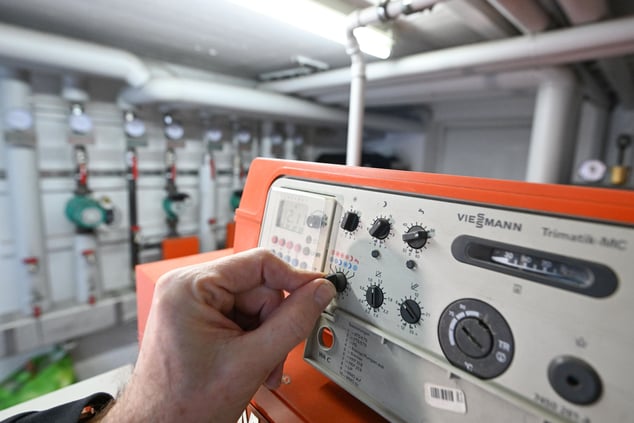
Perhaps the most impactful change is the introduction of income-based bonuses. The previous system offered a flat percentage of subsidy, with some variations. The new system introduces a sliding scale, with higher subsidies for lower-income households and progressively lower subsidies for those with higher incomes.
Summary of Income-Based Bonuses:
- Annual Household Income up to €30,000: These households are designated as the primary beneficiaries of the reform. Self-occupying homeowners in this bracket will see their income bonus increase from the previous 30% to 40%. When combined with other eligible bonuses, such as the replacement of an old fossil fuel heating system or the installation of a highly efficient heat pump, total subsidy rates can reach up to 80% of the eligible costs. This represents a significant increase in financial support for those who may have found the transition previously unaffordable.
- Annual Household Income between €30,000 and €40,000: Households in this income bracket will continue to receive a 30% income bonus. While this is lower than the bonus for the lowest income group, it still offers substantially higher support compared to higher-earning households and likely represents an increase for many compared to the previous flat-rate system.
- Annual Household Income between €40,000 and €50,000: For households in this category, the income bonus is reduced to 10%. While this still provides some additional support, it is a significant decrease from the previous levels and highlights the government’s intention to prioritize lower-income groups.
- Annual Household Income above €50,000: Households earning more than €50,000 annually will no longer receive an income bonus. They will primarily be eligible for the base subsidy rate of 30%, plus any applicable technology-specific bonuses (e.g., speed bonus, efficiency bonus). For these households, the overall subsidy amount will likely be considerably lower than under the previous program, potentially by several thousand euros, especially for larger renovation projects.
Furthermore, a new child bonus has been introduced to support families. Households with at least one minor child will benefit from a one-time deduction of €10,000 from their taxable income when calculating eligibility for the subsidy. This aims to further alleviate the financial burden on families undertaking home improvements.
The revised guidelines also introduce an incentive for European production. Starting in 2027, a bonus of up to 15% will be offered for heating systems manufactured within the European Union. Concurrently, the base subsidy rate for systems from non-EU production will be reduced. This measure is intended to bolster domestic and European manufacturing industries and reduce reliance on external supply chains.
Who Benefits and Who Faces Challenges Under the New Scheme?
The revised subsidy structure clearly delineates winners and losers among German homeowners. The most significant beneficiaries are undoubtedly lower-income households. For those with annual incomes below €30,000, the enhanced income bonus, combined with other potential incentives, can dramatically reduce the out-of-pocket expenses for installing a new, climate-friendly heating system. This could unlock the possibility of modernization for many who previously viewed such an investment as financially out of reach. The added benefit for families with children further underscores the program’s focus on social equity.

Households in the €30,000 to €40,000 income bracket also stand to benefit, retaining a substantial income bonus that, coupled with other subsidies, should still provide significant financial relief. This group represents a crucial segment of the population for whom the transition to renewable heating is made more accessible.
However, the picture is less favorable for higher-income households. Those earning between €40,000 and €50,000 will see their income bonus significantly reduced to 10%. For homeowners with incomes exceeding €50,000, the complete removal of the income bonus means that the overall subsidy they receive will be substantially lower than before. This reduction, combined with the decreased cap on eligible costs, could mean thousands of euros less in support. This group, often comprising owners of larger properties or those undertaking more extensive renovations, may find the financial impact of the subsidy changes more pronounced.
The declining cap on eligible investment costs also poses a challenge, particularly for owners of larger homes or those undertaking complex heating modernization projects. Even with a favorable percentage subsidy, the reduced base amount for calculation means a smaller absolute grant. This could disproportionately affect those whose properties require more substantial and therefore more expensive heating system upgrades.
Background Context: Germany’s Climate Policy and Building Sector Challenges
Germany’s commitment to climate neutrality by 2045, as enshrined in the Climate Protection Act, necessitates a rapid decarbonization of all sectors, with buildings being a critical focus area. The building sector accounts for approximately 35% of Germany’s total final energy consumption and a significant portion of its greenhouse gas emissions, largely due to heating. The previous government’s ambitious Building Energy Act (GEG), which aimed to mandate a phased transition to renewable heating, faced considerable public debate and resistance, particularly concerning the perceived affordability and practicality of heat pumps for all homeowners.
The GEG, in its initial form, stipulated that all new heating systems installed after January 1, 2024, must operate on at least 65% renewable energy. This was a bold step, but its implementation was complicated by concerns about the availability of qualified installers, the suitability of existing building stock for heat pumps, and the overall cost burden on homeowners. The subsequent subsidy program, managed by the KfW, was designed to cushion this transition financially.

The temporary freeze on applications for the heating subsidy program highlights the delicate balancing act the German government faces. On one hand, there is an urgent need to accelerate climate action and meet emission reduction targets. On the other hand, the government must consider the economic realities for its citizens and ensure that climate policies do not disproportionately burden certain segments of society. The revisions to the subsidy program reflect an attempt to reconcile these competing priorities, shifting towards a more socially targeted approach.
The parallel legislative process involving the revised Building Energy Act further complicates the landscape. The current coalition government has made significant adjustments to the original GEG, including allowing for the continued installation of gas and oil heating systems under certain conditions, such as a gradual increase in the use of CO2-neutral fuels. This pragmatic approach aims to provide a more flexible pathway for homeowners, acknowledging that a one-size-fits-all solution may not be feasible.
Official Responses and Industry Reactions
The announcement of the revised subsidy program has elicited varied responses from different stakeholders. The federal government, through the Ministry for Economic Affairs and Climate Action, has defended the changes as a necessary step towards a more equitable and sustainable funding model. A spokesperson for the ministry emphasized that the goal is to ensure that the transition to climate-friendly heating is accessible to all segments of society, particularly those with lower incomes. "We are making the funding more targeted and fair," stated the spokesperson, adding that the increased support for lower-income households would drive the modernization of heating systems across the country.
Industry associations, such as the German Association of the Heating Industry (BDH) and the Central Federation of the German Plumbing and Heating Trade (ZVSHK), have expressed mixed reactions. While acknowledging the importance of government support for the heating transition, they have raised concerns about the complexity of the new rules and the potential impact on demand, particularly for higher-income households. "The increased complexity of the funding landscape requires clear communication and accessible guidance for homeowners," noted a representative from BDH. Installers have also voiced concerns about the temporary funding freeze, which caused significant disruption and uncertainty for both businesses and their customers. Some installation companies reported receiving numerous inquiries from confused homeowners during the freeze period, highlighting the need for clear and consistent communication from the government.
Consumer protection agencies and energy advisory services have welcomed the move towards greater social targeting but have also stressed the need for comprehensive information and guidance. "Homeowners need clear, understandable information to navigate these new, complex subsidy rules," commented an expert from a consumer advocacy group. They have urged the government to ensure that adequate advisory services are available to help individuals make informed decisions about their heating system upgrades.

Broader Impact and Implications for Germany’s Climate Goals
The revised heating subsidy program has significant implications for Germany’s broader climate policy and its transition to a low-carbon economy. By making the subsidies more income-dependent, the government aims to accelerate the adoption of renewable heating technologies, particularly among a demographic that might have been hesitant due to cost concerns. This targeted approach could lead to a more equitable distribution of the benefits of climate action, preventing the perception that environmental policies only benefit the affluent.
However, the reduction in overall funding and the decrease in subsidies for higher-income households could potentially slow down the pace of modernization for a segment of the population that often owns larger, more energy-intensive properties. This could pose a challenge to meeting ambitious emission reduction targets for the building sector. The government’s strategy relies on the assumption that increased accessibility for lower-income groups will compensate for any potential slowdowns in other segments, and that the phased reduction in eligible costs will still incentivize investment.
The emphasis on European production also reflects a broader geopolitical and economic strategy. By encouraging the use of domestically and European-manufactured heating systems, Germany aims to strengthen its industrial base, create jobs, and reduce its dependence on non-EU suppliers. This aligns with a growing trend among nations to prioritize regional supply chains in the face of global economic uncertainties and geopolitical tensions.
The complexity of the new rules, as highlighted by energy advisors, presents a challenge. For the program to be successful, clear communication and readily available support mechanisms will be crucial. Without easily accessible information and guidance, homeowners might be deterred from applying, undermining the program’s objectives. The government’s commitment to ensuring that homeowners can access reliable advice and make informed decisions will be paramount in the coming months and years.
Ultimately, the success of Germany’s revised heating subsidy program will depend on its ability to effectively balance climate imperatives with social equity and economic realities. The coming months will be critical in assessing whether the new framework stimulates the necessary pace of change across all income levels and contributes effectively to Germany’s ambitious climate goals. The shift towards a more targeted approach, while complex, represents a significant evolution in the country’s strategy to decarbonize its building stock and build a more sustainable future.