Clara Shinta
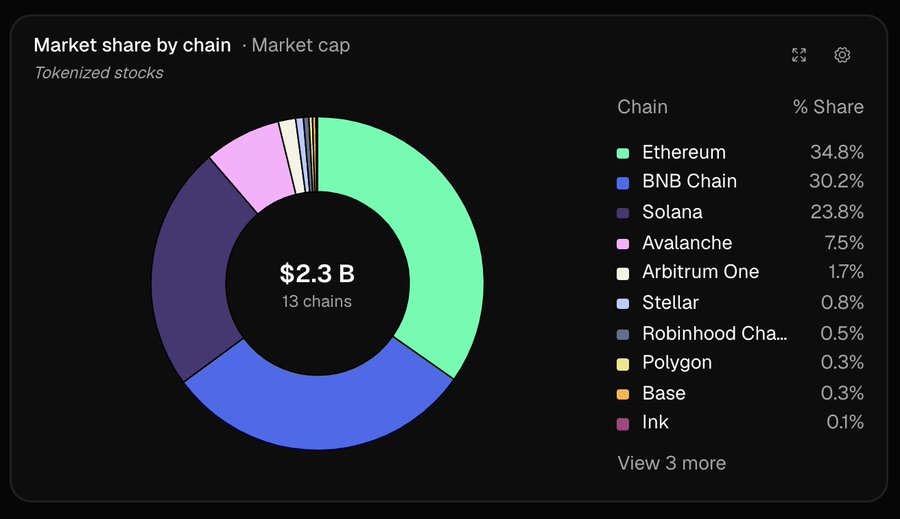
The global market capitalization for tokenized stocks reached an unprecedented $2.3 billion on Wednesday, reflecting a significant uptick in investor appetite for equity products leveraging blockchain technology. This milestone underscores a growing trend where traditional financial assets are being digitized and made accessible on distributed ledgers, opening new avenues for investment and liquidity. The surge highlights the increasing mainstream acceptance and integration of blockchain within the broader financial ecosystem.
The Rise of Blockchain-Based Equities
Tokenized stocks represent shares in traditional companies that have been digitized onto a blockchain network. This innovative approach allows for fractional ownership, enabling investors to purchase small portions of high-value stocks, and facilitates around-the-clock trading, transcending the conventional market hours of traditional exchanges. Furthermore, tokenized stocks often provide access to assets for investors outside the geographic limitations of traditional markets, particularly those in the United States, thereby democratizing access to global equity markets. The inherent transparency and immutability of blockchain transactions also contribute to enhanced trust and efficiency within this nascent market.
Data aggregator Token Terminal reported on Wednesday that the Ethereum network has emerged as the dominant force in this sector, commanding a substantial 34% of the market share. Following closely are BNB Chain with 30% and the Solana network with 23%, demonstrating the diverse foundational layers supporting this burgeoning market. The prominence of these blockchain platforms is attributed to their robust smart contract capabilities, vibrant developer communities, and established infrastructure, which are crucial for the secure and efficient issuance and trading of tokenized assets.
Among the platforms driving this growth, Kraken exchange’s xStocks witnessed the most significant increase, accounting for $507 million worth of tokenized stocks. Binance’s bStocks also made a substantial contribution, adding $334 million to the market capitalization. Ondo Finance has solidified its position as the largest tokenized stock issuer, with an impressive $955 million in on-chain equities, according to Token Terminal’s comprehensive data. Ondo Finance’s leadership in this space signifies a strategic focus on bridging traditional finance with decentralized protocols, offering institutional-grade tokenized products that appeal to a wide range of investors.
Chronology of Strategic Platform Expansions
The record growth in tokenized stocks is not an isolated event but rather the culmination of strategic initiatives by major cryptocurrency exchanges and financial technology firms. Over the past year, several prominent platforms have rolled out or expanded their offerings, signaling a long-term commitment to integrating traditional investment products onto blockchain rails.
June 202X (Implied from the article context, actual year not provided for Binance’s "zero-commission trading"): The world’s largest crypto exchange, Binance, launched zero-commission trading for over 7,000 U.S. tokenized stocks for eligible users. This move was a clear strategic step towards transforming Binance into a comprehensive multi-asset platform, broadening its appeal beyond pure cryptocurrency trading to encompass a wider spectrum of financial instruments. By eliminating commissions, Binance aimed to lower barriers to entry and attract a larger user base interested in diversified investment portfolios.

December 2025: Coinbase, another leading crypto exchange, announced its own initiative to offer commission-free U.S. stock and ETF trading with 24/5 availability. This development from a major player like Coinbase underscores the industry’s collective recognition of the demand for continuous, accessible trading opportunities that blockchain technology can uniquely provide. The 24/5 model, while not fully 24/7, still offers significant flexibility compared to traditional market hours.
April 2025: Kraken, a long-standing crypto-native platform, made significant inroads into the tokenized stock market by launching access to 11,000 U.S.-listed stocks and ETFs through its xStocks offering. This early foray established Kraken as a pioneer among major crypto exchanges in embracing traditional equities on blockchain. The success of xStocks was quickly evident, with its cumulative trading volume exceeding $25 billion within approximately eight months of its launch, highlighting robust market demand and adoption.
April 202X (Implied from the article context, actual year not provided for Bitget’s SpaceX offering): Crypto exchange Bitget ventured into a unique niche by launching a proxy offering tied to the pre-initial public offering (IPO) phase of Elon Musk’s aerospace manufacturing and space transportation company, SpaceX. This innovative product allowed investors to gain exposure to a high-profile, privately held company through a tokenized structure, demonstrating the versatility of tokenization in offering access to illiquid assets.
January 202X (Implied from the article context, actual year not provided for Bitpanda’s expansion plans): Vienna-based crypto exchange Bitpanda unveiled plans to significantly expand its offering to include approximately 10,000 stocks and exchange-traded funds (ETFs). Bitpanda’s vision for a "universal exchange" in Europe reflects a broader trend among regional crypto platforms to diversify their product suites and cater to a more traditional investment audience seeking digital access.
These chronological developments illustrate a clear and accelerating trend: crypto platforms are actively bridging the gap between decentralized finance (DeFi) and traditional finance (TradFi), driven by technological innovation and evolving investor demands. The proactive expansion into tokenized stocks and ETFs by these major players signals a strategic pivot towards becoming comprehensive financial service providers, leveraging blockchain’s advantages to offer more efficient, accessible, and flexible investment options.
The Broader Landscape of Tokenized Real-World Assets (RWAs)
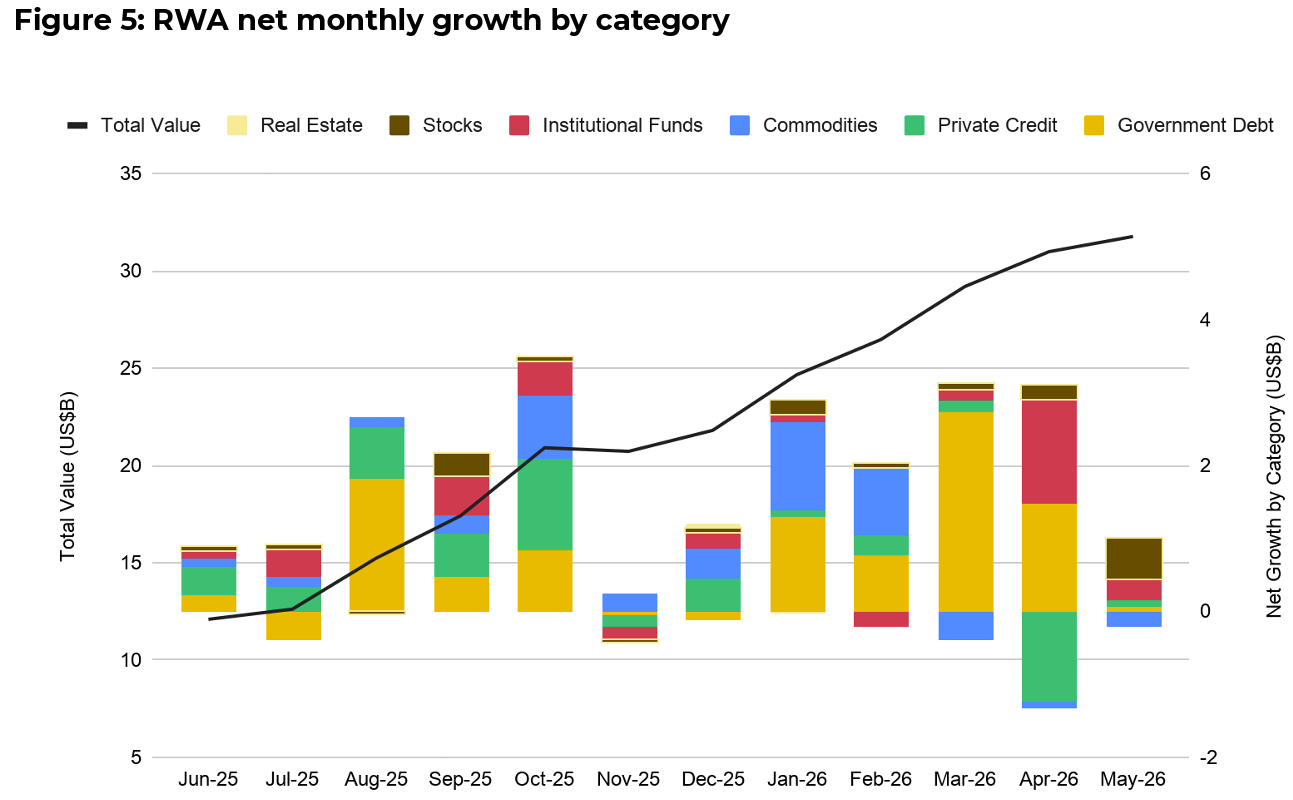
While tokenized stocks are experiencing rapid growth, they are part of an even larger and more expansive category known as tokenized Real-World Assets (RWAs). RWAs encompass a wide array of tangible and intangible assets, from real estate and commodities to government bonds and intellectual property, that are represented as tokens on a blockchain. The market for tokenized RWAs has seen exponential growth, surging by an impressive 589% from early 2025 to June 2026, according to a comprehensive report from Binance Research. This meteoric rise indicates a significant shift in how various asset classes are being managed, traded, and owned.
The RWA market’s diversification is a key trend. Initially dominated by a few asset types, it is now expanding to include a broader spectrum of financial instruments. Government bonds and money market funds have emerged as leading segments within the tokenized RWA market, attracting substantial capital due to their perceived stability and yield. Tokenized precious metals, often seen as a hedge against economic volatility, also garnered considerable interest, attracting about $1.5 billion in value and rising by 39% during the same period. This diversification underscores the utility of tokenization across various risk profiles and investment strategies.
Despite the rapid growth of tokenized stocks, they still constitute a relatively small fraction of the overall tokenized RWA market. Accounting for only about 5.5% of the total $34 billion RWA market capitalization, stocks have significant room for expansion. This figure suggests that while investor interest in blockchain-based equities is surging, other RWA categories have been earlier and more extensively adopted for tokenization.
The largest segment of the RWA market is currently tokenized U.S. Treasury debt, which represents approximately $15 billion, or 44% of the market. This dominance highlights the institutional comfort and demand for stable, highly liquid assets within a tokenized framework. Following U.S. Treasuries, tokenized commodities account for $4.5 billion, or 13%, demonstrating the growing appeal of digital representations of physical goods. These figures, provided by data provider RWA.xyz, illustrate a dynamic and rapidly evolving market where diverse assets are finding new life on blockchain rails.
Driving Factors and Strategic Implications for Finance
The acceleration of tokenization across stocks and other RWAs is driven by several compelling factors and carries profound strategic implications for the future of finance. One primary driver is the promise of enhanced efficiency. By leveraging blockchain technology, the settlement of trades can be significantly faster and cheaper, reducing reliance on intermediaries and streamlining complex processes inherent in traditional finance. This efficiency translates into lower operational costs for financial institutions and potentially lower transaction fees for investors.
Another crucial factor is increased accessibility. As highlighted, tokenized assets can offer fractional ownership, making high-value assets like blue-chip stocks or real estate accessible to a broader base of retail investors who might not otherwise afford full units. Furthermore, the global, borderless nature of blockchain networks allows investors from various jurisdictions to participate in markets that were previously difficult or impossible to access due to geographical or regulatory barriers. This democratization of access fosters greater financial inclusion and opens up new capital pools.
The "level playing field" concept, championed by institutions like the NYSE parent ICE, underscores the ambition to create a 24/7, on-chain environment for perpetual contracts and other financial products. This vision extends to tokenized stocks, where continuous trading eliminates time zone constraints and allows for real-time price discovery and liquidity. Such an environment has the potential to significantly enhance market responsiveness and investor flexibility.
Institutional adoption is also a critical catalyst. As more traditional financial institutions explore and implement blockchain solutions, the credibility and liquidity of tokenized markets grow. The participation of major exchanges like Kraken, Binance, and Coinbase, alongside dedicated RWA issuers like Ondo Finance, signals a serious commitment from industry leaders to integrate this technology into their core offerings. Their investments in infrastructure and product development are paving the way for broader institutional and retail engagement.
The strategic implications are far-reaching. Tokenization has the potential to disrupt established market structures, challenging traditional exchanges, brokers, and custodians. It offers a pathway to increased liquidity for traditionally illiquid assets, such as private equity or real estate, by creating secondary markets on-chain. Moreover, the transparency and auditability inherent in blockchain transactions can enhance regulatory oversight and reduce fraud, fostering greater trust in financial markets. This convergence of TradFi and DeFi is not merely an incremental change but a foundational shift that could redefine how assets are owned, traded, and managed globally.
Regulatory Landscape and Future Challenges
While the growth of tokenized stocks and RWAs presents immense opportunities, it also navigates a complex and evolving regulatory landscape. Regulators globally are grappling with how to classify, oversee, and license these novel digital assets. The decentralized nature of blockchain, coupled with the global reach of tokenized markets, poses significant challenges for traditional regulatory frameworks designed for centralized, geographically bounded entities.
Key regulatory considerations include investor protection, market integrity, anti-money laundering (AML), and combating the financing of terrorism (CFT). Ensuring that tokenized securities meet the same standards of disclosure, fairness, and transparency as their traditional counterparts is paramount. Different jurisdictions are adopting varied approaches, leading to a patchwork of regulations that can create complexities for platforms operating internationally. The lack of a harmonized global regulatory framework can hinder interoperability and create arbitrage opportunities or regulatory gaps.
Looking ahead, several challenges must be addressed for tokenized assets to achieve their full potential. Scalability of blockchain networks remains crucial; as transaction volumes increase, the underlying technology must be able to process them efficiently and cost-effectively. Security is another perpetual concern, as robust protocols and auditing are essential to protect against hacks and vulnerabilities. Interoperability between different blockchain networks and with traditional financial systems is also vital to create a seamless and efficient global market for tokenized assets.
Despite these challenges, the trajectory for tokenized stocks and RWAs appears bullish. The continued innovation from platforms, increasing investor demand for diversified and accessible investment products, and the ongoing efforts to establish clearer regulatory guidelines suggest a future where blockchain-based assets play an increasingly central role in the global financial system. The record $2.3 billion market capitalization for tokenized stocks is not just a numerical milestone; it is a clear indicator of a paradigm shift, heralding a new era of digitized, decentralized, and democratized finance. As the market matures and technological infrastructure strengthens, tokenized assets are poised to unlock unprecedented levels of liquidity, efficiency, and access across a vast spectrum of real-world assets.