Tari Putri Malika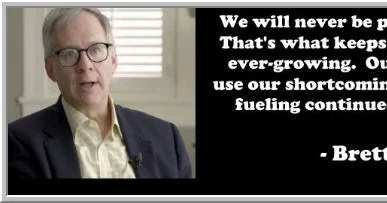
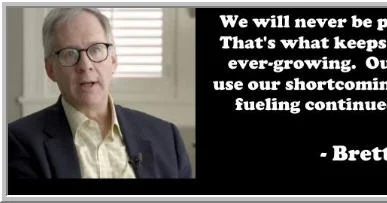
The integration of clinical psychological frameworks into the high-stakes environment of financial trading has transitioned from a niche interest to a fundamental pillar of institutional and retail performance strategy. Dr. Brett Steenbarger, a clinical associate professor of psychiatry and behavioral sciences and a prominent figure in the field of performance psychology, has positioned the concept of "self-coaching" as a primary driver for sustainable success in global markets. By utilizing evidence-based psychological techniques, traders are increasingly moving away from traditional reactive emotional management toward a proactive, solution-focused methodology that emphasizes the identification and leverage of individual cognitive and personality strengths.
The Evolution of Performance Psychology in Financial Markets
The history of trading psychology has undergone a significant transformation over the last four decades. In the late 20th century, the prevailing sentiment in market psychology focused largely on the suppression of emotion—the "trader as a machine" archetype. However, as the field of behavioral finance matured, researchers and practitioners began to recognize that emotions are not merely distractions but are data points that reflect underlying cognitive processes.
Dr. Steenbarger’s contributions, particularly through his extensive body of work including "The Science of Brief Psychotherapies," have shifted the narrative toward a more nuanced, evidence-based approach. This transition mirrors a broader trend in professional sports and high-pressure corporate leadership, where the goal is no longer the elimination of stress but the optimization of response patterns to that stress. The modern chronology of this field shows a clear movement from anecdotal advice to the application of rigorous scientific disciplines, including Cognitive Behavioral Therapy (CBT) and Solution-Focused Brief Therapy (SFBT), to the daily routines of market participants.
The Solution-Focused Paradigm: A Shift in Methodology
At the core of contemporary trading coaching is the "solution-focused" approach. Unlike traditional psychoanalysis, which often delves into the origins of failures or pathological behaviors, the solution-focused model prioritizes the analysis of "exceptions"—those moments when a trader is performing at their peak. The methodology suggests that by deconstructing successful trades and identifying the specific cognitive and interpersonal states present during those periods, a trader can create a replicable blueprint for future performance.
This approach is rooted in the belief that professional growth is achieved more rapidly by amplifying what is already working rather than attempting to overhaul deeply ingrained personality flaws. In a professional setting, this involves a rigorous audit of a trader’s "best self." By understanding their unique cognitive profile—such as their capacity for rapid pattern recognition versus long-term analytical synthesis—traders can align their market strategies with their inherent strengths. This alignment reduces cognitive dissonance and the emotional friction that often leads to catastrophic trading errors.
Supporting Data: The Correlation Between Psychological Resilience and ROI
While qualitative success is often cited in trading psychology, quantitative data supports the necessity of psychological intervention. Industry statistics frequently suggest that a significant majority of retail traders fail within their first two years, often citing emotional volatility and lack of discipline as the primary causes. In contrast, institutional trading desks that employ performance coaches or utilize psychological screening in their hiring processes report higher levels of consistency and lower turnover rates.
Data from behavioral economics indicates that "loss aversion"—the tendency to feel the pain of a loss more acutely than the joy of an equivalent gain—is one of the most significant hurdles to profitable trading. Evidence-based coaching techniques are designed to mitigate the biological impact of loss aversion by retraining the brain’s amygdala response. By implementing structured "self-coaching" routines, traders can maintain a state of "flow," a psychological concept identified by Mihaly Csikszentmihalyi, which is characterized by total absorption in a task and leads to peak performance levels.
Institutional Adoption and the Professionalization of Self-Coaching
The move toward self-coaching is not limited to independent retail traders; it has seen widespread adoption within major hedge funds and proprietary trading firms. Institutions such as Point72 Asset Management and SMB Capital have historically integrated psychological coaching into their trader development programs. The objective is to transform the trader from a market participant into a "performance athlete."

These organizations recognize that the "work-life balance" mentioned by Steenbarger is not merely a lifestyle choice but a functional requirement for risk management. Chronic stress leads to elevated cortisol levels, which have been scientifically linked to impaired decision-making and increased risk-taking. Therefore, the development of a positive work-life balance and the refinement of interpersonal strengths are now viewed as essential components of a firm’s risk mitigation strategy.
Key Pillars of the Self-Coaching Framework
To become an effective self-coach, a trader must master several distinct domains of psychological discipline:
- Cognitive Awareness: The ability to monitor one’s own thought processes in real-time. This involves identifying cognitive biases—such as confirmation bias or the recency effect—as they occur during market hours.
- Process Optimization: Shifting the focus from outcomes (profit and loss) to the quality of the execution process. A "good" trade is defined as one that follows a predefined, edge-based system, regardless of the immediate financial result.
- Strength Leverage: Identifying whether one’s personality is better suited for high-frequency, discretionary, or systematic trading. Attempting to trade a style that contradicts one’s personality profile is a leading cause of psychological burnout.
- Continuous Evolution: Viewing trading not as a static job but as a path of personal development. As Steenbarger notes, the evolution of the trader and the evolution of the person are inextricably linked.
The Role of Brief Psychotherapies in Performance Enhancement
The application of "Brief Psychotherapies" is particularly relevant in the fast-paced world of finance. Unlike traditional therapy, which may take years, brief therapy is time-limited and goal-oriented. It focuses on the present and the future, utilizing specific interventions to change behavior quickly.
For a trader, this might involve "behavioral rehearsal"—visualizing market scenarios and practicing the desired emotional and physical response before the market opens. It also involves "cognitive restructuring," where the trader learns to challenge and replace the self-defeating internal monologue that often accompanies a losing streak. These techniques provide a toolkit for traders to manage the inherent uncertainty of the markets without becoming paralyzed by it.
Broader Implications and the Future of the Industry
The democratization of high-level performance psychology through resources like "TraderFeed" and published academic works has leveled the playing field between institutional and retail participants. As the market becomes increasingly dominated by algorithmic and high-frequency trading, the "human edge" is found in the ability to adapt, innovate, and maintain psychological equilibrium.
The implications of this shift extend beyond the trading floor. The principles of evidence-based performance coaching are being applied to leadership, hiring best practices, and creative idea generation across various sectors. The focus on "what works" and the leverage of personality strengths is becoming a standard in any field where high-stakes decision-making is required.
Furthermore, the emphasis on a "solution-focused" approach suggests a move away from the "grind" culture of Wall Street toward a more sustainable, health-conscious professional model. By prioritizing quality of life and psychological well-being, the industry is beginning to acknowledge that the most valuable asset in any firm is the cognitive clarity of its human capital.
Conclusion: The Path Toward Personal and Professional Integration
The work of Dr. Brett Steenbarger and the broader field of trading psychology underscore a fundamental truth in the financial world: the market is a mirror. A trader’s success is often a reflection of their internal state, their discipline, and their ability to evolve in the face of constant change. By adopting the role of their own trading coach, individuals can navigate the complexities of the global markets with a structured, scientific, and ultimately more human approach.
The journey toward becoming a successful trader is, therefore, a journey toward becoming one’s "best self." It requires a rigorous commitment to self-observation, an unwavering focus on evidence-based improvement, and the realization that peak performance is not an accident but the result of a deliberate and psychologically sound process. As the financial landscape continues to evolve, the integration of these psychological principles will likely remain the defining characteristic of those who not only survive the markets but thrive within them.