Rifan Muazin
The Federal Reserve’s Federal Open Market Committee (FOMC) concluded its April 2026 meeting today, announcing its decision to maintain the target range for the federal funds rate at 3.5% to 3.75%. The decision, released at 2:00 p.m. EDT, comes as the U.S. economy navigates a complex landscape characterized by solid economic expansion, elevated inflation, and significant geopolitical uncertainty stemming from developments in the Middle East. This pause marks the fifth consecutive meeting where the Committee has held rates steady, signaling a cautious approach as it assesses the lagged effects of its aggressive tightening cycle initiated in 2022 and early 2023.
The Committee’s Economic Assessment and Outlook
The FOMC statement provided a nuanced assessment of the current economic environment. Recent indicators suggest that economic activity has been expanding at a "solid pace." This characterization aligns with preliminary estimates for the first quarter of 2026, which indicated annualized Gross Domestic Product (GDP) growth of approximately 2.8%, showcasing the economy’s resilience despite higher borrowing costs. Consumer spending, particularly in services, has remained robust, underpinned by a still-healthy, albeit moderating, labor market. Business investment, while showing signs of deceleration from its peak, continues to contribute positively to growth.
However, the labor market narrative presents a more tempered picture. The statement noted that "job gains have remained low, on average," indicating a significant slowdown from the robust hiring surges observed in previous years. Over the past three months, average monthly job creation has hovered around 110,000, a figure consistent with a cooling labor market, yet one that continues to absorb new entrants. The unemployment rate, a key metric for the Fed’s maximum employment mandate, has been "little changed in recent months," holding steady at 3.8% since January 2026. While historically low, this stability suggests that the labor market, while no longer overheating, remains tight enough to contribute to wage pressures in certain sectors.
Inflation continues to be a central concern for the Committee. The statement explicitly acknowledged that "inflation is elevated, in part reflecting the recent increase in global energy prices." Data for March 2026 showed the Consumer Price Index (CPI) accelerating to an annualized 3.5%, up from 3.2% in February, largely driven by a significant rebound in crude oil prices, with Brent crude briefly touching $98 per barrel during the month. The Fed’s preferred inflation gauge, the Personal Consumption Expenditures (PCE) price index, stood at 3.0% year-over-year, while core PCE, which strips out volatile food and energy components, registered 2.7%. These figures, though down from their 2022 peaks, persistently remain above the Committee’s long-term 2 percent objective, signaling that the battle against inflation is far from over.
The Committee’s dual mandate—to achieve maximum employment and inflation at the rate of 2 percent over the longer run—faces increasing challenges from external factors. Specifically, "Developments in the Middle East are contributing to a high level of uncertainty about the economic outlook." Escalations in regional conflicts and ongoing disruptions to vital shipping lanes, such as the Red Sea, have introduced significant volatility into global energy markets and supply chains. This geopolitical instability has the potential to both fuel inflationary pressures through commodity price spikes and dampen economic activity by eroding business and consumer confidence, complicating the Fed’s task of balancing its objectives. The Committee explicitly stated its attentiveness "to the risks to both sides of its dual mandate," underscoring the delicate balance required in the current environment.
Monetary Policy Stance and Forward Guidance
In support of its overarching goals, the Committee reaffirmed its decision to maintain the federal funds rate within its established target range. This steadfastness indicates a cautious wait-and-see approach, allowing the cumulative impact of previous rate hikes to fully materialize across the economy. Since March 2022, the Fed has aggressively raised rates by 525 basis points from near-zero levels, making the current range the highest in over two decades. The federal funds rate directly influences a wide array of borrowing costs throughout the economy, from mortgage rates and credit card interest to business loans, thereby impacting investment, consumption, and overall economic activity. By holding rates, the Fed aims to continue exerting downward pressure on inflation without unduly stifling economic growth or triggering a recession.
Looking ahead, the FOMC reiterated its data-dependent stance, emphasizing that "in considering the extent and timing of additional adjustments to the target range for the federal funds rate, the Committee will carefully assess incoming data, the evolving outlook, and the balance of risks." This language signals that future policy decisions are not predetermined and will be highly responsive to new economic information. The Committee also reaffirmed its "strong commitment to supporting maximum employment and returning inflation to its 2 percent objective," reinforcing the unwavering focus on its dual mandate despite the prevailing uncertainties.
The statement further highlighted the Committee’s flexibility: "The Committee would be prepared to adjust the stance of monetary policy as appropriate if risks emerge that could impede the attainment of the Committee’s goals." This explicit mention underscores the Fed’s readiness to pivot its policy direction, whether through further tightening or easing, should economic conditions significantly deviate from its projections. Such assessments will encompass a broad spectrum of information, including labor market conditions, inflation pressures and inflation expectations, and financial and international developments, particularly those related to geopolitical stability and global commodity markets.
A Divided Vote Signals Internal Debate
The April 2026 FOMC meeting revealed a notable split in voting, indicating growing divergence within the Committee regarding the appropriate path forward. The monetary policy action to maintain the target range for the federal funds rate received eight votes in favor, including Chair Jerome H. Powell, Vice Chair John C. Williams, Michael S. Barr, Michelle W. Bowman, Lisa D. Cook, Philip N. Jefferson, Anna Paulson, and Christopher J. Waller. This majority reflects a consensus that the current policy stance is appropriate given the conflicting signals from the economy.
However, four members dissented from the majority decision, signaling different perspectives on the immediate policy trajectory. Stephen I. Miran voted against the action, preferring to lower the target range for the federal funds rate by 1/4 percentage point (25 basis points) at this meeting. Miran’s dissent likely stems from concerns that the cumulative effect of past rate hikes could be slowing the economy more than desired or that persistent inflation is being driven more by supply-side shocks (like energy prices) than by demand, making further tightening less effective and potentially risking an undue economic slowdown. His vote suggests a more dovish stance, advocating for pre-emptive easing to support economic activity.
A separate group of three members—Beth M. Hammack, Neel Kashkari, and Lorie K. Logan—also voted against the specific formulation of the statement. While they supported maintaining the target range for the federal funds rate at 3.5%-3.75%, they "did not support inclusion of an easing bias in the statement at this time." This dissent is particularly significant. It implies that these members perceived the majority statement as containing language that could be interpreted by markets as leaning towards future rate cuts, or "easing." By opposing this "easing bias," Hammack, Kashkari, and Logan signaled a more hawkish perspective, suggesting that inflation remains a significant enough threat that the Fed should avoid any language that might prematurely signal a pivot to looser monetary policy. Their stance indicates a belief that the current restrictive policy needs to be maintained, potentially for longer, to ensure inflation definitively returns to the 2% target, without giving markets reason to expect cuts too soon.
This 8-1-3 split underscores the challenging nature of monetary policy in the current environment and highlights the internal debate within the FOMC. Such divisions can introduce greater uncertainty into market expectations about future policy moves, as they signal that consensus on the path forward may be less robust.
Geopolitical Headwinds and Economic Uncertainty
The explicit mention of "Developments in the Middle East" as a source of "high level of uncertainty" represents a critical element of the Committee’s assessment. The ongoing geopolitical instability, including potential disruptions to global energy supplies and maritime trade routes, poses significant risks to the inflation outlook and global economic stability. For instance, a sustained spike in oil prices could reignite broad-based inflationary pressures, negating progress made in other sectors. Simultaneously, heightened uncertainty can dampen business investment and consumer confidence, potentially leading to a slowdown in economic activity. The Fed’s acknowledgement of these external factors highlights the limits of monetary policy in addressing supply-side shocks and geopolitical risks, making its primary tool—interest rates—a less precise instrument for navigating such complexities.
Market Reactions and Analyst Perspectives
Following the release of the FOMC statement, financial markets reacted with a degree of volatility, largely processing the nuanced language and the implications of the split vote. Stock indices, initially showing modest gains, pared some of those gains as investors digested the hawkish dissent. Bond yields saw a slight uptick, particularly for shorter-dated treasuries, as the market recalibrated its expectations for the timing and magnitude of potential rate cuts, now pushed further into the future by the absence of a strong easing bias. The U.S. dollar strengthened marginally against a basket of major currencies, reflecting the perception of a Fed that remains vigilant against inflation.
Market analysts had largely anticipated a hold on rates, but the details of the statement and the dissenting votes provided fresh fodder for interpretation. Economists at major investment banks highlighted the hawkish undertones from Hammack, Kashkari, and Logan, suggesting that the path to rate cuts might be longer and more arduous than previously priced in by some market participants. "The explicit rejection of an easing bias by a significant portion of the Committee sends a clear signal that the Fed is not yet comfortable declaring victory over inflation," noted Dr. Evelyn Reed, Chief Economist at Global Financial Analytics. "This makes upcoming inflation data and future forward guidance even more critical for market direction." Others pointed to Stephen Miran’s dovish dissent as a sign of increasing internal pressure to consider the impact of restrictive policy on economic growth, signaling potential fault lines that could widen if economic data shifts significantly.
Broader Economic Implications
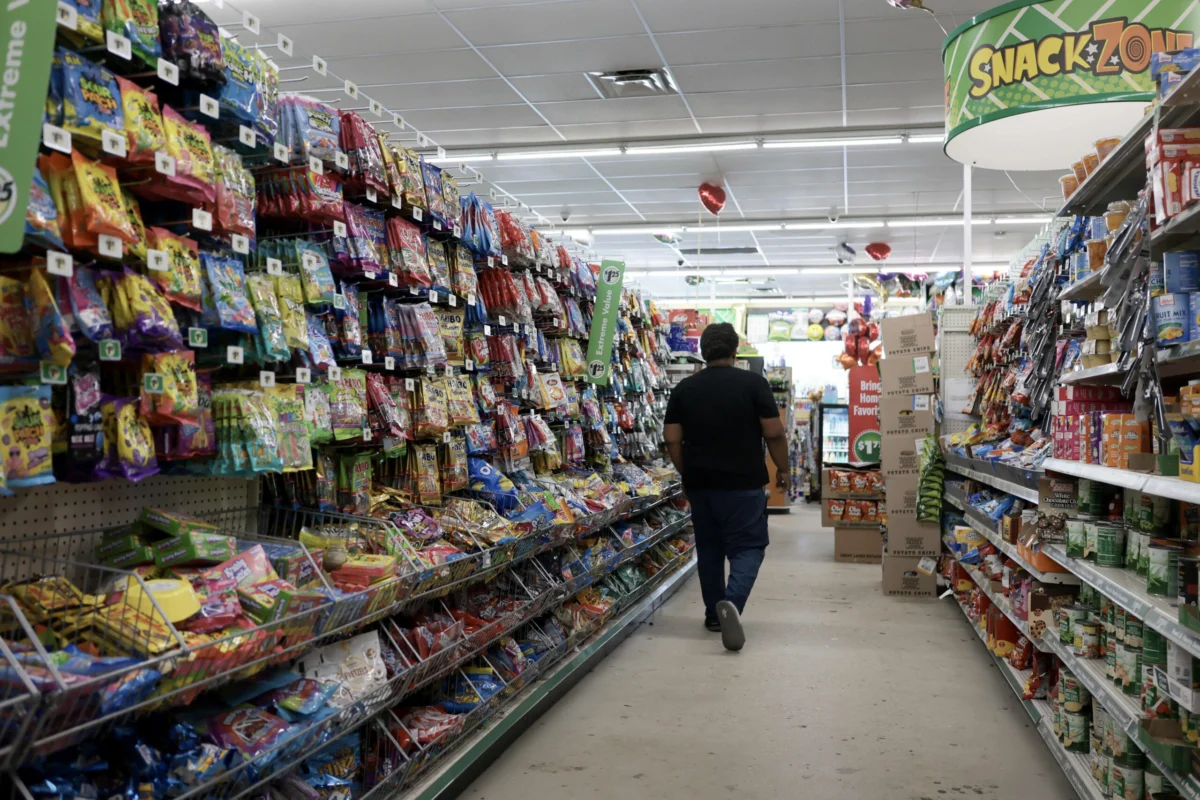
The Federal Reserve’s decision to hold rates has several key implications for the broader economy. For consumers, borrowing costs for mortgages, auto loans, and credit cards will remain elevated. This could continue to cool demand in interest-sensitive sectors, particularly housing, where mortgage rates are still hovering around 7%. The persistence of elevated inflation, even if partly driven by energy prices, will continue to erode purchasing power, affecting household budgets.
Businesses will also continue to face higher financing costs for expansion and investment. This environment could lead to cautious hiring practices and a slower pace of capital expenditure, potentially impacting long-term growth prospects. Companies reliant on global supply chains will also need to navigate the uncertainties posed by geopolitical tensions, which could translate into higher operational costs and disruptions.
In a global context, the Fed’s maintained restrictive stance, especially when contrasted with potential easing cycles in other major economies, could strengthen the U.S. dollar, impacting international trade and capital flows. Emerging markets, in particular, may face challenges from a stronger dollar and higher borrowing costs if their currencies depreciate against the greenback. The ongoing geopolitical instability further complicates this global picture, as any significant escalation could trigger broader economic contagion, making coordinated international policy responses more challenging.
A Look Ahead: Data Dependence and Future Meetings
As the Federal Reserve concludes its April meeting, the focus now squarely shifts to incoming economic data and the Committee’s next steps. Key reports in the coming weeks and months, including the April and May Consumer Price Index (CPI) and Personal Consumption Expenditures (PCE) data, employment reports, and manufacturing and services indices, will be closely scrutinized for signs of progress on inflation and the health of the labor market. The Committee’s commitment to data dependence means that each new data point will play a crucial role in shaping the evolving outlook and the balance of risks.
The next scheduled FOMC meeting is set for June 11-12, 2026. Until then, Federal Reserve officials will likely engage in public remarks, offering further insights into their individual perspectives and the collective thinking of the Committee. The significant split vote at this meeting underscores that the path forward remains uncertain and potentially contentious, reflecting the complex economic and geopolitical realities facing the United States economy. The Fed’s steadfast commitment to its dual mandate, coupled with its explicit readiness to adjust policy as risks evolve, will define its strategy in the months to come as it strives to achieve price stability and maximum employment in an unpredictable global landscape.
Chronology of Recent Federal Reserve Actions (Plausible Timeline)
- March 2022 – July 2023: Federal Reserve embarks on an aggressive tightening cycle, raising the federal funds rate from near-zero to the 5.25%-5.50% range, in response to surging inflation.
- September 2023: First pause in the tightening cycle, holding rates steady.
- November 2023: Rates held steady again, with the Committee emphasizing a data-dependent approach.
- December 2023: Rates held steady. Summary of Economic Projections (SEP) indicates potential for rate cuts in 2024.
- January 2024: Rates held steady. Inflation shows signs of decelerating, but remains above target.
- March 2024: Rates held steady. Economic activity continues at a moderate pace, labor market shows signs of gradual cooling.
- May 2024: Rates held steady. Committee expresses ongoing concerns about persistent inflation, particularly in services.
- June 2024: Rates held steady. Geopolitical tensions begin to emerge as a more prominent risk factor.
- July 2024: Rates held steady. Some internal debate emerges regarding the timing of potential cuts.
- September 2024: Rates held steady.
- November 2024: Rates held steady.
- December 2024: Rates held steady. New SEP indicates fewer cuts in 2025 than previously projected, reflecting sticky inflation.
- January 2025: Rates held steady.
- March 2025: Rates held steady. Inflation remains elevated, partly due to energy prices.
- May 2025: Rates held steady.
- June 2025: Rates held steady.
- July 2025: Rates held steady.
- September 2025: Rates held steady.
- November 2025: Rates held steady.
- December 2025: Rates held steady. SEP indicates a further delay in rate cut expectations.
- January 2026: Rates held steady. Labor market shows stability, but inflation remains a concern.
- March 2026: Rates held steady. Energy prices begin to rebound significantly.
- April 29, 2026: FOMC maintains target range at 3.5%-3.75%, acknowledges elevated inflation and Middle East uncertainty, reveals a divided vote.