Tari Putri Malika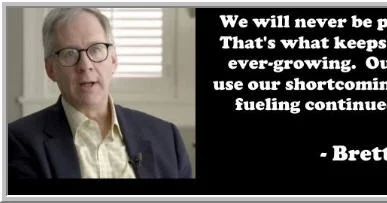
The discipline of trading psychology has undergone a significant transformation, shifting from a focus on correcting behavioral flaws to a proactive model of performance enhancement based on evidence-based psychological techniques. Dr. Brett Steenbarger, a prominent figure in the field of financial psychology and performance coaching, has emphasized a "solution-focused" approach that prioritizes the identification and leverage of a trader’s existing strengths. This methodology, rooted in clinical research and brief psychotherapy, suggests that the path to consistent profitability in the financial markets is inextricably linked to a trader’s personal evolution and the systematic application of cognitive and interpersonal strengths.
By advocating for traders to become their own coaches, the modern psychological framework seeks to bridge the gap between institutional-grade performance and individual execution. This shift occurs at a time when market volatility and the rapid digitization of trading environments have placed unprecedented cognitive demands on market participants. The application of brief psychotherapy techniques—traditionally used in clinical settings to achieve rapid behavioral change—is now being utilized to optimize productivity, leadership, and creativity within the high-stakes world of proprietary trading and hedge fund management.
The Shift Toward Evidence-Based Performance Coaching
Historically, trading psychology was often relegated to the realm of "mindset" or "discipline," frequently relying on anecdotal evidence and motivational rhetoric. However, the contemporary landscape, as outlined by Steenbarger and supported by emerging data in behavioral finance, relies on evidence-based psychological techniques. These techniques are derived from structured therapeutic models, such as Solution-Focused Brief Therapy (SFBT) and Cognitive Behavioral Therapy (CBT).
The core tenet of the solution-focused approach is the "exception principle." Rather than conducting an exhaustive autopsy of every failed trade or psychological lapse, this method encourages traders to analyze their periods of peak performance. By identifying the specific conditions, thought processes, and behaviors present during successful periods, traders can create a repeatable blueprint for success. This methodology aligns with the broader trend in high-performance psychology seen in professional sports and elite military units, where the objective is to amplify "what works" rather than merely mitigating "what does not."
Chronology of Trading Psychology and Methodology Development
The integration of clinical psychology into the financial markets has followed a distinct timeline over the last several decades:
- The Behavioral Finance Era (1970s–1980s): Initial academic research by psychologists such as Daniel Kahneman and Amos Tversky identified cognitive biases—like loss aversion and overconfidence—that lead to irrational economic decision-making.
- The Discipline and Mindset Movement (1990s): Authors like Mark Douglas popularized the idea that "trading in the zone" required a shift in perspective, focusing on the probabilistic nature of the markets.
- The Evidence-Based and Quantitative Integration (2000s–2010s): Dr. Brett Steenbarger and other practitioners began applying formal clinical frameworks to trading. This era saw the introduction of data-driven journals, physiological monitoring (such as heart-rate variability), and the application of brief psychotherapy to the trading floor.
- The Holistic Performance Model (2020s–Present): The current era emphasizes a comprehensive approach that includes work-life balance, cognitive diversity, and the use of technology to monitor psychological states in real-time.
This evolution reflects a maturing industry where the "psychological edge" is viewed as a measurable component of a trader’s total alpha, alongside their technical strategy and risk management protocols.
Supporting Data on Trader Performance and Mental Health
The necessity for robust psychological coaching is underscored by industry statistics regarding trader success rates. Various studies and brokerage data reports have historically indicated that between 80% and 95% of retail traders fail within their first two years of active participation. While technical insufficiency is a factor, institutional research suggests that behavioral errors—such as "revenge trading" or the inability to adhere to stop-loss orders—are the primary drivers of account depletion.
In the institutional sector, the demand for performance coaching has surged. A survey of hedge fund professionals indicated that firms employing dedicated performance psychologists or utilizing structured behavioral coaching reported higher levels of trader retention and more consistent risk-adjusted returns. Furthermore, research into "Behavioral Alpha" suggests that by quantifying and correcting for cognitive biases, institutional desks can improve their execution quality by several basis points—a margin that translates into millions of dollars in the context of large-scale fund management.

Data also highlights the impact of work-life balance on decision-making. Chronic stress and sleep deprivation have been shown to impair the prefrontal cortex, the area of the brain responsible for executive function and impulse control. Steenbarger’s emphasis on a positive work-life balance is not merely a wellness initiative; it is a strategic requirement for maintaining the cognitive clarity necessary for high-frequency decision-making.
Perspectives from the Trading Community and Institutional Leaders
The adoption of these psychological frameworks has garnered reactions from various sectors of the financial community. Proprietary trading firms, such as SMB Capital, have long integrated Steenbarger’s methodologies into their training programs. Leadership at these firms often notes that the ability to self-coach is the distinguishing factor between a "one-hit wonder" trader and a career professional.
"The goal is not to eliminate emotion, but to use it as data," one senior macro trader noted in a recent industry panel. "Steenbarger’s work suggests that our personality strengths—whether they are analytical, intuitive, or highly disciplined—dictate our ‘fit’ with specific market niches. Trying to trade in a way that contradicts your personality is a recipe for burnout."
Furthermore, the focus on "hiring best practices" mentioned in Steenbarger’s work reflects a growing trend where firms use psychological profiling to match candidates with specific trading styles. For example, a high-frequency scalper requires a different cognitive profile (rapid processing, high stress tolerance) than a long-term value investor (patience, deep analytical capacity).
Analysis of Implications: The Future of the "Human Edge"
The implications of integrating solution-focused psychology into trading are profound, particularly as artificial intelligence (AI) and algorithmic execution continue to dominate the volume of market transactions. As machines take over the technical execution of trades, the "human edge" shifts toward higher-level functions: creativity, idea generation, and the ability to manage the psychological pressure of overseeing automated systems.
- Democratization of Performance Coaching: By providing resources for traders to become their own coaches, the barriers to elite-level psychological training are being lowered. This allows independent retail traders to adopt the same mental frameworks used by multi-billion dollar hedge funds.
- Shift from Pathology to Potential: The move away from a "medical model" (which views behavioral issues as symptoms to be cured) toward a "coaching model" (which views behaviors as skills to be developed) fosters a more resilient and proactive trading community.
- Holistic Professional Development: The recognition that "personal evolution" and "trader development" are the same path suggests that the skills learned in the market—discipline, objective analysis, and resilience—are transferable to leadership and creative endeavors in other industries.
Broader Impact on Productivity and Leadership
The principles outlined in Steenbarger’s coaching work extend beyond the trading terminal. The application of evidence-based psychological techniques to teamwork and leadership is becoming a standard practice in corporate environments. The "solution-focused" approach is particularly effective in high-pressure corporate settings where traditional, long-term therapeutic interventions are impractical.
In the context of creativity and idea generation, the focus on cognitive strengths allows organizations to build "cognitive diversity" within teams. By understanding the personality profiles of their members, leaders can foster an environment where divergent thinking is encouraged and leveraged. This systematic approach to human capital optimization is a direct byproduct of the rigorous performance standards established in the financial markets.
Conclusion: The Integrated Trader
As the financial markets continue to evolve, the distinction between a trader’s technical skill set and their psychological fortitude is disappearing. The methodology championed by Dr. Brett Steenbarger provides a roadmap for this integration, emphasizing that peak performance is not an accidental state but a deliberate construction based on one’s best self.
The focus on solution-focused growth, the leveraging of cognitive strengths, and the maintenance of a balanced life are no longer "soft skills" in the world of finance; they are the essential components of a sustainable and profitable career. In the final analysis, the development of a trader is a journey of self-discovery, where the objective is to align one’s professional actions with their inherent psychological strengths to navigate the complexities of the global markets.