Ena Muazin
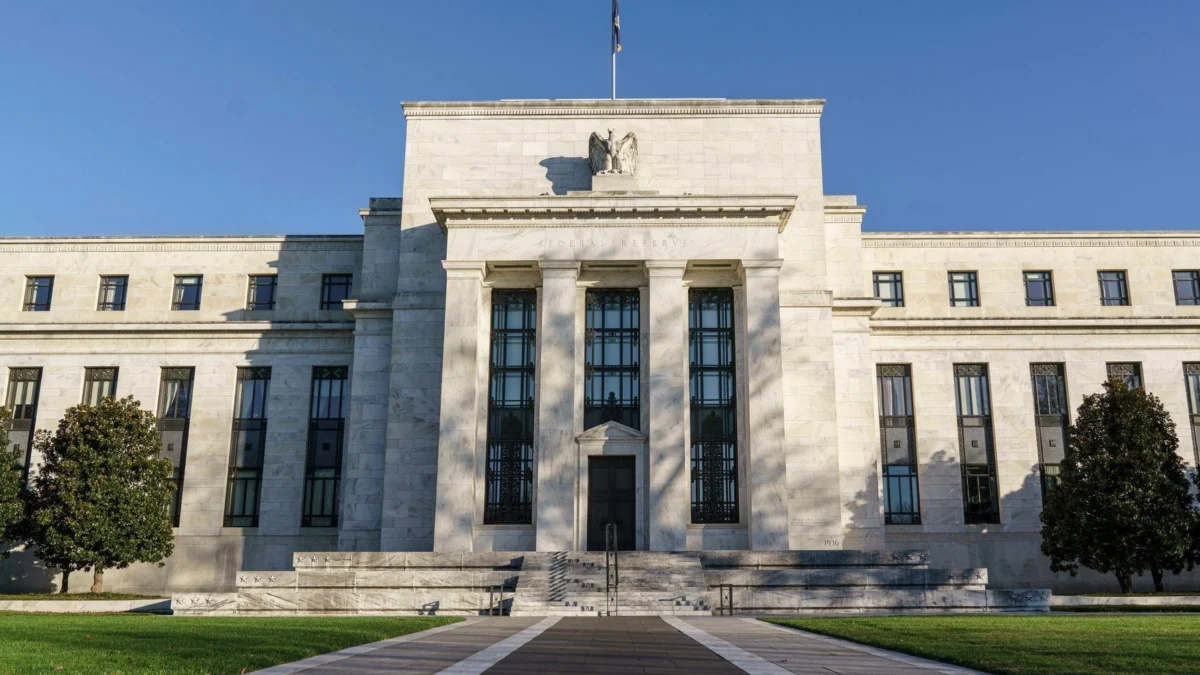
The U.S. economy has experienced modest to moderate growth across most regions in recent weeks, according to the Federal Reserve’s latest Beige Book report. While economic activity has shown signs of expansion, the persistent challenge of inflation continues to be a significant concern for policymakers. The report, released on Wednesday, highlights that eight of the twelve Federal Reserve districts observed this growth, while the remaining four reported economic stagnation.
Background: The Federal Reserve and Economic Monitoring
The Federal Reserve, often referred to as the Fed, serves as the central bank of the United States. Its primary responsibilities include conducting the nation’s monetary policy, supervising and regulating financial institutions, and maintaining the stability of the financial system. A key tool in the Fed’s arsenal for understanding the pulse of the American economy is the Beige Book, officially known as the Summary of Commentary on Current Economic Conditions. This report is compiled from anecdotal evidence gathered from business contacts and economists across the twelve Federal Reserve districts. It provides a qualitative assessment of economic conditions, offering insights into various sectors such as manufacturing, services, employment, and inflation. The Beige Book is published eight times a year, approximately two weeks before each Federal Open Market Committee (FOMC) meeting, serving as a crucial input for the committee’s interest rate decisions.
Key Findings of the Latest Beige Book
The report indicates a general trend of moderate economic expansion. This growth is characterized by a slight increase in employment levels across many districts. However, this positive development is tempered by the persistent nature of inflation, which continues to exert upward pressure on prices. Businesses are reporting ongoing cost increases stemming from various sources, including energy, transportation, healthcare, insurance, and tariffs.
Despite these rising costs, companies are facing challenges in fully passing them on to consumers. Competitive pressures and customer price sensitivity are limiting their ability to translate higher expenses into higher prices. This dynamic creates a complex environment for businesses, potentially impacting profit margins.
Inflationary Pressures Detailed
The Beige Book elaborates on the persistent inflationary environment, noting that overall price increases have been moderate. However, specific sectors are experiencing more pronounced price hikes. Businesses cited significant cost pressures from energy, transportation, healthcare, insurance, and tariffs. This broad-based increase in input costs suggests that inflationary pressures are not confined to a single sector but are rather systemic.
The report also sheds light on the delicate balance businesses must strike between absorbing these costs and maintaining competitiveness. The acknowledgment that firms are unable to fully pass on higher costs due to market dynamics is a significant observation. This suggests that while demand may be present, the ability or willingness of consumers to bear higher prices is constrained. This can lead to a scenario where businesses might face shrinking profit margins if they cannot find efficiencies or if demand weakens further.
Employment Landscape
The employment situation, while showing a slight increase in most districts, remains a nuanced picture. The report indicates that labor markets are generally tight, with businesses continuing to seek qualified workers. However, the pace of hiring has been described as "slight" in many areas, suggesting that while job creation is occurring, it is not at a pace that would significantly overheat the labor market. The Fed’s dual mandate includes both price stability and maximum employment, and the current data suggests a delicate balance is being sought.
Regional Variations
The report highlights regional differences in economic performance. While eight districts experienced growth, the remaining four saw economic activity stagnate. This suggests that the national economic picture is not monolithic and that specific regional factors, such as industry composition, local demand, and supply chain resilience, are playing a role in shaping economic outcomes. Understanding these regional disparities is crucial for policymakers aiming to implement effective national economic strategies.
Implications for Monetary Policy
The release of the Beige Book comes at a critical juncture, just two weeks before the Federal Reserve’s FOMC meeting on December 8th and 9th. The current federal funds rate target range stands at 3.75% to 4.00%. The prevailing expectation among economists and market participants is that the Fed will implement another interest rate hike, likely by at least a quarter of a percentage point, at this upcoming meeting.
The Beige Book’s findings provide further context for this anticipated policy move. The persistent inflation, despite some moderation in the pace of price increases, continues to be a primary concern for the Fed. The central bank has been aggressively raising interest rates over the past year to combat inflation, aiming to bring it back down to its 2% target. The report’s emphasis on stubborn inflation and ongoing cost pressures suggests that the Fed may feel compelled to maintain a hawkish stance.
The Fed’s Inflation Target and Concerns
The Federal Reserve has consistently stated its commitment to achieving price stability, defining this as inflation averaging 2% over the longer run. The report’s findings, particularly the PCE price index increasing by 3.8% year-over-year in October and the core rate rising to 3.3%, underscore the significant distance still to be covered to reach this target. The core PCE inflation rate, which excludes volatile food and energy prices, is closely watched by the Fed as a more accurate indicator of underlying inflationary trends. The fact that this core rate has reached its highest level in three years is a cause for concern.

The Fed’s policymakers have expressed increasing worry about the persistence of inflation. Their efforts to curb inflation through monetary tightening aim to cool demand and bring price increases back under control. However, the current economic data suggests that the impact of these measures may not yet be fully translating into sustained inflation reduction.
Broader Economic Context and Analysis
The current economic climate is shaped by a confluence of factors, including lingering supply chain disruptions from the pandemic, geopolitical tensions impacting energy and commodity prices, and robust consumer demand that has, until recently, outpaced supply. The Fed’s monetary policy actions are designed to rebalance these forces.
The Beige Book’s assessment of modest growth suggests that the U.S. economy is demonstrating resilience, avoiding a sharp downturn despite the aggressive pace of interest rate hikes. This resilience could be attributed to a strong labor market and continued consumer spending, though the latter may be showing signs of moderating under inflationary pressures.

The analysis of businesses’ inability to fully pass on costs is also significant. It implies that while inflationary pressures are present, demand-side strength might not be sufficient to support sustained price increases across the board. This could lead to a period of slower profit growth for corporations, which might, in turn, influence investment and hiring decisions.
Future Outlook and Potential Scenarios
Looking ahead, the Federal Reserve faces a challenging balancing act. Continuing to raise interest rates aggressively risks tipping the economy into a recession. However, pausing or slowing rate hikes too soon could allow inflation to become entrenched, making it more difficult and costly to control in the long run.
The Beige Book provides a snapshot of the current economic landscape, but the situation remains fluid. Future reports will be closely scrutinized for any signs of accelerating inflation, a significant slowdown in growth, or a material weakening of the labor market. The Fed’s future decisions will likely depend on a careful assessment of incoming economic data and its implications for both inflation and employment.

The persistent inflationary pressures, coupled with the signs of ongoing economic expansion, present a complex scenario for the Federal Reserve as it navigates its monetary policy path. The upcoming FOMC meeting will be a key event to watch for further indications of the Fed’s strategy in addressing these intertwined economic challenges. The report serves as a reminder that while the economy may be growing, the battle against inflation remains a central focus for policymakers.