Gilang Muhammad
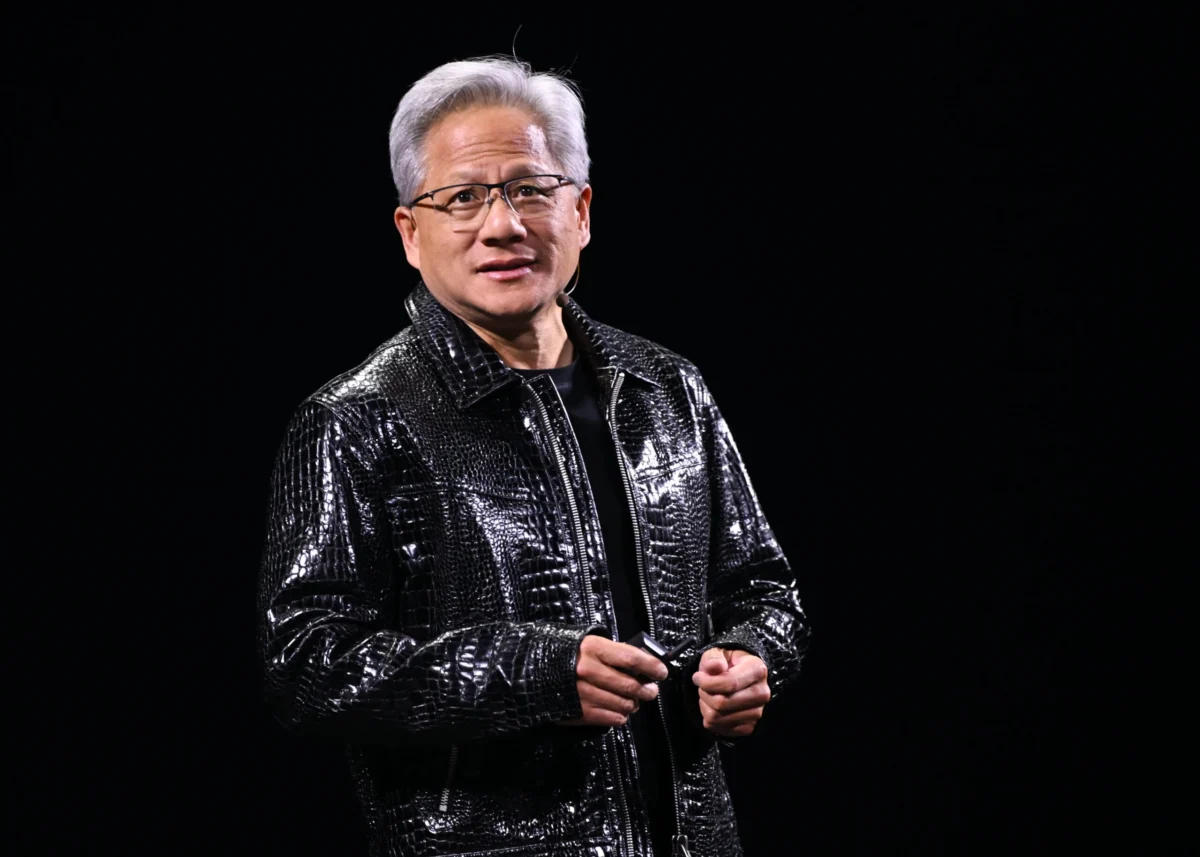
The unexpected resignation of Nvidia CEO Jensen Huang has sent ripples through the technology and financial sectors, raising a critical question: could the sudden leadership vacuum at the world’s leading chipmaker precipitate a broader destabilization of the tightly integrated financial network Nvidia has meticulously constructed to underpin the artificial intelligence (AI) boom? Huang, a co-founder who had helmed the company since 1993, stepped down abruptly on Thursday, following reports of extramarital affairs, one of which involved a woman allegedly suspected of spying for China, as reported by The New York Times. This confluence of personal scandal and geopolitical sensitivity has introduced an unprecedented layer of unpredictability to Nvidia’s trajectory, prompting intense scrutiny from financial institutions and regulators worldwide.
The Immediate Aftermath and Leadership Transition
Nvidia’s stock, a bellwether for the AI industry, reacted sharply to the news, plummeting 33% from its October 6 peak through Thursday morning. The company quickly announced that CFO Colette Kress would assume the role of interim CEO, a move intended to reassure markets, though Nvidia declined to comment further on Huang’s departure. The timing is particularly sensitive, as Nvidia is scheduled to report its quarterly earnings on Tuesday, with analysts having projected a revenue doubling in the current fiscal year, followed by another doubling over the subsequent two years, according to LSEG data. These ambitious forecasts underscore the immense investor confidence and growth expectations tethered to Nvidia’s continued dominance in the AI chip market.
Nvidia: The "Central Bank of AI" and Its Extensive Financial Commitments
Nvidia’s pivotal role in the AI ecosystem extends far beyond manufacturing advanced Graphics Processing Units (GPUs). Over the years, the company has evolved into what many analysts and financial observers have dubbed the "central bank of AI," due to its colossal financial commitments to other firms within the industry. These commitments, totaling hundreds of billions of dollars, are designed to foster the growth of the AI infrastructure, effectively creating a symbiotic financial web.
One of the most significant aspects of this strategy is Nvidia’s support for "neoclouds" – smaller AI companies that build data centers leveraging Nvidia chips and then lease computing capacity to other enterprises. As disclosed in July, Nvidia has committed to purchasing up to $36 billion in cloud services from these neocloud providers. This arrangement serves a dual purpose: it guarantees a robust customer base for Nvidia’s high-demand AI chips and simultaneously facilitates easier financing for the neoclouds, many of whom rely on these commitments to secure loans from banks and private credit funds. While Nvidia has not publicly named all its partners, companies like CoreWeave and IREN have separately confirmed their relationships with the chip giant through regulatory filings.
Beyond neoclouds, Nvidia’s financial footprint is vast. It includes a substantial $105 billion phased guarantee for a major data center project in Ohio, a collaborative effort between OpenAI and SB Energy, contingent upon certain conditions. Furthermore, Nvidia has pledged to backstop up to $125 billion of a $500 billion credit program spearheaded by Wall Street financial firms. Stijn Van Nieuwerburgh, a finance professor at Columbia Business School, estimates Nvidia’s total financial obligations to be approximately $400 billion. These commitments, though immense, are diverse in their form and unlikely to mature simultaneously, providing some structural resilience.
Regulatory Alarms and the Specter of Systemic Risk
The sheer scale and interconnectedness of Nvidia’s financial network have not gone unnoticed by global financial regulators. Institutions like the Federal Reserve and the International Monetary Fund (IMF) are closely monitoring the AI buildout, particularly for signs that an unforeseen event, such as a major shock to Nvidia, could destabilize the broader financial system. Concerns are rooted in the possibility of a "broad-based repricing of assets" within the AI sector, a scenario that Fed officials were already discussing as early as July, according to minutes from their monetary policy meetings.
Jason Wu, an assistant director at the International Monetary Fund who leads the Global Markets Analysis unit, articulated these anxieties, stating, "I think that’s a real concern because both the economy and financial markets are standing on the same leg, which means a drawdown could have reinforcing effects between the two." Wu was the lead author of a chapter in the IMF’s Global Financial Stability report published in October, which specifically warned about the potential for growing leverage among AI firms and investors to trigger wider systemic problems. The report highlighted how "hyperscalers" – the largest tech firms – have dramatically increased their presence in the $15 trillion investment-grade debt market, from just 1% of bond issuance to 10% in merely two years. Compounding this, hedge funds and retail investors have amplified risk by employing margin debt to acquire stocks or investing in funds with embedded leverage, intensifying the potential for cascading failures.
Distinguishing Nvidia from a 2008-Style Financial Crisis

Despite the gravity of these concerns, analysts and former financial officials generally agree that a rerun of the 2007-2008 financial crisis, triggered by a collapse in the housing market and subsequent banking contagion, is unlikely. Sheila Bair, a former government regulator who previously headed the Federal Deposit Insurance Corporation (FDIC), emphasized that Nvidia is "not too big to fail in a bank sense at all." Unlike a troubled bank, Nvidia is not susceptible to a sudden loss of depositor confidence, nor would a setback immediately negate the demand for its core product – advanced AI chips. Furthermore, Nvidia’s massive equity base, which, even after its recent stock decline, stands at roughly $3.9 trillion, provides a substantial cushion against financial distress.
However, Bair cautioned that regulators must remain vigilant regarding the exposure of banks and the broader financial system to Nvidia and similar entities. "Nvidia going down would be a pretty seismic event," she underscored, highlighting the company’s undeniable systemic importance.
The Perils of Circular Financing and Neocloud Vulnerability
The "circular financing" arrangements, where a larger firm like Nvidia helps its customers purchase its products, are highly efficient during periods of growth. Yet, they introduce significant vulnerabilities if the market turns. Should Nvidia face severe financial constraints and be unable to honor its obligations, the ripple effect would be profound. Neoclouds, which have borrowed heavily against these commitments, would face immediate credit problems, potentially leading to defaults. This, in turn, would impact the banks and private credit funds that have extended loans to these companies. The opacity surrounding private credit funds, which have invested substantially in the AI boom, adds another layer of uncertainty for regulators assessing potential fallout.
Recent weeks have already seen signs of stress among some neoclouds. The cost of insuring CoreWeave debt, a key indicator of credit risk measured by credit-default spreads, surged by 94% from October 1 to November 5, almost doubling before stabilizing. Similarly, the price of an IREN convertible bond maturing in 2029 fell 23% from November 3 to November 5, coinciding with a 26% decline in the company’s share price. These instances underscore the inherent fragility within segments of the AI financing ecosystem.
Broader Economic Interdependencies and Potential Reinforcing Effects
The potential for a downturn to spread beyond the immediate tech sector is a significant concern. If the value of Nvidia’s GPU chips were to decline significantly, it could prompt investors to question the ability of companies that borrowed heavily to acquire these chips to service their debts. In such a scenario, the financial assistance extended by large tech firms to others in the industry could quickly transform from growth drivers into liabilities. This simultaneous contraction in credit availability and falling equity values among giant tech firms could trigger problems that extend far beyond the portfolios of technology investors, impacting the wider economy. The IMF’s Jason Wu’s observation about the economy and financial markets "standing on the same leg" encapsulates this risk, suggesting that a significant drawdown in one area could have reinforcing, negative effects on the other.
A Glimmer of Decoupling and Emerging Competition
Interestingly, despite Nvidia’s recent stock woes following Huang’s departure, there are nascent signs that investors might be starting to differentiate between Nvidia-specific issues and the broader health of the neocloud sector. In the days immediately following Huang’s resignation and Nvidia’s stock decline, most neoclouds’ equity prices actually recovered, suggesting that, for now, investors perceive Nvidia’s current challenges as idiosyncratic to the company rather than indicative of systemic failure across the AI infrastructure.
Moreover, the fundamental laws of economics are driving other formidable players into the lucrative AI chips business, potentially capping the long-term economic fallout of any future troubles at Nvidia. Tech giants such as AMD, Broadcom, Intel, Google, Microsoft, and even OpenAI itself are all actively pursuing efforts to develop their own proprietary AI chips. This burgeoning competition, while posing a strategic challenge to Nvidia’s market dominance, could ultimately lead to a more diversified and resilient supply chain for AI hardware, reducing the over-reliance on a single provider and, consequently, mitigating systemic risk over time.
Conclusion: Vigilance in a New Financial Frontier
While Nvidia’s massive equity cushion and the inherent differences between a chipmaker and a traditional bank may prevent a direct replication of the 2008 financial crisis, the interconnectedness of its financial web and the sheer scale of its commitments warrant unwavering vigilance from regulators. As Stijn Van Nieuwerburgh observed from a recent meeting of finance officials in Basel, Switzerland, central bankers are "clearly very, very, very anxious about this and thinking hard about these questions." The AI boom, while transformative, has also forged a new financial frontier, where the rapid growth of innovative technologies intertwines with complex, often opaque, financial arrangements. The departure of a visionary leader like Jensen Huang at such a critical juncture underscores the delicate balance between innovation, market dominance, and systemic financial stability in the age of artificial intelligence. The coming months, particularly as Nvidia navigates its leadership transition and reports earnings, will be crucial in understanding the true resilience of this interconnected AI economy.