Lina Wu
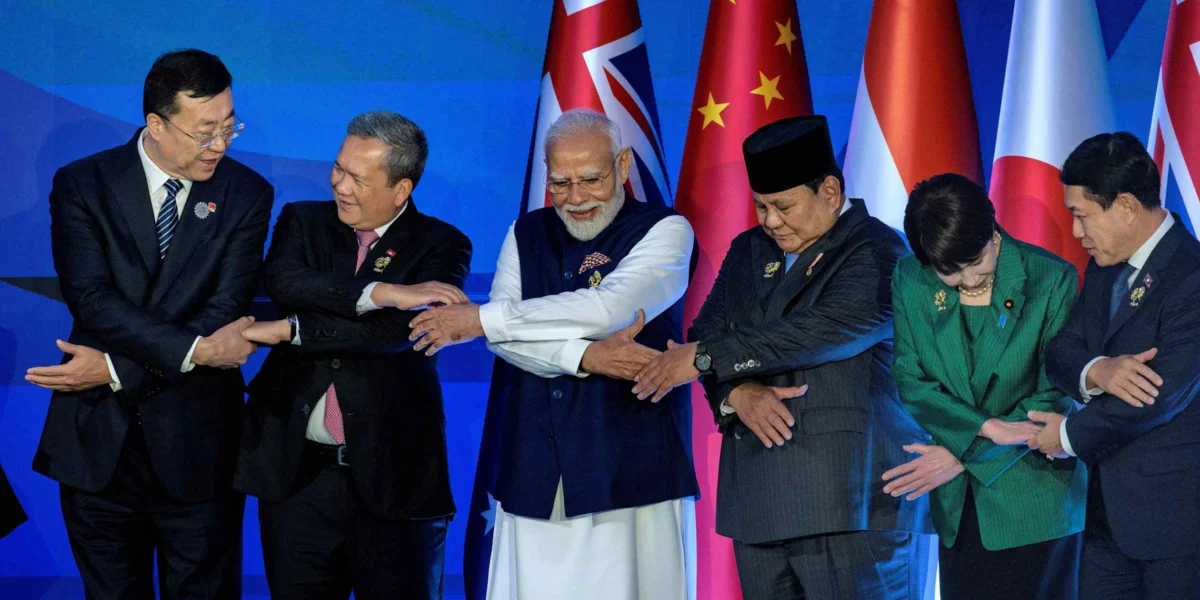
MANILA – Leaders from the Association of Southeast Asian Nations (ASEAN) and its key dialogue partners, including China, India, and Japan, gathered in Manila on Tuesday, November 17, 2026, for the annual East Asia Summit. The summit, a crucial forum for regional dialogue, placed a significant emphasis on bolstering efforts to combat transnational and online criminal activities. Concurrently, the United States reportedly sought to moderate language in official statements concerning climate change and diversity, a point of divergence that underscored the complex geopolitical dynamics at play.
The summit, held at the Philippine International Convention Center, brought together heads of state and government from the ten ASEAN member states – Brunei, Cambodia, Indonesia, Laos, Malaysia, Myanmar, the Philippines, Singapore, Thailand, and Vietnam – alongside leaders from Australia, China, India, Japan, New Zealand, Russia, South Korea, and the United States. The presence of such a diverse group of influential nations highlights the East Asia Summit’s role as a premier platform for addressing pressing regional security and economic issues.
Combating Transnational and Online Crimes: A Top Priority
The escalating threat of transnational and online crimes was a central theme of discussions. Delegates acknowledged the growing sophistication and interconnectedness of criminal networks operating across borders, posing significant challenges to national security, economic stability, and public safety. This included a focus on cybercrime, terrorism financing, human trafficking, and illicit drug trade, all of which have seen a marked increase in prevalence and impact in recent years.
Recent data from Interpol indicates a 15% year-on-year increase in reported cybercrime incidents globally in 2025, with a disproportionate impact on developing economies and critical infrastructure. In the Asia-Pacific region, cyberattacks targeting financial institutions and government agencies have become more frequent and damaging, leading to substantial economic losses and erosion of public trust. Similarly, the United Nations Office on Drugs and Crime (UNODC) has reported a persistent rise in drug trafficking, with Southeast Asia remaining a critical transit and consumption hub.
In response, leaders discussed strengthening inter-agency cooperation, enhancing intelligence sharing mechanisms, and developing robust legal frameworks to prosecute offenders. Proposals included the establishment of a regional task force dedicated to cybercrime investigation and prevention, as well as joint training programs for law enforcement officials across ASEAN and dialogue partner nations. The Philippines, as the host nation, stressed the importance of a coordinated, multi-faceted approach that addresses both the technological and human elements of these criminal activities.
Divergent Views on Climate and Diversity
While consensus was sought on many fronts, the summit also highlighted differing priorities, particularly concerning climate change and diversity. Sources close to the negotiations indicated that the U.S. delegation advocated for a more cautious approach to language surrounding climate action and the inclusion of diversity as a core tenet of regional cooperation in official communiqués. This stance appeared to contrast with the views of several ASEAN member states and other dialogue partners who expressed a strong commitment to accelerating climate mitigation efforts and promoting inclusive growth.
The urgency of climate action has been underscored by a series of extreme weather events across the Asia-Pacific region in recent years. The Intergovernmental Panel on Climate Change (IPCC) has repeatedly warned of the severe consequences of inaction, including rising sea levels, increased frequency of typhoons, and threats to food security, particularly for vulnerable island nations and low-lying coastal areas within ASEAN. Many regional economies are heavily reliant on agriculture and natural resources, making them exceptionally susceptible to climate-induced disruptions.
The push for stronger language on climate commitments at the summit reflects growing international pressure and the scientific consensus on the need for immediate and ambitious action. Countries like Japan, while a major industrialized nation, have also been investing heavily in renewable energy technologies and exploring innovative solutions for carbon capture. India, a rapidly developing economy, has set ambitious renewable energy targets, balancing its growth imperatives with environmental responsibilities.
The debate over diversity, while seemingly distinct from climate change, often intersects with broader discussions on sustainable and equitable development. Many nations view the inclusion of marginalized groups, gender equality, and social justice as integral components of resilient and prosperous societies. The U.S. position, as reported, suggested a focus on more traditional security and economic cooperation, potentially downplaying the emphasis on these social dimensions.
Background and Chronology of the East Asia Summit
The East Asia Summit (EAS) was established in 2005 as a leaders-led forum for dialogue on important strategic, political, and economic issues of common interest and concern, with the goal of promoting peace, security, and economic prosperity in the East Asian region. It is the only leaders-level forum in the Asia-Pacific region that brings together the eight ASEAN Member States and eight Dialogue Partners.
The first EAS was held in Kuala Lumpur, Malaysia, on December 14, 2005. Since then, it has convened annually, rotating among ASEAN member states. The summit’s agenda has evolved over the years, reflecting emerging regional and global challenges. Key themes have included disaster management, energy security, financial stability, pandemics, and maritime security.
Key Milestones and Previous Summits:
- 2005 (Kuala Lumpur): Inaugural summit, establishing the framework for regional cooperation.
- 2007 (Singapore): Focus on economic cooperation and energy security.
- 2011 (Bali): Emphasis on maritime security and ASEAN’s centrality in regional architecture.
- 2015 (Kuala Lumpur): Commemoration of the 10th anniversary, with discussions on the ASEAN Community.
- 2019 (Bangkok): Significant focus on the Indo-Pacific concept and trade issues.
- 2023 (Jakarta): Discussions centered on the post-pandemic economic recovery and regional architecture amidst geopolitical tensions.
The 2026 summit in Manila marks another critical juncture, occurring at a time of heightened geopolitical competition and increasing awareness of shared global challenges. The Philippines, having previously hosted the EAS in 2007 and 2017, brought its experience in facilitating regional dialogue to the forefront.
Statements and Reactions from Related Parties
While official statements are often carefully worded to achieve consensus, informal reactions and expert analyses provide further insight into the summit’s proceedings. Following the conclusion of the summit, various government officials and think tank representatives offered their perspectives.
A spokesperson for the Philippine Department of Foreign Affairs stated, "The Philippines is honored to host this vital summit. We believe that through open dialogue and enhanced collaboration, our nations can effectively address the complex challenges of transnational crime and build a more secure and prosperous region for all."
An analyst from the International Crisis Group, speaking on condition of anonymity, commented, "The emphasis on combating transnational crime is a welcome development, as these issues directly impact the daily lives of citizens. However, the reported differences in approach towards climate and diversity reflect the ongoing ideological and economic divides that continue to shape international relations. The ability of the EAS to foster genuine consensus on these broader issues will be a key test of its long-term relevance."
Leaders from countries heavily impacted by climate change, such as small island developing states in the Pacific that are often part of broader Asia-Pacific dialogues, have consistently called for more ambitious climate action from major emitters. Their participation in related forums often highlights the disparity between their urgent needs and the pace of global mitigation efforts.
Broader Impact and Implications
The outcomes of the East Asia Summit have significant implications for regional stability and economic development. The enhanced cooperation on transnational crime, if effectively implemented, could lead to a tangible reduction in criminal activities, fostering greater trust and security within the region. This, in turn, can create a more conducive environment for trade and investment.
The divergence on climate change and diversity, however, highlights the persistent challenges in forging a unified regional front on critical global issues. While the U.S. may seek to moderate language, the momentum for climate action and inclusive development is strong within many ASEAN nations and other dialogue partners. This could lead to parallel initiatives or regional blocs forming around these priorities, potentially fragmenting the broader consensus-building efforts of the EAS.
Furthermore, the summit’s success in navigating the complex geopolitical landscape, particularly concerning the influence of major powers like China and the U.S., will be closely watched. The EAS remains a crucial platform for managing regional tensions and preventing miscalculations. Its ability to adapt to evolving global dynamics and foster substantive cooperation will determine its efficacy in promoting a stable and prosperous East Asia in the years to come. The discussions in Manila, therefore, represent not just a snapshot of current regional concerns but also a glimpse into the future trajectory of multilateralism in one of the world’s most dynamic regions.