Putri Inara

The strategic development of digital headlines has emerged as the primary determinant of content performance in an increasingly saturated global information market. Within the ecosystem of digital publishing, the few words comprising a post title serve as the gatekeeper for engagement, dictating whether a piece of journalism achieves viral dissemination or remains dormant within a website’s archives. Professional content creators and digital marketing analysts emphasize that for the majority of readers, the decision to engage with the primary body of text is made instantaneously based on the headline’s efficacy. This phenomenon has led to a paradigm shift in how digital media is produced, moving away from traditional print-style labeling toward high-impact, psychologically driven titling strategies.
The Foundational Role of the Digital Headline
In the contemporary media landscape, blog post titles function far beyond their role as a simple summary of content. They appear across a diverse array of platforms including search engine results pages (SERPs), RSS feeds, social media timelines, and internal site navigation menus. In many of these instances, the title represents the solitary piece of information available to the consumer. Data from advertising pioneers such as David Ogilvy suggests that, on average, five times as many people read the headline as read the body copy. Consequently, unless a title manages to successfully "sell" the content, the investment in the subsequent writing is rendered obsolete.
The primary objective of a headline, as defined in professional copywriting circles, is to compel the reader to engage with the first sentence of the article. This "hook" mechanism is essential for navigating the "attention economy," where digital platforms compete for a limited supply of consumer focus. Analysts suggest that the failure to invest adequate time in the titling process is one of the most significant contributors to poor content ROI (Return on Investment).
Methodologies for High-Engagement Titling
Professional digital publishers utilize several distinct methodologies to optimize headline performance. These techniques are grounded in cognitive psychology and consumer behavior patterns.

The Communication of Tangible Benefits
One of the most effective strategies involves the clear articulation of a value proposition. When a headline promises to solve a specific problem or fulfill a need, click-through rates (CTR) tend to increase significantly. For example, instructional content that utilizes "How-to" structures or listicles (e.g., "10 Ways to Improve Photography") provides a clear expectation of the utility the reader will receive. By identifying a specific pain point and offering a direct solution in the title, publishers can target niche audiences with high precision.
The Strategic Use of Controversy and Debate
Psychological studies indicate that controversy piques human curiosity. Headlines that challenge conventional wisdom or present a strong, polarized opinion often generate higher levels of engagement and social sharing. However, industry experts warn that this approach requires the content to be robust enough to support the provocative claim. If the article fails to deliver on the promise of the headline, it can lead to a loss of brand credibility and an increase in "bounce rates"—a metric indicating that users leave a site shortly after arriving.
Interrogative Structures and Personalization
Asking a question in a title activates the reader’s cognitive "open loop," creating a psychological drive to find the answer. This is particularly effective when the question is personalized through the use of second-person pronouns. Direct address, using terms such as "you" or "your," creates a sense of individual relevance. For instance, a title like "How Your Digital Privacy is Being Compromised" is statistically more likely to engage a reader than a generic statement regarding data security trends.
Search Engine Optimization and Keyword Integration
From a technical perspective, the inclusion of keywords is vital for discoverability. Search engines prioritize headlines that contain relevant terms, especially when those terms appear at the beginning of the title. This dual-purpose approach satisfies both human readers and algorithmic crawlers. Market data shows that titles containing specific names of products, companies, or public figures perform better in search rankings, as these are the most frequently queried terms globally.
Emotional Triggers and Power Words
The use of "power words"—terms that evoke strong emotional responses such as "secret," "proven," "essential," or "shocking"—is a staple of high-traffic digital media. While effective, these terms must be used with caution. Overuse can lead to "clickbait fatigue," where audiences become skeptical of sensationalist language. Ethical digital journalism requires a balance between emotional resonance and factual accuracy.

Historical Context and the Evolution of the Headline
The transition of the headline from print to digital has followed a clear chronological trajectory marked by technological shifts.
- The Print Era (Pre-1990s): Headlines were designed for scanning on a physical page. They were often cryptic, clever, or used alliteration to catch the eye of someone browsing a newsstand.
- The Early Web (1990s – 2005): With the birth of the internet, headlines became more descriptive to accommodate basic search functions. The focus remained on informing the reader rather than driving specific metrics.
- The SEO Revolution (2005 – 2012): As Google became the dominant gateway to information, headlines were increasingly written for algorithms. This period saw the rise of keyword-stuffed titles that often sacrificed readability for ranking.
- The Social Media and Viral Era (2012 – 2018): Platforms like Facebook and Twitter prioritized engagement. This era popularized the "curiosity gap" and listicles, as seen in the rise of outlets like BuzzFeed.
- The Modern Analytical Era (2018 – Present): Current strategies combine SEO, psychological triggers, and data-driven testing. Publishers now use A/B testing to determine which version of a headline performs best in real-time.
Statistical Analysis of Headline Performance
Supporting data from various digital marketing studies underscores the importance of precision in titling. According to research by HubSpot, headlines with 8–12 words tend to receive the most consistent click-through rates. Furthermore, the inclusion of brackets or parentheses (e.g., "[Interview]" or "[Study]") has been shown to increase performance by up to 38%.
Data from Moz indicates that the first and last three words of a headline are the most impactful, as readers tend to scan the beginning and end of a sentence while skipping the middle. Additionally, the "negativity bias" in psychology suggests that negative superlatives (e.g., "Worst," "Avoid," "Never") often perform 30% better than positive ones (e.g., "Best," "Always"), as readers are naturally more attuned to avoiding threats or mistakes.
Industry Responses and Ethical Implications
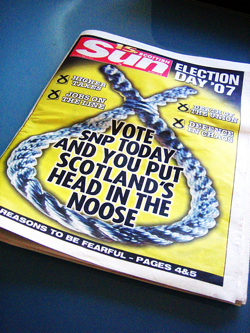
The shift toward high-impact titling has drawn mixed reactions from media critics and industry leaders. While digital marketers celebrate the increased reach and monetization potential, some journalists express concern over the "sensationalization" of information.
"The headline is the most important part of the story in the digital age, but it is also the most dangerous," stated a senior editor at a major tech publication. "If the gap between the headline’s promise and the article’s reality becomes too wide, we destroy the trust that is the foundation of journalism."
The rise of AI-driven headline generators has further complicated the landscape. These tools can analyze millions of data points to create the "perfect" title, but they often lack the nuance and ethical consideration of a human editor. Major news organizations have responded by implementing stricter guidelines on "clickbait," ensuring that while titles are engaging, they remain representative of the factual content.
Broader Impact and Future Implications
The methodology used to craft blog post titles has broader implications for how society consumes information. As attention spans shorten and the volume of content increases, the headline becomes the primary vehicle for news dissemination. This has led to the "headline-only" consumption habit, where a significant portion of the public forms opinions based on titles without ever reading the full text.
Looking forward, the integration of personalized AI will likely lead to "dynamic headlines," where the title of a post changes based on the specific interests and browsing history of the individual user viewing it. This hyper-personalization represents the next frontier in digital publishing, promising even higher engagement rates while raising new questions about filter bubbles and information echo chambers.
In conclusion, the "8 secrets" of crafting titles are not merely tips for bloggers but are essential components of a sophisticated digital communications strategy. By balancing psychological triggers, technical SEO, and ethical integrity, publishers can ensure their content survives and thrives in the competitive digital marketplace. The destiny of a post is indeed determined by its first few words, making the headline the most powerful tool in the modern writer’s arsenal.