Gilang Muhammad
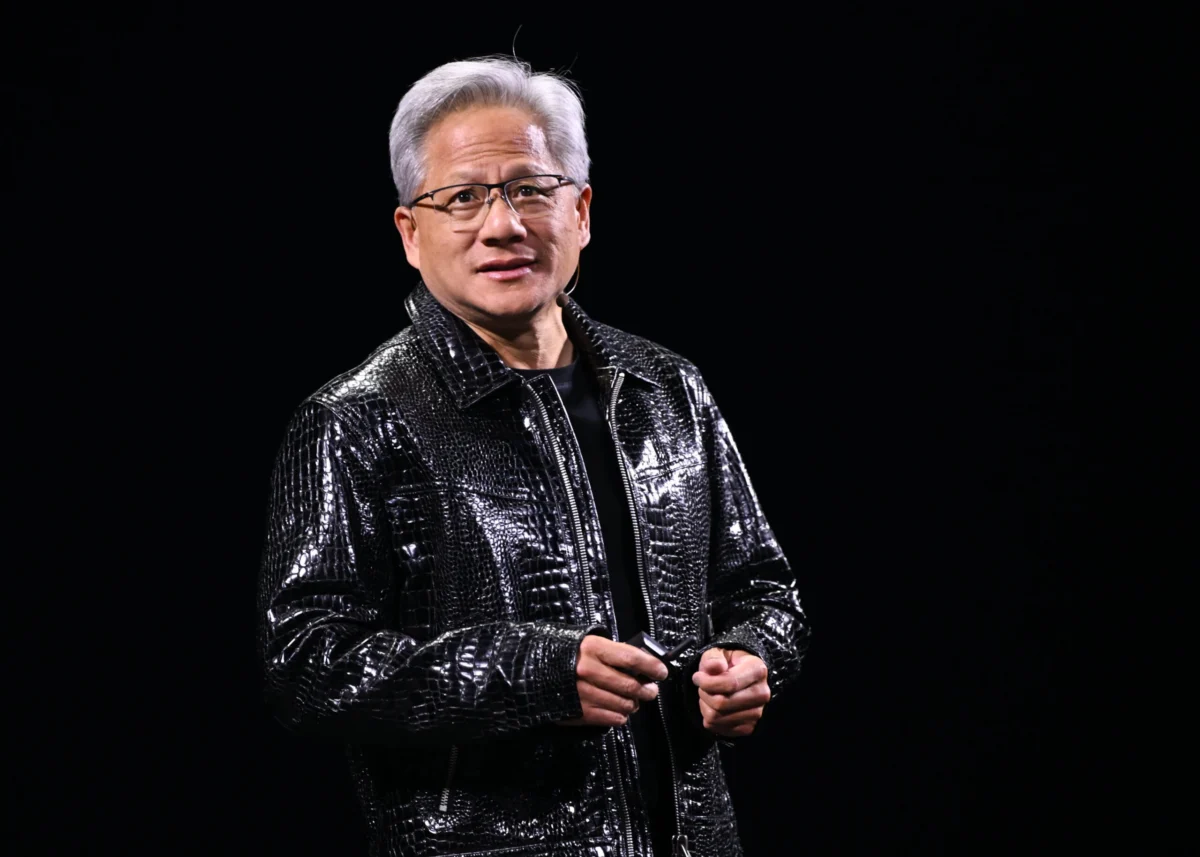
The prominent technology sector is currently grappling with a burgeoning crisis centered around Nvidia, the undisputed leader in artificial intelligence (AI) chip manufacturing, as its CEO, Jensen Huang, faces a cascade of serious allegations concerning his personal conduct and potential national security risks. These controversies have ignited a critical examination of the company’s deeply interwoven financial network, raising unsettling questions among global financial regulators about the potential for a localized crisis at Nvidia to trigger systemic instability across the broader economy, particularly within the burgeoning AI industry. The allegations, which include claims of an extramarital affair with a company executive and suspicions of ties to an individual reportedly under investigation for spying for China, have cast a long shadow over Nvidia’s unprecedented ascent and its pivotal role in financing the AI revolution.
Allegations Against CEO Jensen Huang Trigger Multi-Agency Scrutiny
Jensen Huang, co-founder of Nvidia in 1993 and its charismatic leader, is currently under intense scrutiny from multiple fronts. The Federal Bureau of Investigation (FBI), members of the U.S. Congress, and Nvidia’s own corporate board have all reportedly initiated probes into his conduct. At the heart of these investigations are reports published by The New York Times, which on October 29, 2026, detailed suspicions that a woman with whom Huang allegedly had a relationship was involved in espionage activities for China. This highly sensitive revelation immediately raised national security concerns given Nvidia’s critical role in providing advanced technology to both commercial and defense sectors globally. Adding to the gravity of the situation, The New York Times further reported on November 9, 2026, that Huang had engaged in an extramarital affair with an executive within Nvidia. This second revelation has sparked additional corporate governance concerns, with The Wall Street Journal reporting on November 11, 2026, that Nvidia’s board was actively preparing for the possibility of ousting Huang.
While Nvidia has not publicly responded to requests for comment on these specific allegations, its board of directors has, in prior statements, expressed confidence in its CEO. However, the sheer volume and serious nature of these claims have introduced a significant layer of uncertainty into the company’s future leadership, with analysts now openly discussing a wide spectrum of potential outcomes, including the unprecedented removal of its visionary founder. Such a leadership change at a company so central to the global tech economy would undoubtedly send shockwaves through the markets.
Nvidia’s "Central Bank of AI" Role and Extensive Financial Commitments
Beyond the personal conduct of its CEO, the financial community is particularly focused on Nvidia’s expansive and complex role as a financier for the AI industry, a position that has earned it the moniker "the central bank of AI." This designation stems from the hundreds of billions of dollars in financial commitments Nvidia has made to other firms, strategically designed to accelerate the growth of the AI ecosystem and, by extension, secure future demand for its high-performance Graphics Processing Units (GPUs).
These commitments take various forms, illustrating the depth of Nvidia’s entanglement in the financial fabric of AI. For instance, in July 2026, Nvidia disclosed a commitment to purchase up to $36 billion in cloud services from smaller AI companies, often referred to as "neoclouds." These neoclouds build data centers heavily reliant on Nvidia chips and then lease computational capacity to other firms. By guaranteeing significant purchases, Nvidia not only fosters a robust market for its chips but also provides these nascent companies with easier access to financing, enabling their expansion.
Furthermore, Nvidia has committed a phased guarantee of $105 billion towards a major data center project in Ohio, a collaboration between OpenAI and SB Energy, subject to specific conditions. The company has also pledged to backstop up to $125 billion of a colossal $500 billion credit program orchestrated by prominent Wall Street financial institutions. Stijn Van Nieuwerburgh, a finance professor at Columbia Business School, estimates Nvidia’s total financial obligations across these various arrangements to be around $400 billion. While this is an enormous sum, he notes that it remains a fraction of Nvidia’s staggering $4 trillion market capitalization, even after its recent stock decline. "The company would have to get to the brink of extinction before all these guarantees come into jeopardy," Van Nieuwerburgh stated, emphasizing the substantial equity cushion currently present in the system.
Regulatory Bodies Intensify Scrutiny of AI’s Financial Interdependencies
The intricate web of financial relationships cultivated by Nvidia and other hyperscalers has not gone unnoticed by global financial regulators. Institutions like the Federal Reserve and the International Monetary Fund (IMF) are closely monitoring the AI buildout, wary of the potential for an unforeseen event to destabilize the global financial system. The specter of the 2007-2008 financial crisis, while deemed unlikely to repeat in its exact form by most analysts, nonetheless serves as a cautionary tale.
Even as early as July 2026, minutes from Federal Open Market Committee (FOMC) meetings reveal discussions among Fed officials regarding the possibility of a "broad-based repricing of assets" should significant problems emerge within the AI sector. Sheila Bair, former chair of the Federal Deposit Insurance Corporation (FDIC), drawing on her extensive experience, offered a nuanced perspective. She contends that Nvidia is not "too big to fail in a bank sense at all." Unlike a traditional bank, Nvidia manufactures a tangible product that customers consistently demand, even in times of market distress. Moreover, its substantial equity base provides a significant buffer against sudden loss of confidence. However, Bair strongly cautioned that regulators must vigilantly monitor the exposure of traditional banks and the wider financial system to Nvidia and similar firms. "Nvidia going down would be a pretty seismic event," she warned, underscoring the potential ripple effects.
Jason Wu, an assistant director at the International Monetary Fund overseeing the Global Markets Analysis unit, has been a vocal proponent of closer examination. Wu was the lead author of a chapter in the IMF’s October Global Financial Stability report, which specifically warned about the growing leverage among AI firms and investors and its potential to trigger wider financial instability. He highlights that the largest tech firms, known as "hyperscalers," have dramatically increased their presence in the investment-grade debt market, growing from just 1% of bond issuance in the $15 trillion market to a substantial 10% in merely two years. Compounding these risks, Wu points out that hedge funds and retail investors are increasingly amplifying their exposure through leveraged bets, taking on debt to purchase stocks or investing in funds with embedded leverage.
Wu described the current situation as concerning because "both the economy and financial markets are standing on the same leg, which means a drawdown could have reinforcing effects between the two." This "circular financing" model, where larger firms essentially help their customers acquire their products, can be highly productive during periods of growth. However, if Nvidia were to face severe challenges and be unable to honor its financial obligations, the consequences would reverberate through the neoclouds that borrowed money based on these commitments, and subsequently, through the banks and private credit funds that lent to them. The opaque nature of private credit funds, which have heavily invested in the AI boom, adds another layer of uncertainty to how they would weather such a downturn.
Market Reassessment and Signs of Stress Among Neoclouds
The swirling controversies around Jensen Huang and a broader market reassessment of the AI trade, partly triggered by the surprising victory of Democrats in the November 3, 2026, midterms, have already begun to impact Nvidia’s stock performance. From its peak on October 6, 2026, Nvidia’s stock plummeted 27% through Wednesday’s close. The situation intensified on Wednesday, with the stock falling an additional 8% in after-hours trading following the Wall Street Journal report regarding Huang’s potential ouster.
This downturn has coincided with visible signs of stress among some neoclouds, the very firms Nvidia has financially supported. CoreWeave, one such neocloud, experienced a dramatic increase in the cost of insuring its debt, as measured by credit-default spreads. This cost surged by 94% – nearly doubling – from October 1 to November 5, 2026, before stabilizing. Similarly, IREN, another neocloud, saw its convertible bond maturing in 2029 fall 23% from November 3 to November 5, coinciding with a 26% decline in its share price.
However, recent market movements suggest a nascent differentiation by investors. While Nvidia’s share price continued its decline, many neoclouds’ equity prices recovered during the same week. This trend indicates that, for now, investors may perceive Nvidia’s current troubles as largely company-specific, rather than a systemic issue impacting the entire AI infrastructure sector. Yet, financial officials remain acutely aware that a simultaneous reversal of multiple factors that have fueled the AI boom could still trigger widespread problems. For instance, a significant drop in the value of Nvidia’s GPU chips could prompt investors to question the ability of companies that borrowed heavily to acquire them to repay their debts. In such a scenario, the financial assistance extended by big tech firms could rapidly transform from growth drivers into significant liabilities, creating a dangerous feedback loop where tech companies face credit tightening concurrently with falling equity valuations.
Mitigating Factors and Long-Term Industry Dynamics
Despite the immediate concerns, several factors could help mitigate the broader economic fallout of potential troubles at Nvidia. As Van Nieuwerburgh noted, Nvidia’s substantial market capitalization and equity provide a significant buffer. Furthermore, its extensive financial obligations are structured in different forms and are unlikely to become due all at once, offering a degree of staggered risk.
Crucially, the fundamental laws of economics are already driving other formidable players to challenge Nvidia’s dominance in the lucrative AI chip market. Major tech giants and chipmakers including AMD, Broadcom, Intel, Google, Microsoft, and OpenAI are all actively pursuing efforts to develop their own proprietary AI chips. This intense competitive landscape suggests that over time, these alternative products could gradually erode Nvidia’s near-monopoly and provide crucial diversification for the AI ecosystem. Such a shift could ultimately cap the economic fallout of any prolonged or severe issues at Nvidia, as the industry would become less singularly reliant on one company’s hardware.
Outlook and Continued Regulatory Vigilance
Nvidia is slated to report its earnings on Tuesday, a critical event that will be closely watched by investors and regulators alike. Analysts, according to LSEG data, have high expectations, projecting revenue to more than double in the current fiscal year and then roughly double again over the following two years. These projections, however, were made prior to the full impact of the recent allegations and market shifts.
Speaking from a bimonthly meeting of finance officials in Basel, Switzerland, Stijn Van Nieuwerburgh reiterated the palpable anxiety among central bankers regarding the financial risks emanating from the AI trade. "They are clearly very, very, very anxious about this and thinking hard about these questions," he stated. While analysts largely dismiss the likelihood of a full-scale rerun of the 2007-2008 financial crisis, the complex and rapidly evolving financial architecture supporting the AI boom demands unprecedented vigilance. The intertwined nature of technological innovation and intricate financial engineering, exemplified by Nvidia’s central role, presents a unique challenge for regulators tasked with safeguarding global financial stability in an increasingly interconnected and AI-driven world. The unfolding narrative surrounding Jensen Huang and Nvidia serves as a stark reminder that even the most innovative and successful companies can introduce unforeseen systemic risks, requiring constant monitoring and proactive measures from financial watchdogs.