Clara Shinta
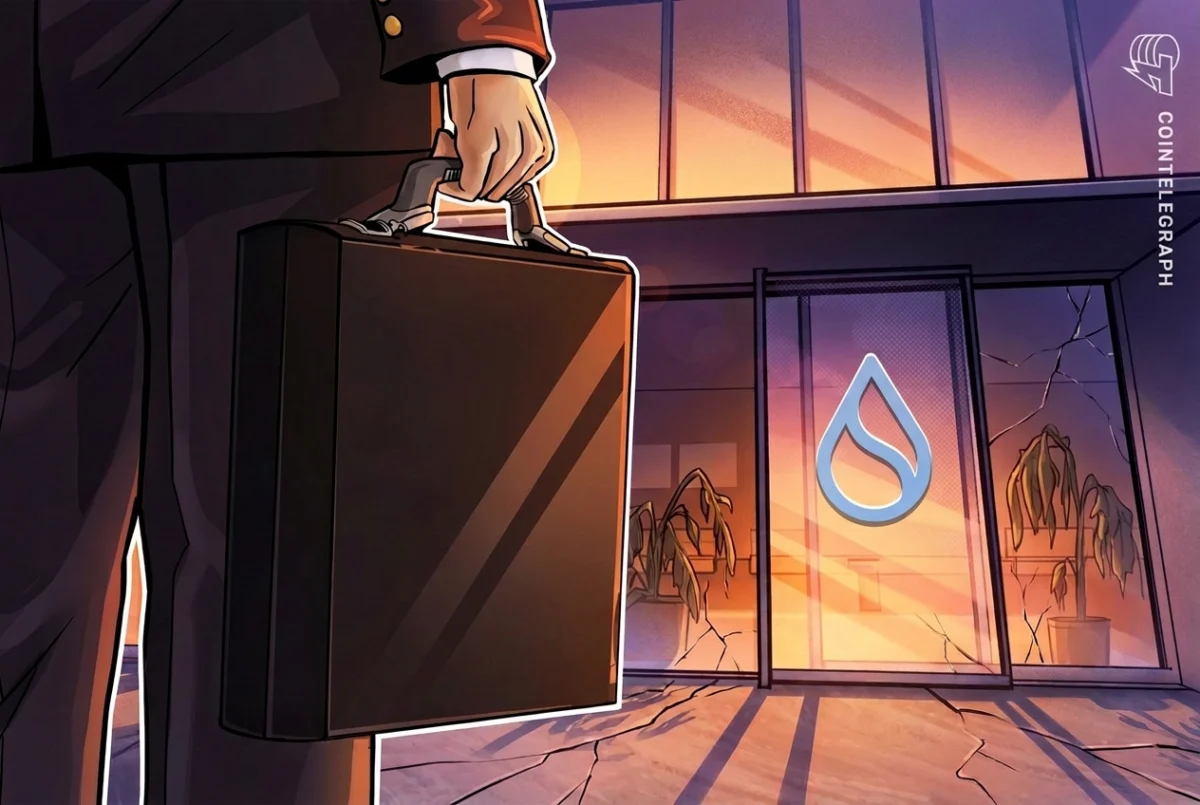
The cryptocurrency wallet Suiet, a prominent self-custodial solution built specifically for the Sui blockchain, has announced its imminent shutdown, marking a significant development in a series of recent closures and service withdrawals that have raised concerns across the Sui ecosystem. This decision by Suiet, which informed its users that it would cease updating and supporting its wallet, with API services scheduled to conclude after November 14, comes amidst a sharp decline in decentralized finance (DeFi) activity and user engagement on the Sui network, casting a shadow over the platform’s future trajectory.
The Retreat of Key Infrastructure: Suiet’s Closure
Suiet’s departure is particularly noteworthy given its role as a dedicated wallet provider, a fundamental piece of infrastructure for any blockchain ecosystem. Self-custodial wallets are crucial for users to securely manage their digital assets, interact with decentralized applications (dApps), and participate in the network’s economy. The cessation of support for such a core component inevitably impacts user experience and trust. For users of Suiet, the immediate concern shifts to migrating their assets to alternative wallets before the November 14 deadline, a process that, while routine for experienced crypto users, can be a point of friction and potential loss for less savvy participants. The formal notice from Suiet, disseminated through its official channels, underscored the finality of its decision, leaving little room for speculation about a potential reversal. The lack of detailed public explanation for the shutdown, beyond the general challenging environment, amplifies the uncertainty surrounding the ecosystem’s stability.
A Broader Trend of Departures and Service Withdrawals
Suiet’s closure is not an isolated incident but rather the latest in a troubling pattern of withdrawals and shutdowns within the Sui ecosystem. Just days prior to Suiet’s announcement, on November 10, Suiball, a project focused on hardware wallet solutions for Sui, also declared its cessation of operations. Furthermore, the widely used multi-chain wallet provider Phantom, which boasts a significant user base across various blockchain networks, made the strategic decision to end its support for Sui as early as September. These infrastructure-level departures signal a growing reluctance among service providers to maintain or initiate operations on the Sui network, potentially due to economic viability or perceived risk.
Beyond wallet services, the DeFi sector on Sui has also experienced significant setbacks. The DeFi protocol Full Sail, for instance, wound down its operations following a security incident involving Switchboard, which resulted in approximately $91,000 in losses. While specific security vulnerabilities can plague any protocol, the cumulative effect of such incidents, coupled with the exit of core service providers, creates an impression of instability and increases the perceived risk for both users and developers considering the Sui ecosystem. These successive closures contribute to a narrative of contraction, contrasting sharply with the robust growth narratives often associated with emerging blockchain platforms.
Economic Headwinds and User Engagement Metrics
The economic challenges facing the Sui network are starkly reflected in key on-chain metrics. Data from DefiLlama, a reputable aggregator of DeFi statistics, indicates that Sui’s Total Value Locked (TVL) stood at approximately $413 million on a recent Wednesday. This figure represents a decline of more than 22% over the preceding month, illustrating a significant outflow of capital and a reduction in liquidity within its DeFi protocols. TVL is a critical indicator of a blockchain’s health, representing the total amount of assets currently staked or locked in DeFi applications on that chain. A sustained decline suggests diminishing investor confidence and reduced activity in lending, borrowing, and decentralized exchange operations.
Further compounding these concerns is the precipitous drop in daily active users (DAU). Data compiled by Token Terminal, another leading analytics platform, reveals that Sui averaged approximately 128,000 daily active users in October. This represents a dramatic fall from its peak, which saw around 601,000 daily active users in a prior period (likely November 2023, correcting for the original article’s likely typo of ‘November 2025’). This equates to an alarming drop of approximately 79% in user engagement over a relatively short period. A shrinking user base directly impacts network utility, transaction fees, and the overall vibrancy of the ecosystem, making it challenging for dApps to attract and retain participants.
Interestingly, despite the sharp decline in active users, transaction volumes on Sui have shown a paradoxical increase. Token Terminal data indicates that transactions reached 324 million in October, a substantial rise from 101 million in a previous high-activity period (again, likely November 2023, correcting for the ‘2025’ typo). However, industry experts caution against equating higher transaction counts with a healthy, growing user base. Kadan Stadelmann, former Chief Technology Officer of Komodo Platform, highlighted this discrepancy, noting that "more transactions do not necessarily mean more users." He suggested that inflated transaction volumes could be attributed to automated processes, bots, or specific applications generating numerous low-value interactions, rather than organic human engagement. For wallet providers and other infrastructure projects, the critical factor remains the number of active, valuable users who justify the operational costs of supporting the network.
Stadelmann elaborated on the underlying economic rationale for the current situation: “Sui’s problems seem to mostly be of an economic nature resulting from expensive engineering costs and low user volume rather than protocol failures.” He reassured that “No flaw in the system’s core design has been found.” This distinction is crucial; it implies that the challenges are not inherent to Sui’s core technology but rather stem from the practicalities of ecosystem development and market adoption. The "expensive engineering costs" can encompass everything from developer salaries for building and maintaining sophisticated dApps to the specialized knowledge required for the Move smart contract language, which presents a higher barrier to entry for some developers compared to more ubiquitous languages like Solidity. The low user volume, in turn, fails to generate sufficient revenue or network effects to offset these high operational expenditures for many projects.
Technical Stability Concerns: A History of Outages
Beyond economic pressures, the Sui network has also grappled with technical stability issues, which can erode user trust and deter enterprise adoption. Reports published by the Sui Foundation indicate that the network experienced four significant outages in 2023, resulting in approximately 22 hours of combined downtime. These disruptions are particularly damaging for a blockchain platform that touts high performance and reliability as key differentiators.
The first major outage occurred in January 2023, when the network ceased processing transactions for about six hours. This was followed by three more disruptions on May 28 and 29, 2023. The Sui Foundation attributed these May incidents to "software bugs," including problems introduced by a network update. While the Foundation affirmed that "no user funds were at risk" during these May disruptions, such assurances often do little to alleviate the concerns of users who rely on constant network availability for trading, transferring funds, or managing their DeFi positions. Even brief outages can lead to missed opportunities, liquidations, or an inability to react to market movements, creating significant financial and emotional stress for users.
To contextualize Sui’s stability record, it’s illustrative to compare it with rival Layer 1 blockchains. Solana, which has historically faced its own share of network stability challenges, has reportedly not recorded a network-wide outage since February 2024, when it went offline for nearly five hours. Aptos, another blockchain that shares the same underlying smart contract programming language (Move) as Sui and also emerged from Meta’s Diem project, last reported a mainnet outage in October 2023. This comparison highlights that while network disruptions are not unique to Sui, the frequency and cumulative duration of its outages in 2023 present a considerable challenge to its reputation for reliability. Consistent uptime is a non-negotiable requirement for critical financial infrastructure, and repeated outages can severely hamper institutional interest and mainstream adoption.
The Sui Ecosystem: Background and Aspirations
To fully appreciate the current challenges, it’s essential to recall the initial aspirations and significant backing of the Sui network. Sui was developed by Mysten Labs, a company founded by former engineers from Meta’s (Facebook’s) defunct Diem (formerly Libra) blockchain project. Leveraging their expertise, Mysten Labs designed Sui to be a high-performance, scalable Layer 1 blockchain capable of processing transactions in parallel, aiming for extremely high throughput and low latency. A cornerstone of its technology is the Move smart contract programming language, also derived from Diem and shared with Aptos. Move is lauded for its focus on resource ownership and security, designed to prevent common smart contract vulnerabilities.
Sui launched with considerable market enthusiasm and substantial venture capital funding, positioning itself as a potential "Solana-killer" or a next-generation blockchain capable of supporting mass-market adoption and complex Web3 applications like gaming and social media. Its initial mainnet launch in May 2023 was met with anticipation, promising an environment where developers could build robust dApps without the scalability bottlenecks often encountered on older blockchains. This context of high expectations and significant investment makes the current downturn in user activity and the series of project closures particularly stark. The initial narrative was one of innovation and disruption, but the practical realities of ecosystem development have proven more challenging than anticipated.
Challenges and the Path Forward
The confluence of expensive engineering costs, low user volume, repeated network outages, and the departure of key ecosystem projects presents a multi-faceted challenge for Sui. Kadan Stadelmann’s observation that "Multi-chain wallets have expansive attack surfaces, and Sui’s approach adds costs for vendors who can take their business to less capital intensive chains," encapsulates a critical issue. For multi-chain wallet providers, supporting an additional blockchain entails significant development, maintenance, and security overhead. If the return on investment – measured in terms of user acquisition, transaction fees, or strategic importance – does not outweigh these costs, providers are logically inclined to reallocate resources to more economically viable chains. Any individual failure of a multi-chain wallet in this context, Stadelmann argues, "is more a reflection of the risks rather than an indictment of any given protocol," highlighting the broader economic pressures faced by infrastructure providers in a competitive blockchain landscape.
For the Sui Foundation, the non-profit entity tasked with fostering the growth and development of the Sui ecosystem, these headwinds necessitate a strategic re-evaluation. The challenges extend beyond merely technical fixes; they involve complex issues of developer attraction, user acquisition, and cultivating a vibrant, self-sustaining economic environment. Building a robust developer community for a specialized language like Move requires significant investment in tooling, educational resources, and grants. Attracting users in a crowded market demands compelling applications and seamless user experiences, which are harder to achieve when core infrastructure like wallets is retracting.
The implications for developers considering building on Sui are profound. The current environment may lead to hesitation, as the risk of building on a platform with declining user engagement and a shrinking support infrastructure becomes a significant deterrent. Investor confidence, too, could be shaken, potentially impacting future funding rounds for projects within the ecosystem. The long-term viability of Sui hinges on its ability to address these economic and operational challenges comprehensively, rebuild trust, and demonstrate a clear path toward sustainable growth.
Industry Context and Future Outlook
The struggles of Sui are not unique in the highly competitive Layer 1 blockchain landscape. Many new chains launched in recent years have faced similar challenges in carving out a niche, attracting developers, and achieving significant user adoption against established players like Ethereum, Solana, and Avalanche. The current market conditions, characterized by heightened scrutiny of tokenomics and a general maturation of the crypto industry, further amplify these pressures. Projects are increasingly judged on their fundamental utility, economic sustainability, and ability to deliver consistent value, rather than purely on speculative hype.
In conclusion, the shutdown of Suiet, coupled with the series of other project departures, declining DeFi metrics, and past network outages, signals a critical juncture for the Sui ecosystem. While the underlying technology developed by Mysten Labs is considered robust, the practical execution of building a thriving, decentralized network involves more than just technical prowess. It requires a delicate balance of economic incentives, community engagement, and unwavering reliability. The path forward for Sui will undoubtedly demand strategic adjustments, focused efforts on developer and user retention, and a renewed commitment to operational excellence to navigate these turbulent waters and secure its place in the broader blockchain pantheon. The coming months will be crucial in determining whether Sui can overcome these formidable obstacles and regain momentum.