Clara Shinta
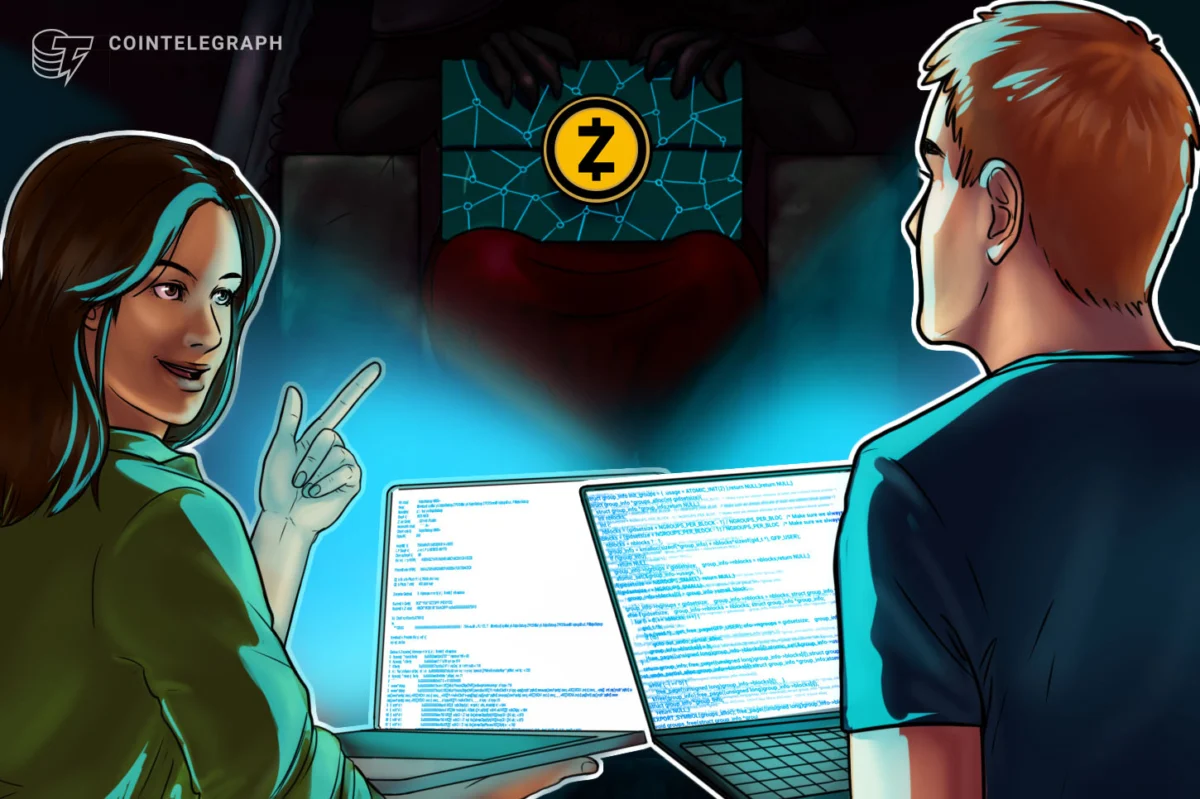
Following closely on the heels of its significant NU7 network upgrade, Zcash developers have put forth a new proposal to further decrease the blockchain’s target block interval, moving from 25 seconds to a more rapid 20 seconds. This initiative is designed to drastically shorten transaction confirmation times, thereby enhancing the overall user experience for critical applications such as point-of-sale payments, cryptocurrency exchange deposits, and cross-chain swaps. The proposed adjustment underscores a continuous commitment within the Zcash ecosystem to optimize network performance and solidify its position as a competitive, privacy-focused digital currency.
The Latest Proposal: A Bid for Expedited Confirmations
The formal proposition, presented as a draft Zcash Improvement Proposal (ZIP), was publicly submitted on the Zcash community forum on Sunday, November 7, 2026, by prominent developers ValarDragon and Evan Forbes. Their intent is for this fundamental change to be subjected to the next community-wide poll and subsequently considered for inclusion in the forthcoming NU7.1 network upgrade. The core rationale behind this reduction is straightforward: a shorter block interval directly translates to a quicker initial confirmation for any given transaction. For users and businesses relying on Zcash for daily operations, this means less waiting time, leading to a smoother and more integrated digital payment experience.
In their detailed submission, ValarDragon and Forbes articulated that while the reduction in block time would increase the frequency of block production, it would meticulously preserve Zcash’s existing issuance schedule. This critical aspect ensures that the network’s tokenomics remain stable and predictable, despite the accelerated block generation rate. Furthermore, the developers clarified that the proposed change would not lead to an increase in the network’s overall daily capacity for private transactions. Instead, it focuses purely on the speed of confirmation, a key metric for real-world usability.
Building on Recent Success: The NU7 Upgrade’s Foundation
This latest proposal is particularly noteworthy as it comes mere days after the successful activation of Zcash’s monumental NU7 upgrade. Activated on the mainnet on Friday, November 5, 2026, NU7 itself represented a substantial leap forward for the network, dramatically cutting the target block interval from a protracted 75 seconds down to a much more practical 25 seconds. The current proposal, therefore, is not a standalone effort but rather an incremental, yet impactful, refinement building upon the significant architectural changes already implemented.
The NU7 upgrade was a multifaceted development that introduced several crucial enhancements beyond just block time reduction. Among its most significant features was the implementation of a Network Sustainability Mechanism. This innovative design aims to strategically recycle a portion of transaction fees back into future mining rewards. This mechanism is meticulously crafted to bolster the long-term economic health and security of the Zcash network, all while steadfastly preserving the cryptocurrency’s immutable 21 million ZEC supply cap. This ensures that as the network processes more transactions, a sustainable feedback loop is established, benefiting miners and contributing to the network’s overall resilience without inflationary pressures.
Technical Rationale and User Experience Benefits
The drive for faster confirmation times stems from a clear understanding of contemporary user expectations in the rapidly evolving digital asset landscape. In environments where speed is paramount, such as point-of-sale systems, a transaction that takes 25 seconds to receive its first confirmation can still feel sluggish compared to traditional payment methods or even other rapidly confirming blockchains. Reducing this to 20 seconds, while seemingly a small numerical change, represents a 20% improvement in initial confirmation speed from the NU7 baseline, and a massive 73% improvement from the pre-NU7 75-second interval.
For point-of-sale payments, a shorter wait time translates directly to a smoother customer experience, reducing checkout queues and making Zcash a more viable option for everyday commercial transactions. Merchants benefit from quicker finality, reducing the risk of chargebacks or payment reversals. In the context of exchange deposits, faster confirmations mean users can access their funds on trading platforms more quickly, enabling them to capitalize on market movements without undue delay. This is a critical factor for active traders and for maintaining liquidity. For cross-chain swaps, where assets are moved between different blockchain networks, initial confirmations on the source chain are vital for initiating the next steps in the transfer process. Expediting this step reduces the overall time taken for a cross-chain transfer, making the entire ecosystem more fluid and interconnected.
The developers have carefully considered the technical implications of such a change. A more frequent block interval means that blocks are produced closer together. While this could theoretically increase the orphan rate (blocks mined but not added to the main chain) if network propagation times are slow, modern network infrastructure and Zcash’s optimized protocol designs are generally robust enough to mitigate this risk for a 20-second interval. The proposal implicitly suggests that the Zcash network’s current topology and latency are sufficient to handle this increased block frequency without compromising security or chain stability.
Maintaining Economic Stability: Issuance and Capacity
A key concern with increasing block frequency in any blockchain is its potential impact on the token’s issuance schedule and total supply. The Zcash developers have proactively addressed this by ensuring that the proposal "would also preserve Zcash’s existing issuance schedule, despite blocks being produced more frequently." This is typically achieved by adjusting the block reward proportionally. For instance, if the block time is reduced by a factor of X, the reward per block is also reduced by a factor of X, ensuring that the total number of new ZEC issued over a given period (e.g., daily, yearly) remains constant. This thoughtful approach safeguards the long-term economic model of Zcash, which is built around a fixed supply cap of 21 million ZEC, mirroring Bitcoin’s scarcity model.
Regarding network capacity, the proposal states that the change "would not increase the network’s overall daily capacity for private transactions." This indicates that while transactions confirm faster, the total data throughput or computational complexity per day remains consistent. Zcash’s unique privacy features, particularly its use of zero-knowledge proofs (zk-SNARKs), require significant computational resources for shielded transactions. The network’s capacity is often constrained by the time it takes to generate and verify these proofs, not solely by the block interval. Therefore, the focus remains on enhancing the speed of processing existing capacity rather than expanding the total volume of transactions that can be processed daily. This distinction is crucial for understanding the specific goals of the proposed ZIP.
The Zcash Governance Process: From ZIP to Implementation
The journey from a developer’s idea to a live network upgrade in the Zcash ecosystem is governed by a well-defined and transparent process centered around Zcash Improvement Proposals (ZIPs). A ZIP serves as a formal design document providing information to the Zcash community, or describing a new feature, process, or environment. The current proposal, submitted by ValarDragon and Evan Forbes, is in its draft ZIP stage, indicating that it is open for community review, discussion, and feedback.
Following this initial phase, if the proposal garners sufficient support and passes technical scrutiny, it would then be put to a community poll. This democratic mechanism allows Zcash stakeholders – including miners, node operators, users, and ZEC holders – to voice their support or opposition. A successful poll result would pave the way for its inclusion in an upcoming network upgrade, in this case, NU7.1. This iterative and community-driven development model is a cornerstone of Zcash’s decentralized governance, ensuring that significant changes reflect the collective will and technical consensus of its user base.
Historical Context: Zcash’s Evolution and Block Times
Zcash’s history is marked by a continuous quest for enhanced privacy, security, and usability. Launched in October 2016 as a fork of Bitcoin, Zcash introduced groundbreaking cryptographic techniques, most notably zk-SNARKs, to enable optional transaction privacy. Over the years, the network has undergone several significant upgrades, each aimed at refining its core functionalities.
The recent reduction from 75 seconds to 25 seconds in the NU7 upgrade was itself a monumental shift. For years, the 75-second block interval was a defining characteristic of Zcash, offering a balance between security and transaction throughput. However, as the cryptocurrency space evolved, and user expectations for speed increased, the need for a faster confirmation time became apparent. The move to 25 seconds brought Zcash closer to the responsiveness of some of its competitors while still maintaining its robust security model. The current proposal for a further reduction to 20 seconds demonstrates an agile development philosophy, responding to user feedback and competitive pressures to remain at the forefront of privacy-preserving digital payments. This progressive shortening of the block interval showcases a clear trajectory towards prioritizing user experience and real-world adoption.
Comparing Zcash’s Speed to Other Blockchains
To fully appreciate the significance of a 20-second block interval, it’s useful to contextualize it within the broader cryptocurrency landscape.
- Bitcoin (BTC): The pioneer cryptocurrency operates on a target block interval of approximately 10 minutes (600 seconds). This slower confirmation time, while providing immense security, makes Bitcoin less ideal for immediate retail payments without reliance on off-chain solutions or multiple confirmations.
- Ethereum (ETH): Ethereum, the leading smart contract platform, generally aims for a block time between 12 and 15 seconds, particularly after its transition to Proof-of-Stake (the Merge). This faster interval supports its vast ecosystem of decentralized applications (dApps) and DeFi protocols.
- Litecoin (LTC): Often considered the "silver to Bitcoin’s gold," Litecoin boasts a block time of 2.5 minutes (150 seconds), making it significantly faster than Bitcoin for transaction confirmations.
- Solana (SOL): Known for its high throughput, Solana achieves incredibly fast block times, often under 0.5 seconds (500 milliseconds), making it one of the fastest blockchains in terms of finality. However, this speed often comes with trade-offs in terms of decentralization and hardware requirements for validators.
- Cardano (ADA): Cardano’s block time is typically around 20 seconds, placing it in a similar league to what Zcash is now proposing.
With a proposed 20-second block interval, Zcash would position itself among the faster layer-1 blockchains, comparable to Ethereum and Cardano in terms of raw block production speed. This places it well ahead of Bitcoin and Litecoin, making it a more attractive option for applications requiring near-instant feedback without sacrificing the robust security and privacy features that define the Zcash protocol. The move highlights Zcash’s ambition to be not just a privacy coin, but a highly performant and user-friendly digital currency for a wide array of use cases.
Potential Implications and Community Discourse
The proposal is expected to spark considerable discussion within the Zcash community. While the benefits to user experience are clear, potential concerns or areas of scrutiny might include:
- Network Stability and Decentralization: Ensuring that a 20-second block interval does not unduly strain network propagation or disproportionately favor well-connected mining pools, potentially affecting decentralization.
- Software Readiness: The readiness of wallet software, exchanges, and other ecosystem participants to seamlessly adapt to the new block interval.
- Security Implications: While minor changes in block time generally don’t drastically alter security, any adjustment warrants a thorough review to ensure no unforeseen vulnerabilities are introduced, particularly regarding orphan rates or potential for 51% attacks.
- Developer Workload: The rapid succession of major upgrades (NU7 followed by NU7.1 with another block time change) represents a significant workload for the core development teams at Electric Coin Company (ECC) and the Zcash Foundation, necessitating efficient resource allocation and rigorous testing.
Initial reactions on the Zcash community forum are likely to focus on these technical considerations, with developers and experienced community members weighing in on the feasibility and long-term implications. The transparent nature of the ZIP process allows for these discussions to unfold publicly, fostering a collaborative approach to network development.
Looking Ahead: The Road to NU7.1
The draft ZIP marks the beginning of a crucial phase for Zcash. Should the proposal gain traction and pass community consensus, its inclusion in the NU7.1 network upgrade would represent another significant step in Zcash’s evolution. NU7.1 is anticipated to be a focused upgrade, primarily designed to integrate such performance enhancements and possibly address any minor refinements emerging from the NU7 activation.
The ongoing efforts to refine Zcash’s core protocol, evidenced by the successive block interval reductions and the introduction of mechanisms like the Network Sustainability Mechanism, paint a picture of a dynamic and responsive development ecosystem. Zcash is not merely resting on its laurels as a privacy pioneer but actively striving to be a leading-edge digital currency that balances cutting-edge cryptography with practical usability and robust economic principles. As the digital asset space continues to mature, Zcash’s commitment to these areas will be pivotal in shaping its future trajectory and adoption across various financial and commercial applications.