Putri Inara

The digital publishing industry increasingly acknowledges that the success of online content is disproportionately determined by the first few words a reader encounters. In an era characterized by information saturation and dwindling attention spans, the blog post title serves as the primary gatekeeper for engagement. Industry data suggests that while eight out of ten people will read headline copy, only two out of ten will proceed to read the rest of the content. This 80/20 rule underscores the reality that a headline is not merely a label but a critical strategic asset that dictates the "destiny" of a post. Whether a piece of writing achieves viral status or remains dormant in a digital archive often depends on the efficacy of its title.
The Strategic Importance of Headline Placement
In the contemporary digital landscape, a blog post title does not exist in isolation. It is disseminated across a multitude of platforms, each with its own set of audience expectations and algorithmic requirements. Titles are the primary elements visible in search engine results pages (SERPs), RSS feeds, social media shares, and internal site recommendations. In these contexts, the title is often the sole metric by which a user decides to click or scroll past.
Professional copywriters, following the lineage of advertising pioneers like David Ogilvy, maintain that the singular purpose of a title is to compel the reader to engage with the first line of the actual content. This "slippery slide" effect begins with the headline. If the headline fails to generate sufficient curiosity, utility, or urgency, the resources invested in the body of the article—regardless of its quality—are essentially neutralized.
A Chronology of Headline Evolution in Media
The science of headline writing has evolved through distinct phases, reflecting changes in technology and consumer behavior:
- The Print Era (Pre-1990s): Headlines were designed for static shelf visibility and newspaper layout. Clarity and brevity were paramount, dictated by physical space constraints.
- The Early Digital Era (1990s–2005): Titles became functional markers for basic search directories. SEO was in its infancy, and titles were often literal and dry.
- The Blogging and Social Media Revolution (2005–2015): The rise of platforms like ProBlogger and Buzzfeed introduced the "curiosity gap" and the "listicle." Titles became psychological tools designed to trigger social sharing.
- The Algorithmic and AI Era (2015–Present): Modern headlines must now satisfy both human psychology and sophisticated machine-learning algorithms. There is a renewed focus on "E-E-A-T" (Experience, Expertise, Authoritativeness, and Trustworthiness) as search engines penalize deceptive "clickbait" in favor of high-utility titles.
Eight Core Strategies for Headline Optimization
To navigate this complex environment, content strategists employ eight specific techniques designed to maximize click-through rates (CTR) and reader retention.

1. Direct Communication of Value and Benefit
Utility remains the most consistent driver of engagement. When a title promises to solve a specific problem or meet a documented need, it appeals to the reader’s self-interest. Examples such as "How to Secure Your Digital Assets" or "10 Ways to Enhance Productivity" perform well because they clearly articulate the "return on investment" for the reader’s time. Data from marketing analytics firms indicates that "How-to" headlines consistently rank among the highest for long-term organic search traffic.
2. Strategic Use of Controversy and Debate
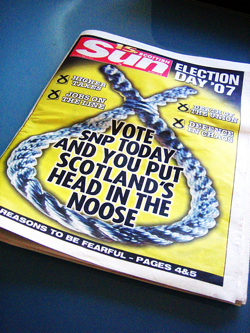
Titles that challenge the status quo or present a polarizing opinion can generate significant social signals. Controversy piques interest by inviting the reader to either validate their own views or prepare a counter-argument. However, analysts warn that this strategy requires a high degree of integrity; the body of the post must provide a substantive, well-reasoned argument to avoid alienating the audience.
3. The Interrogative Approach
Asking a question engages the reader’s cognitive processes. When a title poses a question that the reader has already been asking themselves, it creates an immediate connection. Effective interrogative titles often utilize the word "you" to personalize the inquiry, transforming a general topic into a direct conversation with the individual.
4. Personalization and Direct Address
The use of second-person pronouns—specifically "you" and "your"—is a proven psychological trigger. It creates a sense of intimacy and relevance. For instance, "Improving Your Financial Health" is statistically more likely to engage a reader than "Improving General Financial Health." This technique bridges the gap between a mass-produced piece of content and the specific circumstances of the reader.
5. Keyword Integration for Search Visibility
From a technical standpoint, keywords are the connective tissue between a user’s query and the content. Strategically placing primary keywords at the beginning of a title (front-loading) is a recognized best practice for Search Engine Optimization (SEO). This not only helps search engines categorize the content but also helps users quickly identify the relevance of the post in a list of search results.
6. Utilization of Power Words
Certain words are linguistically engineered to evoke emotional responses. Terms like "Secret," "Essential," "Proven," or "Instant" can increase the perceived value of the information. However, professional standards dictate caution. Overuse of power words can lead to "headline fatigue," where the audience becomes skeptical of hyperbolic claims.

7. High-Stakes Claims and Promises
Making a significant promise—such as "The Only Guide You Will Ever Need"—can be a powerful draw. These titles leverage the reader’s desire for comprehensive solutions. The risk associated with this method is the "expectation-reality gap." If the content fails to deliver on a bold promise, the publisher’s brand authority may be permanently damaged.
8. Humorous and Creative Wordplay
In niches where the brand voice allows for informality, humor can serve as a powerful differentiator. A witty or unexpected title can stand out in a sea of literal headlines. The challenge lies in ensuring that the humor does not obscure the actual topic of the post, which could negatively impact SEO and confuse new visitors.
Technical Constraints and SEO Standards
Beyond the psychological aspects of headline writing, there are rigid technical parameters that influence performance. Search engines typically display only the first 60 to 65 characters of a title. Titles exceeding this limit are truncated, often removing the most critical context or the call to action.
Furthermore, the "period" or "full stop" at the end of a title is often discouraged by digital copywriters. Linguistically, a period signifies an ending, which can subconsciously signal the reader to stop. In contrast, an open-ended title or one ending in a colon or question mark suggests that there is more to be discovered, encouraging the click.
Supporting Data and Market Insights
According to a 2023 study by Conductor, headlines with numbers (listicles) are preferred by 36% of readers, followed by "reader-addressing" headlines at 21%. Interestingly, titles that use "superlatives" (e.g., "Best," "Greatest") can actually see a decrease in engagement if they appear too biased; a moderate use of one or two superlatives was found to be the "sweet spot" for maximizing CTR.
Industry experts at HubSpot have also noted that headlines containing 11 to 14 words tend to receive the most social media shares. This suggests that while brevity is important for SEO, a slightly longer, more descriptive title often performs better in the social ecosystem where context is highly valued.
Industry Reactions and Expert Analysis
The consensus among digital marketing authorities is that the "era of the lazy headline" has ended. "We are seeing a shift toward ‘content transparency,’" says a lead strategist at a major SEO firm. "Readers are increasingly savvy. They can spot a ‘clickbait’ title from a mile away. The titles that are winning today are those that combine psychological triggers with an honest representation of what is in the article."
Analytical trends also suggest that the rise of Voice Search (Siri, Alexa, Google Assistant) is changing how titles are crafted. Users who search via voice tend to use full sentences and questions, leading to a rise in "conversational headlines" that mirror natural human speech.
Broader Impact and Future Implications
The mastery of blog post titles has implications beyond individual traffic metrics. It influences the overall authority of a digital publication. Consistently high-quality titles that lead to high-quality content signal to search engine algorithms that a site is a trusted source of information. This creates a "virtuous cycle" where better titles lead to better rankings, which in turn lead to higher organic reach.
As Artificial Intelligence (AI) becomes more integrated into content creation, the role of the human editor in "crafting" the final title remains vital. While AI can generate dozens of title variations based on data, the human element—understanding nuance, cultural context, and emotional resonance—remains the deciding factor in whether a title truly "sets the internet ablaze."
In conclusion, the development of a blog post title should not be a rushed afterthought but a deliberate, data-driven process. By balancing the eight secrets of benefit-driven communication, psychological engagement, and technical optimization, content creators can significantly alter the trajectory of their work, ensuring that their insights reach the widest possible audience in an increasingly competitive digital marketplace.