Putri Inara

The global digital landscape has transformed the act of blogging from a fringe hobby into a cornerstone of the multi-billion-dollar creator economy. As of 2024, the creator economy is estimated to be worth approximately $250 billion, with professional blogging serving as a primary vehicle for content distribution and monetization. However, the industry remains shrouded in a dichotomy of perception: one side promotes blogging as a "get-rich-quick" scheme fueled by marketing hyperbole, while the other dismisses it as a saturated field where financial success is a statistical anomaly. Independent analysis and longitudinal data from industry veterans suggest that the reality of blog monetization lies in a nuanced middle ground, characterized by slow growth, high labor intensity, and diversified revenue streams.
The Economic Reality of Digital Publishing
The feasibility of generating a sustainable income through blogging is no longer a matter of theory but a documented economic phenomenon. Data indicates that while the barrier to entry is low, the barrier to profitability remains high. Industry veteran Darren Rowse, who has operated in the space since 2002, notes that his own journey transitioned from earning a few dollars a day to managing a business that employs a full-time staff. This trajectory mirrors the broader evolution of the internet, where early adopters found success through timing, but contemporary creators must rely on sophisticated business models.
Statistics from a survey of over 1,500 digital content creators reveal a stark distribution of wealth within the industry. Approximately 63% of bloggers attempting to monetize their platforms earn less than $3.50 per day. Furthermore, 10% of those surveyed report zero earnings, while 28% earn less than 30 cents daily. These figures underscore the fact that for the vast majority of practitioners, blogging remains a hobby or a negligible source of supplemental income. Conversely, a small but significant elite—roughly 4% of the surveyed group—generates upwards of $10,000 per month, placing them in a high-earning professional bracket. Another 9% earn more than $1,000 per month, which often serves as a substantial part-time income or a primary salary in lower-cost-of-living regions.
A Chronology of Blogging Evolution (2002–Present)
To understand the current state of blog monetization, one must examine the chronological shifts in how digital content has been valued over the past two decades.
The Foundational Era (2002–2009)
In the early 2000s, blogging was primarily a medium for personal expression. Monetization was rudimentary, often limited to early iterations of Google AdSense and basic text-link advertisements. During this period, pioneers established "first-mover advantage," securing high search engine rankings for broad keywords that would later become hyper-competitive.

The Diversification Era (2010–2017)
The middle years saw the rise of affiliate marketing and digital products. Bloggers moved away from a total reliance on display advertising, which required massive traffic volumes, and began focusing on niche authority. This era saw the emergence of successful Australian creators such as Chantelle Ellem (Fat Mum Slim) and Nikki Parkinson (Styling You), who proved that lifestyle and fashion niches could support full-time careers through brand partnerships and community engagement.
The Creator Economy Era (2018–Present)
Today, blogging is integrated into a broader ecosystem of social media, newsletters, and video content. The focus has shifted toward "owned" audiences. With the volatility of search engine algorithms and social media reach, professional bloggers now prioritize email lists and direct-to-consumer sales, such as online courses, membership portals, and physical merchandise.
Diversified Monetization Frameworks
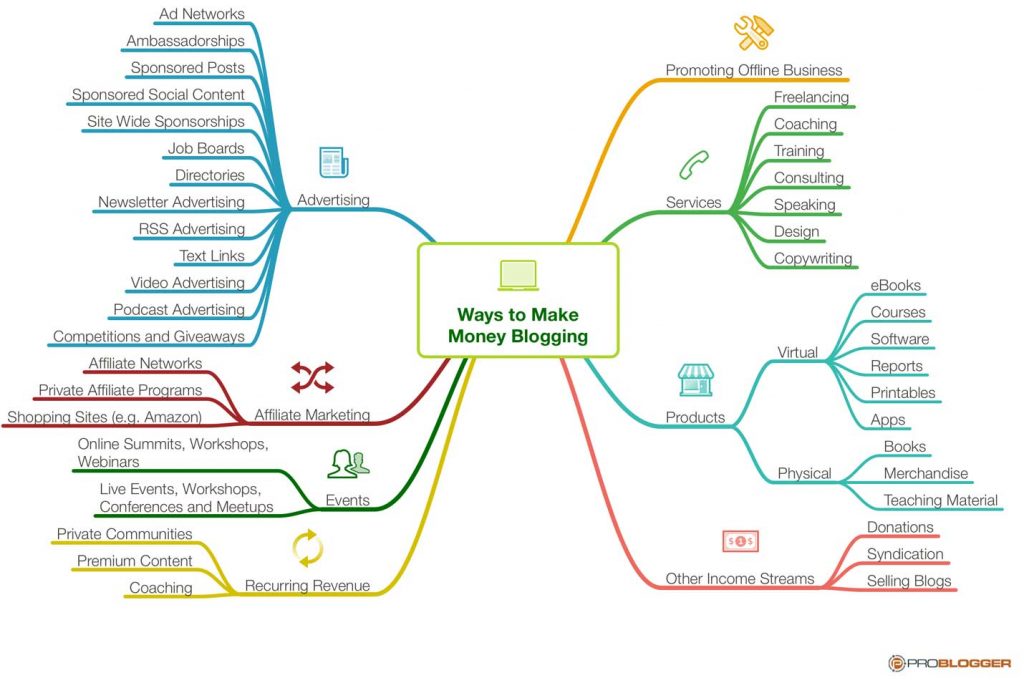
A critical finding in the study of profitable blogs is the absence of a singular "success formula." Instead, high-earning blogs utilize a "Money Map" approach, layering multiple revenue streams to ensure financial stability.
- Direct Advertising and Sponsorships: Traditional display ads remain a staple for high-traffic sites, but direct sponsorships—where a brand pays for a dedicated post or series—offer higher margins for influencers with engaged audiences.
- Affiliate Marketing: This involves earning a commission by promoting third-party products. It is particularly effective in "high-intent" niches such as technology reviews or DIY tutorials.
- Digital and Physical Products: Many bloggers have transitioned from being "publishers" to "merchants." This includes selling e-books, specialized software, or curated subscription boxes.
- Services and Consulting: Professional blogging often serves as a portfolio. Woodworking experts, health consultants, and business strategists use their blogs to attract high-paying clients for offline services.
The data suggests that the most profitable niches are often those that solve specific problems. For instance, photography tutorials or woodworking guides frequently outperform general lifestyle blogs in terms of per-visitor revenue because they cater to a motivated audience willing to invest in tools and education.
Analysis of Longevity and Labor Intensity
One of the most persistent myths in the digital space is the concept of "passive income." Journalistic inquiry into the daily operations of top-tier bloggers reveals a high-intensity work environment. Professional blogging requires a multidisciplinary skill set, including content production, search engine optimization (SEO), community management, and technical troubleshooting.
The correlation between time and income is perhaps the most significant finding for prospective creators. Analysis shows that 85% of bloggers in the top income bracket (earning over $10,000 per month) have been active for at least four years. Most high earners report a "gestation period" of two to three years before their platform generates enough revenue to replace a standard full-time salary. This delay is attributed to the time required to build domain authority with search engines and to establish a rapport of trust with a recurring audience.
Institutional and Market Responses
The shift toward professional blogging has prompted reactions from various sectors. Educational institutions have begun offering courses in digital media entrepreneurship, recognizing that content creation is a viable career path. Simultaneously, tech giants like Google and Meta have frequently adjusted their algorithms to prioritize "Helpful Content," a move designed to filter out low-quality "made-for-advertising" sites in favor of genuine experts and enthusiasts.
Industry analysts suggest that the rise of Artificial Intelligence (AI) presents a new inflection point. While AI can generate content rapidly, market trends indicate a growing premium on "human-centric" content—narratives that include personal experience, unique perspectives, and community interaction. This shift reinforces the importance of "Building Blogs that Matter," a philosophy championed by industry leaders who argue that originality and helpfulness are the only long-term defenses against algorithmic fluctuations.
Broader Impact and Future Implications
The professionalization of blogging has democratized media ownership, allowing individuals to bypass traditional gatekeepers in publishing and journalism. It has also created a decentralized economy where niche experts can find global audiences. However, the low success rate for beginners suggests a need for better financial literacy and realistic expectations within the creator community.
The implications for the future are twofold. First, the barrier to entry will remain low, leading to continued saturation in general niches. Second, the "middle class" of bloggers—those earning a part-time or modest full-time living—is expected to grow as monetization tools become more accessible and as consumers become more accustomed to paying for specialized digital content.
In conclusion, while the prospect of making millions from a blog is statistically unlikely for the average person, the data confirms that blogging is a legitimate and scalable business model. Success is predicated not on a secret formula, but on a combination of niche selection, diversified income, and a long-term commitment to high-quality output. As the creator economy continues to mature, the distinction between "blogging" and "digital publishing" will likely vanish, with blogs serving as the central hubs for comprehensive personal and corporate brands.