Clara Shinta
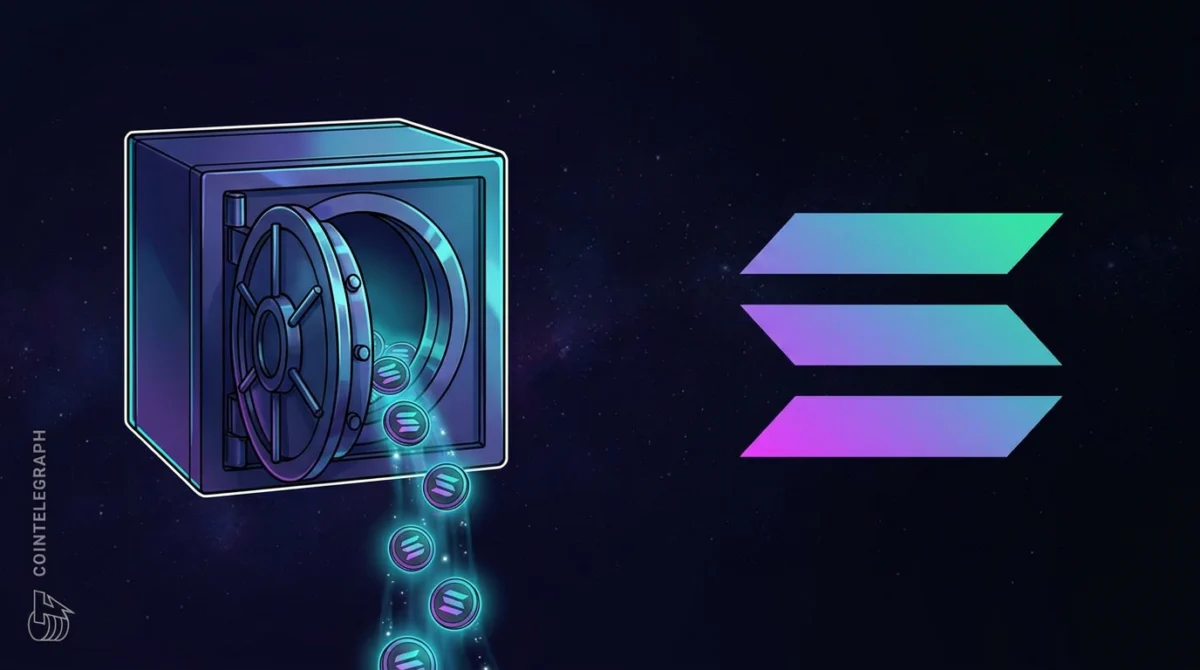
SkyAI, formerly known as Sharps Technology, has dramatically shifted its financial strategy, announcing the complete liquidation of its Solana (SOL) treasury and the launch of a substantial tender offer to repurchase up to $201.3 million in its outstanding shares and warrants. This strategic reversal marks a definitive departure from the company’s prior cryptocurrency accumulation strategy, which had seen it amass a significant stake in the Solana ecosystem. The move, disclosed in a filing with the US Securities and Exchange Commission (SEC) on Monday, October 19, 2026, positions SkyAI with a robust cash reserve of approximately $223.8 million as of October 16, following the sale of its SOL assets.
A Strategic Reversal: From Crypto Accumulation to Capital Return
The decision by SkyAI to divest its entire Solana treasury represents a significant pivot for a company that had previously committed substantial capital to digital assets. The tender offer allows eligible shareholders and warrant holders to sell their securities directly back to SkyAI at a fixed price, providing an immediate liquidity event. The offer is designed to cover up to 95% of each class of the company’s outstanding shares and warrants, a move entirely funded by the company’s newly fortified cash reserves. Notably, SkyAI confirmed that the tender offer is no longer contingent on Solana’s price performance, a condition that had been part of its initial buyback announcement on October 11, signaling a complete decoupling from crypto market volatility. Despite this divestment, SkyAI has reiterated its commitment to developing its core business: a financial platform integrating stablecoin infrastructure built on the Solana blockchain with advanced artificial intelligence capabilities.
The Genesis of SkyAI’s Solana Strategy: A $400 Million Bet
SkyAI’s journey into the Solana ecosystem began with considerable fanfare in August 2025. Following a successful private placement that raised over $400 million, the company, then operating as Sharps Technology, embarked on an ambitious cryptocurrency treasury strategy. The rationale at the time, broadly shared by a segment of the corporate world, centered on diversifying treasury assets, potentially hedging against fiat inflation, and gaining exposure to what was perceived as a burgeoning digital economy with high growth potential. Solana, known for its high transaction throughput and low fees, was a popular choice among institutional investors seeking exposure to next-generation blockchain infrastructure.
In September 2025, Sharps Technology made a substantial acquisition, securing more than 2 million SOL tokens. This initial position was valued at over $400 million at the time of acquisition, making it one of the more prominent corporate treasury holdings in the Solana ecosystem. The company’s financial disclosures at the end of 2025 detailed its holdings: approximately 2.08 million SOL, acquired with a cost basis of $403.1 million, translating to an average price of roughly $194 per token.
Market Volatility and Unrealized Losses: A Challenging Year for Crypto Treasuries
However, the period following SkyAI’s significant SOL acquisition proved challenging for the broader cryptocurrency market, and particularly for altcoins like Solana. The enthusiasm that drove the initial investment began to wane as market conditions shifted. By the close of 2025, SkyAI’s Solana holdings, which had been valued at over $400 million at acquisition, had depreciated to an estimated $250.1 million. This represented a substantial unrealized loss of approximately $153 million, a figure highlighted in the company’s annual financial disclosures.
This downturn was not isolated to SkyAI. The broader trend of companies adopting SOL as a treasury asset faced significant headwinds. By February 2026, publicly traded companies holding Solana in their treasuries collectively reported more than $1.5 billion in combined unrealized losses. Falling token prices exerted considerable pressure on their digital asset holdings and, consequently, impacted their overall share valuations. The allure of potential gains had been replaced by the stark reality of market volatility and the challenge of managing significant digital asset exposure on corporate balance sheets.
Solana’s price trajectory during this period underscored the inherent risks. After reaching highs earlier in the cycle, SOL experienced a significant correction, falling to around $62 in June 2026. This sharp decline would have further exacerbated the unrealized losses for companies like SkyAI. However, the market saw a degree of recovery in the latter half of 2026, with SOL trading near $104 as of Monday, October 19, according to CoinGecko data. While this recovery offered some relief, it appears to have come too late to sway SkyAI from its decision to fully exit its position.
The Mechanics of the Tender Offer: Returning Capital to Shareholders
The tender offer represents a structured mechanism for SkyAI to return capital directly to its shareholders and warrant holders. By offering to repurchase up to $201.3 million worth of its securities, the company provides an opportunity for investors to exit their positions at a fixed price, often at a premium to the prevailing market rate, or at least with certainty. Such offers are typically executed for several strategic reasons:
- Returning Excess Capital: With over $223.8 million in cash following the SOL liquidation, SkyAI possesses significant liquidity that it may deem in excess of its immediate operational and growth needs. A tender offer is an efficient way to distribute this capital to investors.
- Optimizing Capital Structure: By reducing the number of outstanding shares, SkyAI can potentially improve key financial metrics such as earnings per share (EPS), making the company appear more attractive to investors.
- Signaling Confidence: A substantial buyback can signal management’s belief that the company’s shares are undervalued, or that its future prospects are strong enough to justify investing in itself.
- Providing Liquidity: For certain shareholders, particularly those with large blocks of shares or warrants, a tender offer can provide a clear and efficient path to liquidity without impacting market prices through large open-market sales.
The fact that the offer covers "up to 95% of each class of the company’s outstanding shares and warrants" indicates a comprehensive approach, aiming to address a significant portion of its equity and equity-linked instruments. The removal of the condition linking the tender offer to SOL’s price, as initially considered on October 11, underscores SkyAI’s commitment to a clean break from cryptocurrency price dependency for its corporate financial decisions.
Market Reaction and Share Performance
Investors appear to have responded positively to SkyAI’s strategic pivot. SkyAI shares (SKYA) closed Monday at $2.79, marking a 5.3% gain on the day, according to Yahoo Finance data. This immediate upward movement suggests that the market views the liquidation of the SOL treasury and the subsequent tender offer as a favorable development. The divestment of a volatile asset and the commitment to returning capital to shareholders likely instilled confidence.
Looking at a broader timeframe, the stock has experienced a significant rebound, gaining approximately 65% over the past month. This recent surge indicates a renewed investor interest, possibly fueled by anticipation of this strategic realignment and a clearer focus on the company’s core AI and stablecoin platform development. However, despite this recent positive momentum, the stock remains down about 41% over the past year. This annual performance reflects the challenges faced during the period of significant unrealized losses from its SOL treasury and the broader market’s reassessment of crypto-exposed companies. The current strategic shift is an attempt to address these historical headwinds and reposition the company for future growth based on its operational strengths rather than speculative asset holdings.
Broader Implications for Corporate Crypto Treasury Strategies
SkyAI’s decision to entirely exit its Solana treasury holds significant implications beyond the company itself. It serves as a stark reminder of the inherent volatility and risks associated with holding substantial amounts of cryptocurrencies as corporate treasury assets. While the initial wave of corporate crypto adoption was driven by innovation and diversification, the subsequent market corrections have forced many companies to re-evaluate these strategies.
This move could signal a trend among publicly traded companies that ventured into crypto treasuries. For some, the promise of significant gains has been overshadowed by the burden of managing volatile assets, regulatory uncertainties, and the impact of unrealized losses on financial statements and share prices. SkyAI’s pivot might encourage other companies to reconsider their exposure, especially if their core business does not directly involve cryptocurrency trading or infrastructure. The emphasis may shift back towards more traditional treasury management practices, or at least towards more conservative approaches to digital asset allocation.
However, it is also important to note that SkyAI is not abandoning the crypto space entirely. Its stated intention to "continue developing a financial platform combining stablecoin infrastructure on Solana with artificial intelligence" indicates a strategic focus on the utility and technological innovation within blockchain, rather than speculative asset holding. This distinction is crucial: separating the operational integration of blockchain technology from the financial strategy of holding volatile native tokens. Companies may continue to build on blockchain, but increasingly shy away from simply holding blockchain assets in their treasuries.
The Future Path for SkyAI: Focus on Core Business and AI Integration
With its treasury strategy firmly recalibrated and a substantial cash reserve, SkyAI is now poised to intensify its focus on its core business objectives. The development of a financial platform that leverages Solana’s stablecoin infrastructure with artificial intelligence represents a compelling niche within the rapidly evolving fintech landscape. Solana’s capabilities for high transaction speed and low costs make it an attractive foundation for stablecoin-based financial services, while AI can significantly enhance features like fraud detection, personalized financial advice, and automated trading strategies.
The company’s commitment to this operational strategy, even as it sheds its direct SOL investment, suggests a maturation in its approach. Instead of relying on the appreciation of a speculative asset, SkyAI appears to be concentrating on generating value through product development, technological innovation, and service delivery. The $201.3 million tender offer, by potentially consolidating ownership and improving financial metrics, could further empower the company to execute this vision without the distraction of a volatile crypto treasury. As the digital asset space continues to evolve, SkyAI’s trajectory will be closely watched as a case study in corporate adaptation and strategic re-prioritization in the face of market realities.