Putri Inara
The digital publishing landscape has undergone a radical transformation over the last decade, transitioning from a collection of niche online journals to a multi-billion-dollar creator economy. As of 2024, estimates suggest that over 600 million blogs exist globally, with more than 7 million posts published daily. In this saturated market, technical proficiency—encompassing search engine optimization (SEO), mobile responsiveness, and high-quality prose—is no longer a competitive advantage but a baseline requirement. Industry analysts increasingly point to "personality" as the primary differentiator that determines whether a platform achieves long-term reader retention or remains an obscure repository of information. This report examines the strategies employed by ten leading digital publishers to inject unique identity into their platforms, providing a blueprint for modern content creators.
The Evolution of Personalization in Digital Media
The history of blogging can be divided into three distinct eras. The "Pioneer Era" (1994–2004) was defined by raw, unpolished personal narratives. The "Professionalization Era" (2005–2015) saw the rise of corporate-style blogs that prioritized SEO and clinical authority. The current "Humanization Era" (2016–Present) represents a synthesis of the two, where technical excellence must be balanced with a distinct human voice. This shift is largely driven by changes in search engine algorithms, specifically Google’s E-E-A-T (Experience, Expertise, Authoritativeness, and Trustworthiness) guidelines, which reward content that demonstrates a clear personal perspective and verified human experience.
Data from the Content Marketing Institute indicates that 81% of consumers state they must trust a brand before they buy from them. In the context of blogging, trust is often built through the perception of a genuine human connection. The following case studies illustrate how top-tier creators utilize various media and stylistic choices to establish this connection.
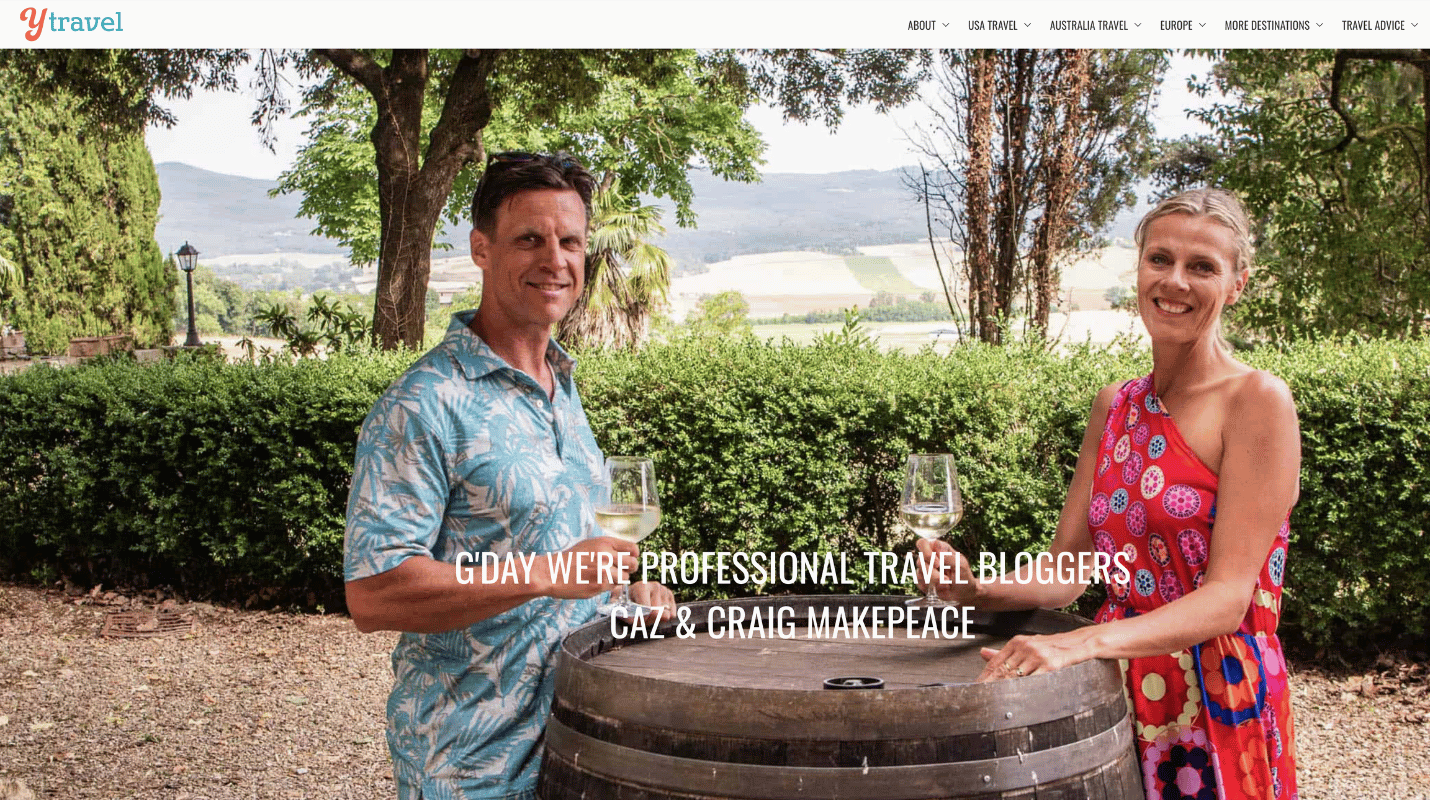
Visual Storytelling and Authentic Imagery: YTravel
Caz and Craig of YTravel have established one of the most successful travel blogs globally by eschewing the clinical aesthetics of traditional travel brochures in favor of high-quality, family-centric photography. While travel blogging is inherently visual, YTravel distinguishes itself by blending professional-grade landscapes with candid family snapshots.
This approach aligns with psychological studies on "social proof" and "relatability." By including photos of their children and themselves in various states of travel—both the glamorous and the mundane—they lower the barrier between the creator and the consumer. The strategic use of imagery serves as a visual "About Me" page that permeates every article, reinforcing their brand as a family-first travel resource rather than a generic booking guide.
The Role of Quirky Humor and Personal Flair: Pat Flynn
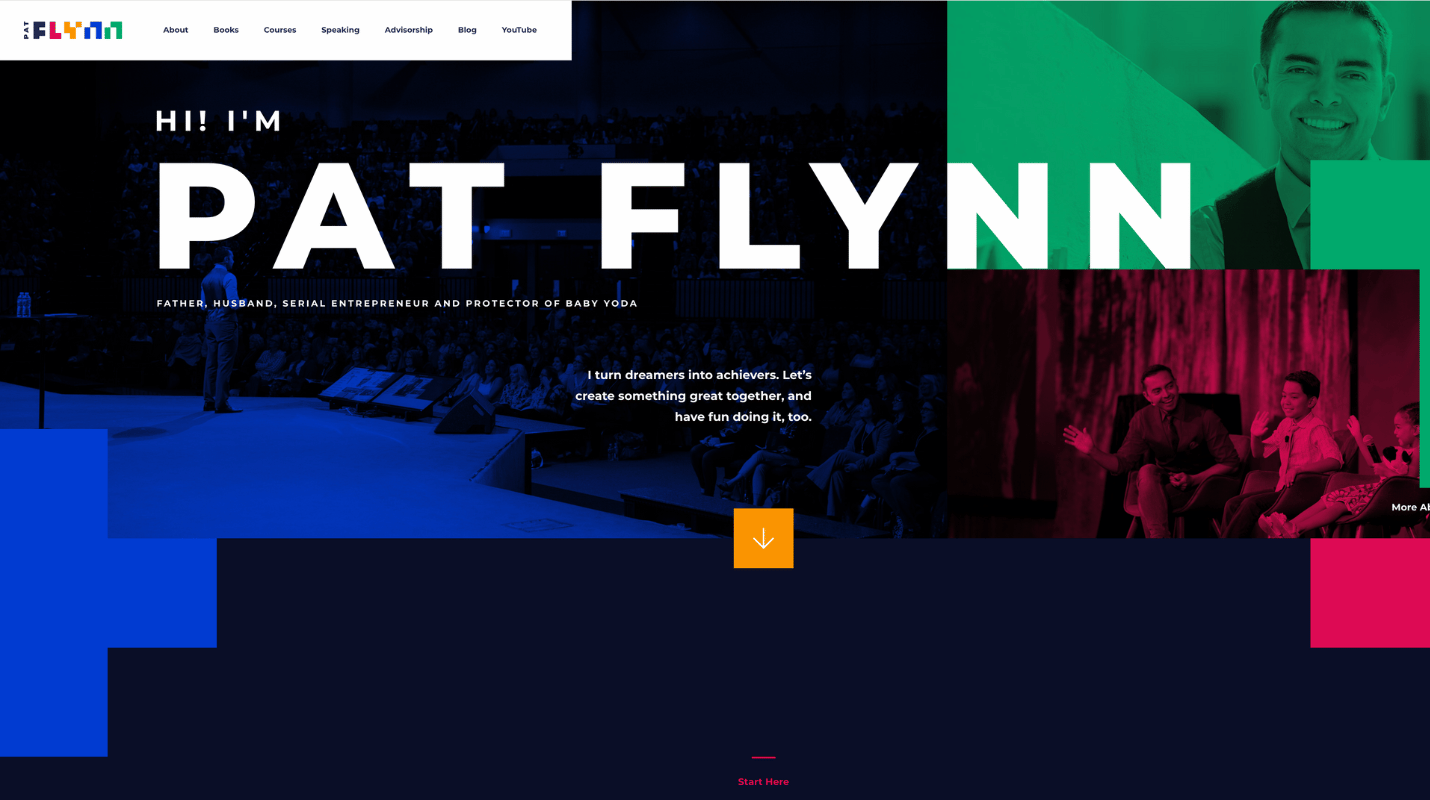
Pat Flynn, the founder of Smart Passive Income, utilizes "flair" to humanize a topic—business and finance—that is often perceived as dry or overly formal. Flynn’s site prominently features his identity as a "father, husband, and serial entrepreneur," but it is his inclusion of personal interests, such as being a "protector of Baby Yoda," that creates a memorable brand.
Market research suggests that "micro-interactions" or small bursts of personality can increase user time-on-site by up to 15%. Flynn’s use of humor serves two purposes: it makes complex financial advice more approachable and it acts as a filter, attracting like-minded entrepreneurs while signaling his brand’s unique culture.
Linguistic Identity and Niche Filtering: Shannon Kelly White
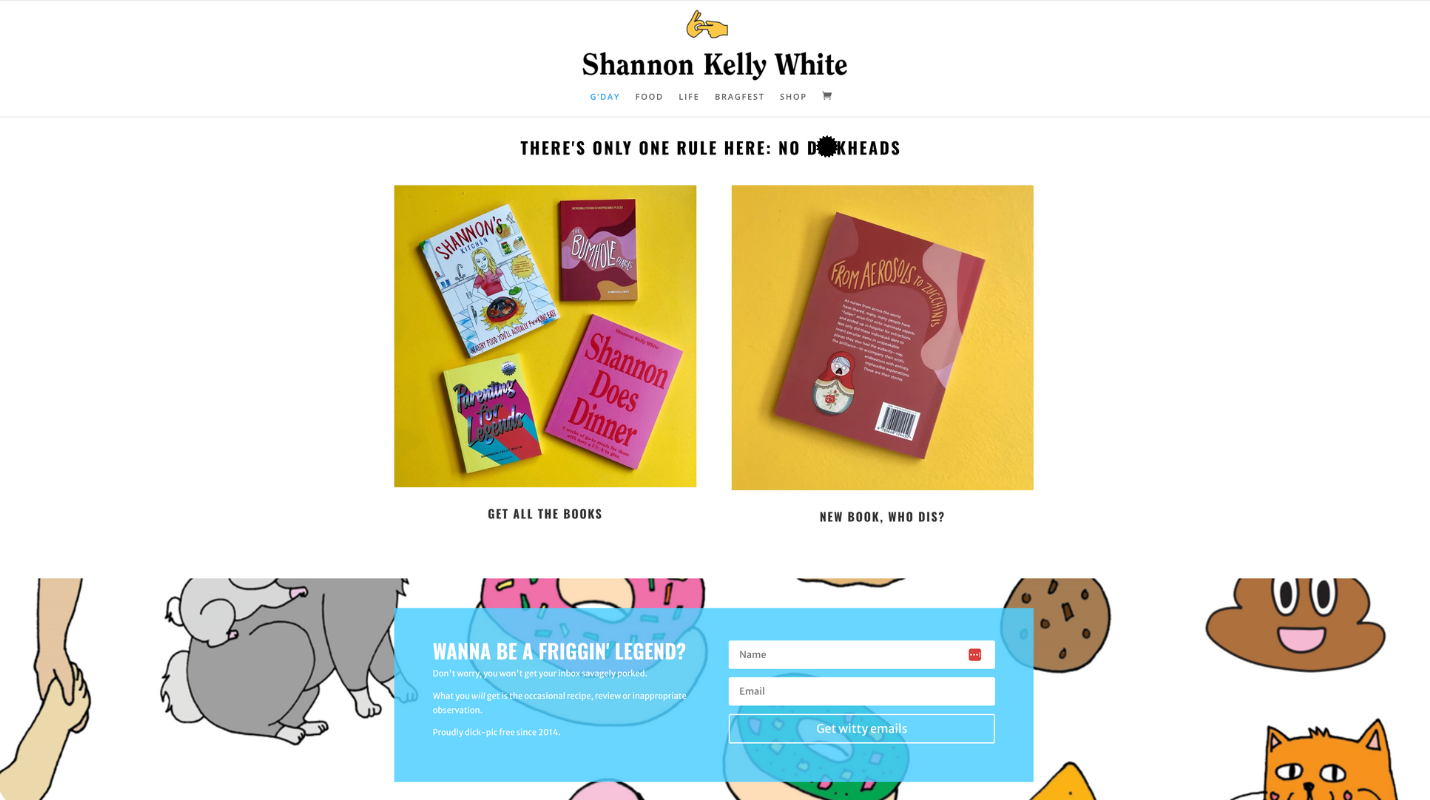
Shannon Kelly White employs a polarizing linguistic strategy that serves as a powerful tool for audience segmentation. By utilizing "salty language" and an unapologetically blunt tone, White creates a high-intensity brand identity. From a journalistic perspective, this is known as "niche filtering."
While a significant portion of the general audience may be deterred by such language, the segment that remains becomes highly loyal and engaged. Analysis of community engagement metrics shows that "high-polarization" brands often enjoy 2.5 times the average comment rate and higher newsletter open rates, as the audience feels a deeper sense of belonging to a specific "in-group."
Visual Branding Through Custom Illustrations: Blog Tyrant
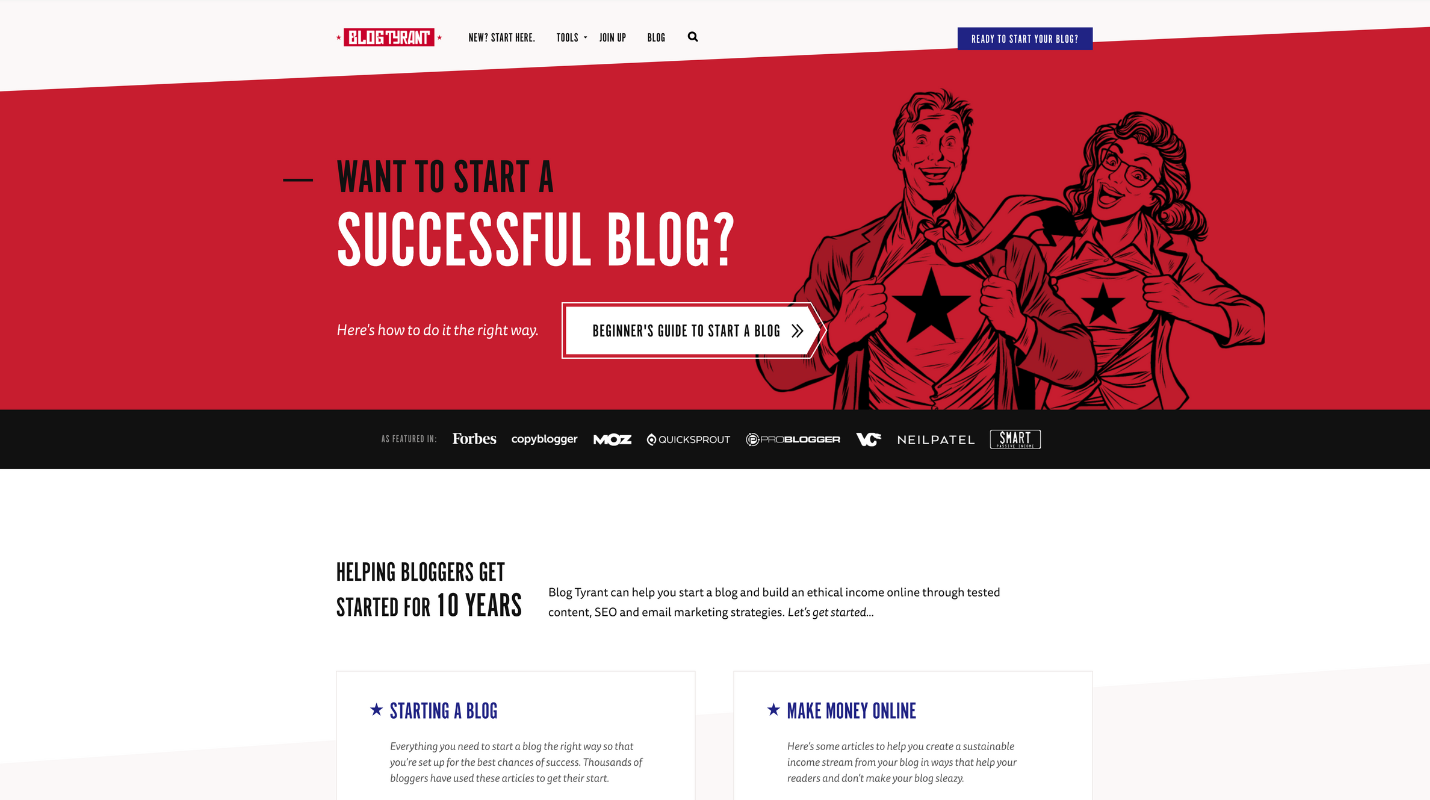
Ramsey of Blog Tyrant utilizes custom illustrations to differentiate his platform from competitors who rely on generic stock photography. His red-shirted superhero avatar is a consistent visual motif across his website, free reports, and social media channels.
The use of a mascot or a custom avatar taps into the "Mascot Effect," a psychological phenomenon where consumers develop a more emotional connection to a brand when it is represented by a consistent character. This strategy is particularly effective in the B2B (business-to-business) space, where it helps to break down the "faceless corporation" barrier and provides a recognizable anchor for brand recognition.
The Strategic Importance of the About Page: A Beautiful Mess
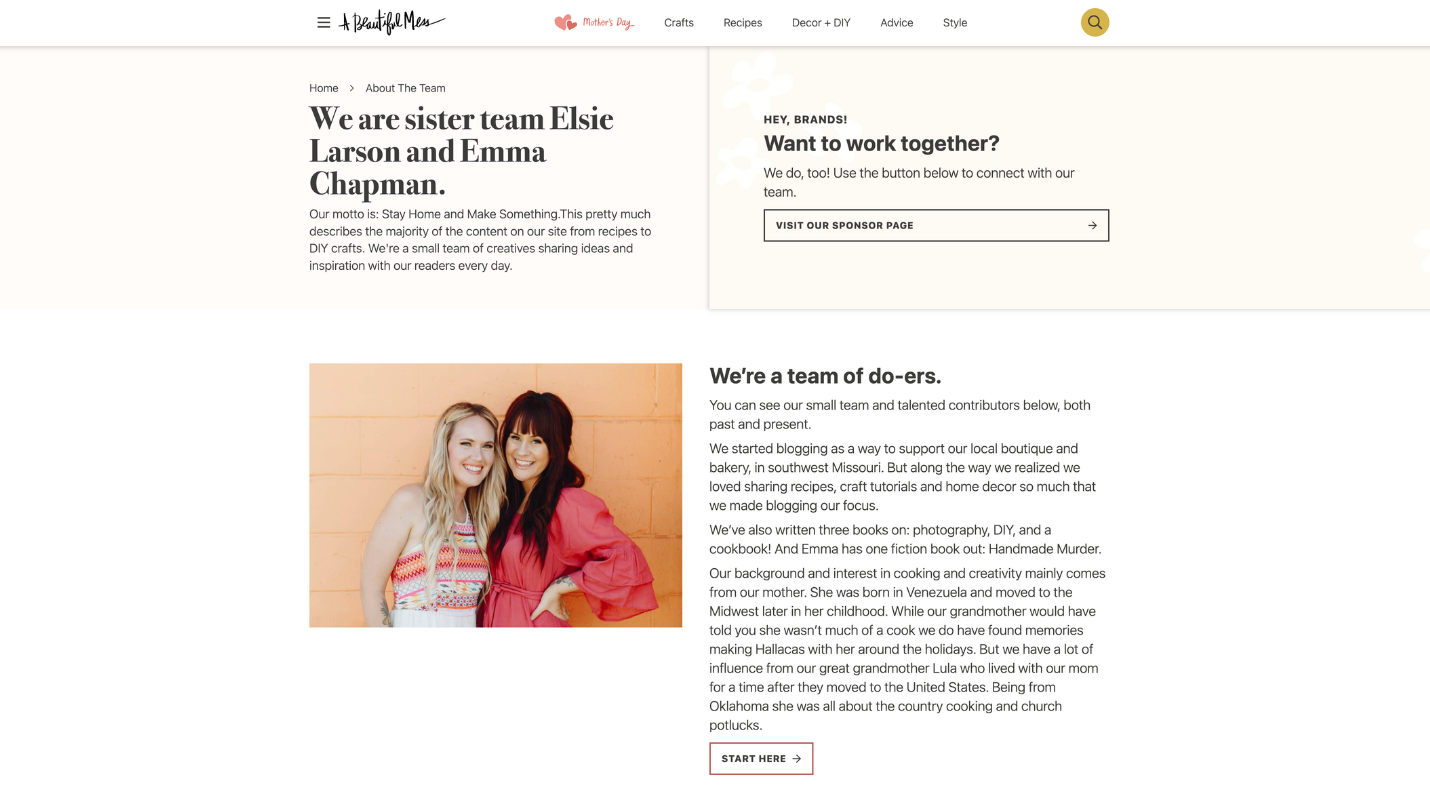
Sisters Elsie and Emma of A Beautiful Mess have optimized their "About" page to serve as a primary conversion tool. New readers often land on specific tutorials via Pinterest or search engines, but their journey toward becoming loyal followers typically involves a visit to the "About" section.
A Beautiful Mess uses bold photography and concise, punchy introductions to convey their brand’s aesthetic and mission statement instantly. According to heat-map data from various blogging platforms, the "About" page is frequently the second most-visited page on a site. By treating this page as a high-stakes landing page rather than a secondary biographical note, Elsie and Emma ensure that their personality is the "sticky" factor that encourages return visits.
Omnichannel Consistency: Chris Ducker
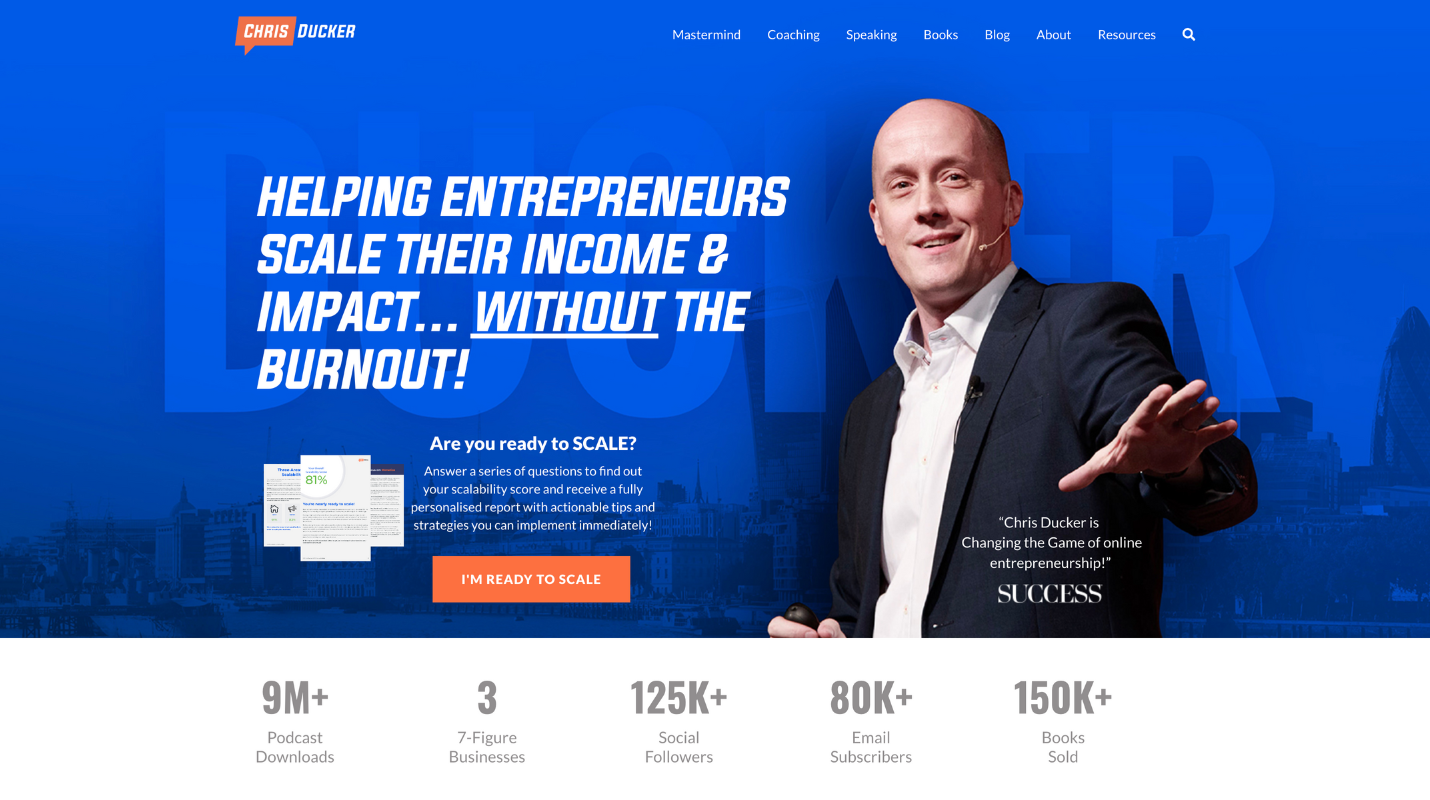
Entrepreneur Chris Ducker demonstrates the importance of cross-platform brand consistency. Ducker uses the same high-quality headshots and color palettes across his blog, Twitter, Facebook, and LinkedIn profiles. In a fragmented digital landscape where a reader may interact with a brand across five different apps in a single hour, consistency is vital.
Marketing data suggests that consistent brand presentation across all platforms can increase revenue by up to 23%. Ducker’s approach ensures that his "personal brand" is instantly recognizable, regardless of the medium, which accelerates the development of the "know, like, and trust" factor.
Color Theory and Brand Warmth: Jadah Sellner
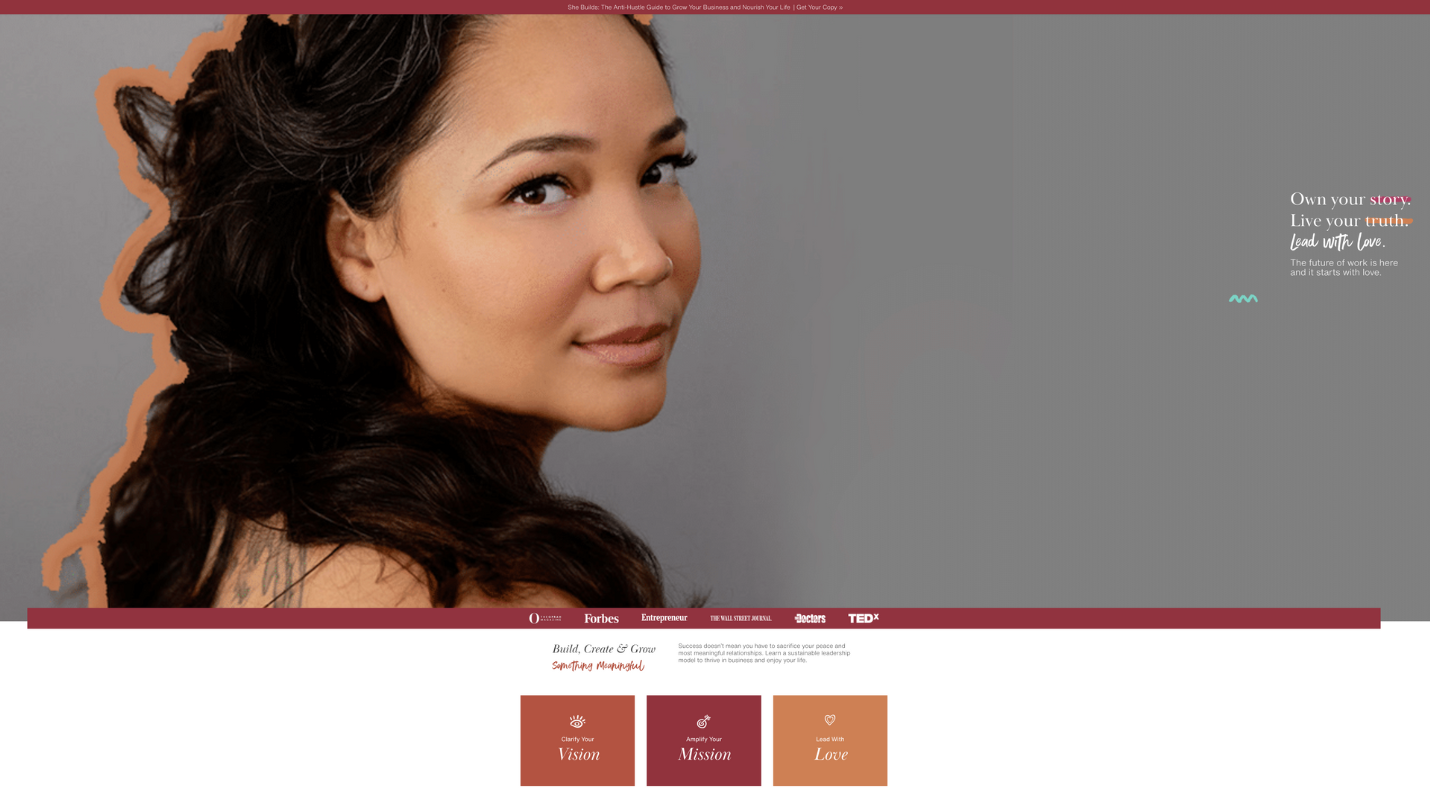
Jadah Sellner’s platform is a case study in the psychological application of color. Her site uses a warm, earthy palette that extends from the website’s UI (user interface) to the clothing she wears in her professional photography.
In color psychology, earthy tones are associated with stability, warmth, and reliability. By aligning her personal appearance with her site’s design, Sellner creates a "seamless" brand experience. This level of detail suggests a high degree of intentionality, which signals professional authority to the reader while maintaining a welcoming atmosphere.
The Authority of the Brand Statement: SuperFastBusiness
James Schramko of SuperFastBusiness uses a direct brand statement to personalize his interaction with his audience. By immediately defining who he is and who he serves, Schramko eliminates ambiguity.
This journalistic approach to "calling out the audience" ensures that the reader feels seen and understood. From a strategic standpoint, a brand statement acts as a verbal handshake, setting the expectations for the relationship between the creator and the consumer.
Conversion-Focused Taglines: Kelly Exeter
Kelly Exeter utilizes a streamlined tagline and call-to-action (CTA) that cuts through the noise of traditional marketing jargon. Her approach follows a proven formula: [Name] is a [What you do] who helps [Ideal reader] [Do what you offer].
This clarity is a form of personalization because it respects the reader’s time. By providing a direct "Find Out Here" button, Exeter removes friction from the user experience, positioning herself as a helpful and efficient authority figure.
Identity Marketing and Psychographics: Puttylike
Emily Wapnick of Puttylike has built an entire brand around a single psychological concept: the "Multipotentialite." By giving her audience a label that identifies their personality type, she transforms her blog from a content site into a community hub.
Wapnick’s use of a quiz as a lead magnet—"Are You a Multipotentialite?"—is a masterclass in identity marketing. Quizzes have been shown to have a lead capture rate of up to 31%, significantly higher than standard PDF downloads. This strategy personalizes the reader’s experience by making the content about them, rather than just about the creator.
Broad Impact and Implications for the Future of Content
The strategies outlined above indicate a broader shift in the digital economy. As artificial intelligence (AI) begins to generate vast amounts of technically perfect but emotionally hollow content, the value of human personality is expected to rise.
Search engines are already pivoting toward "hidden gems" and personal perspectives in their results pages. For content creators, the implication is clear: the technical "basics" of blogging are now commodities. The only non-commodity asset a creator possesses is their unique personality and the specific way they connect with their audience.
In conclusion, personalizing a blog is not merely an aesthetic choice; it is a fundamental business strategy. Whether through visual consistency, linguistic flair, or identity-based community building, the most successful bloggers are those who treat their platforms as an extension of their human identity. As the digital space becomes increasingly crowded, those who fail to personalize risk becoming invisible in the noise of the global information stream.