Putri Inara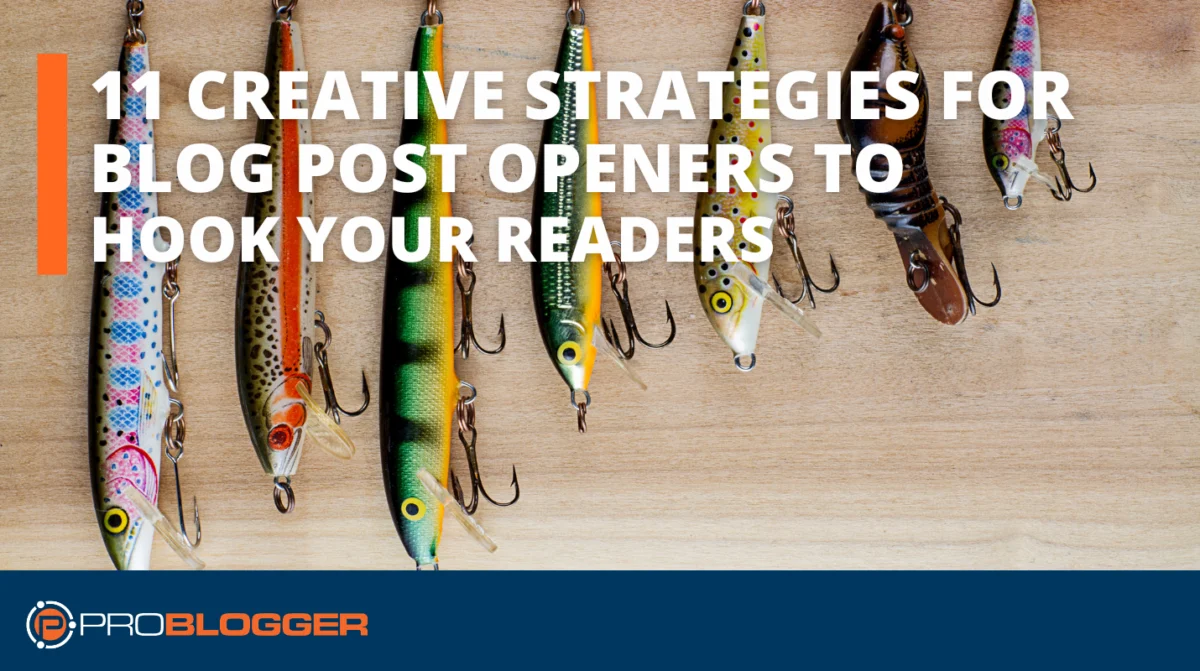
The digital publishing landscape has undergone a radical transformation over the last decade, shifting from a niche hobbyist pursuit to a multi-billion-dollar industry where the battle for consumer attention is fought in milliseconds. Industry data suggests that while a compelling headline is necessary to generate a click, it is the opening sentence that determines whether a reader will stay or "bounce" back to their search results. In the context of the modern attention economy, the opening line of a blog post serves as the critical bridge between initial interest and sustained engagement. Expert analysis indicates that the first few sentences of a digital article are the second most important words a writer will produce, tasked with the singular goal of compelling the reader to consume the subsequent line.
The Psychological Landscape of Reader Engagement
To understand the necessity of a powerful opening, one must examine the current state of digital consumption. A widely cited study by Microsoft found that the average human attention span has fluctuated significantly since the mobile revolution began, with some metrics suggesting a functional window of only eight seconds for a digital asset to prove its value. This phenomenon, often referred to as "the scan culture," means that readers do not consume content linearly; they audit it. If the opening line fails to provide immediate value, emotional resonance, or a curiosity gap, the likelihood of the reader reaching the core message of the post drops by over 50%.
Professional content strategists argue that the opening line must perform several functions simultaneously: it must establish the tone, signal the relevance of the topic to the reader’s specific needs, and create a narrative momentum that overcomes the friction of digital distraction.
Chronology of the Content Consumption Process
The journey of a reader from discovery to engagement follows a specific chronological path. Understanding this sequence allows writers to place their opening lines within a strategic framework:
- The Discovery Phase: The reader encounters a link via social media, search engine results pages (SERPs), or email newsletters.
- The Impression Phase: The reader evaluates the headline. If the headline promises a solution or provides intrigue, the click occurs.
- The Hook Phase: Upon landing on the page, the reader’s eyes gravitate toward the first paragraph. This is the "make or break" moment where the opening line must validate the click.
- The Retention Phase: Successful opening lines lead the reader into the body of the text, where subheadings and formatting maintain the engagement.
- The Conversion Phase: The reader completes the article and engages with a call to action (CTA), such as subscribing or sharing.
Strategic Methodologies for Opening Lines
Research into high-performing digital content has identified 11 distinct strategies that consistently yield higher dwell times and lower bounce rates.
1. The Identification of Immediate Need
Effective communication often begins with the "Problem-Agitation-Solution" (PAS) framework. By identifying a reader’s specific pain point in the very first sentence, the writer establishes immediate utility. This strategy relies on the psychological principle of relevance; if a reader perceives that a text understands their struggle, they are more likely to trust the author for the solution.
2. The Implementation of the Socratic "Yes" Question
Copywriters have long utilized the "one-answer question" to create a micro-commitment from the reader. By asking a question to which the reader must internally answer "yes," the writer creates a cognitive alignment. This technique draws the reader into a mental dialogue, making the transition to the informative sections of the post feel like a natural progression of their own thoughts.
3. The Construction of the Curiosity Gap
Based on the "Information Gap Theory" developed by George Loewenstein in the early 1990s, this strategy involves posing a question that highlights a void in the reader’s knowledge. The human brain experiences a mild form of cognitive dissonance when faced with a gap in information, which can only be resolved by continuing to read to find the answer.
4. The Pattern Interruption Through Surprise
In an environment saturated with standardized content, "pattern interruption"—sharing an unexpected fact or a surprising personal anecdote—serves to "snap" the reader out of a passive scanning state. For instance, beginning a professional marketing article with a seemingly unrelated personal mistake can humanize the brand and increase the perceived authenticity of the advice that follows.
5. Narrative Transportation Through Storytelling
Psychological research into "Narrative Transportation Theory" suggests that when individuals are lost in a story, their attitudes and intentions change to reflect those of the narrative. Starting with a story or an analogy allows the writer to bypass the reader’s initial skepticism, making complex or "dry" topics more accessible and memorable.
6. The Bold Assertion and Authority Building
A strong, authoritative claim serves as a signal of expertise. When a writer starts with a definitive statement about a major industry shift or a personal achievement, it establishes a hierarchy of information. However, data suggests this approach carries a high "trust debt"; the writer must be able to provide empirical evidence for the claim within the body of the text to avoid losing credibility.
7. The Utilization of Affective Priming through Controversy
While high-risk, starting with a controversial opinion can lead to viral engagement. Controversy triggers emotional responses—either agreement or defense—both of which compel the reader to investigate the writer’s reasoning. This strategy is most effective when the controversy is directly related to the core subject matter rather than being used as "clickbait."
8. Sensory Engagement Through Vivid Imagery
By encouraging readers to visualize a specific scenario, writers engage the sensory processing centers of the brain. This "mental simulation" makes abstract concepts feel tangible. For example, a financial blog might ask a reader to "imagine the silence of a house without debt," which evokes a more powerful emotional response than a mere discussion of interest rates.
9. Quantitative Credibility: The Impact of Statistics
Leading with a startling statistic provides immediate objective value. Data acts as a "reason to believe," grounding the article in reality. Statistics that highlight a common failure or a massive opportunity are particularly effective at motivating a reader to continue through the technical details of a post.
10. The Transferred Authority of the Quote
Starting with a quote from a recognized industry leader or a historical figure allows a writer to borrow the authority of that individual. This sets a professional and thoughtful tone, framing the subsequent content as part of a larger, established conversation.
11. Visual Dominance and the Picture Superiority Effect
The "Picture Superiority Effect" is a phenomenon where pictures and images are more likely to be remembered than words. In digital media, leading with a high-impact, relevant image can serve as the primary hook, especially for visual learners. Internal metrics from photography and design blogs indicate that posts starting with a compelling image often see higher comment volumes and social shares.
Industry Analysis and Expert Perspectives
Industry leaders in content marketing, such as those at HubSpot and the Content Marketing Institute, have noted that the "opener" is increasingly becoming a metric of brand health. High-quality opening lines contribute to "Dwell Time," an SEO factor that search engines like Google use to determine the quality of a page. If users consistently land on a page and stay for several minutes, the page is rewarded with higher rankings.
"The opening line is the handshake of the digital age," states a summary from a 2023 digital publishing summit. "It is the moment of first contact where trust is either built or broken. You cannot afford to be boring in the first twenty words."
Broader Implications and Future Trends
As Artificial Intelligence (AI) begins to generate more "filler" content across the web, the value of a uniquely crafted, human-centric opening line is expected to rise. AI models often struggle with the nuance of "pattern interruption" and the subtle emotional resonance required for a truly effective hook. Consequently, professional writers who master these 11 strategies will likely see a competitive advantage in a crowded marketplace.
Furthermore, the rise of "Zero-Click" searches—where Google provides the answer directly on the search page—means that when a user does click through to a site, they are looking for depth and engagement that a summary cannot provide. The opening line is the gateway to that depth.
In conclusion, the craft of the opening line is not merely a stylistic choice but a strategic necessity. By employing psychological triggers, data-driven insights, and narrative structures, writers can transform a casual browser into a committed reader, ensuring that their message is not only seen but absorbed in an increasingly distracted world. Success in the digital space requires a move away from the "introduction" and a move toward the "hook."