Gilang Muhammad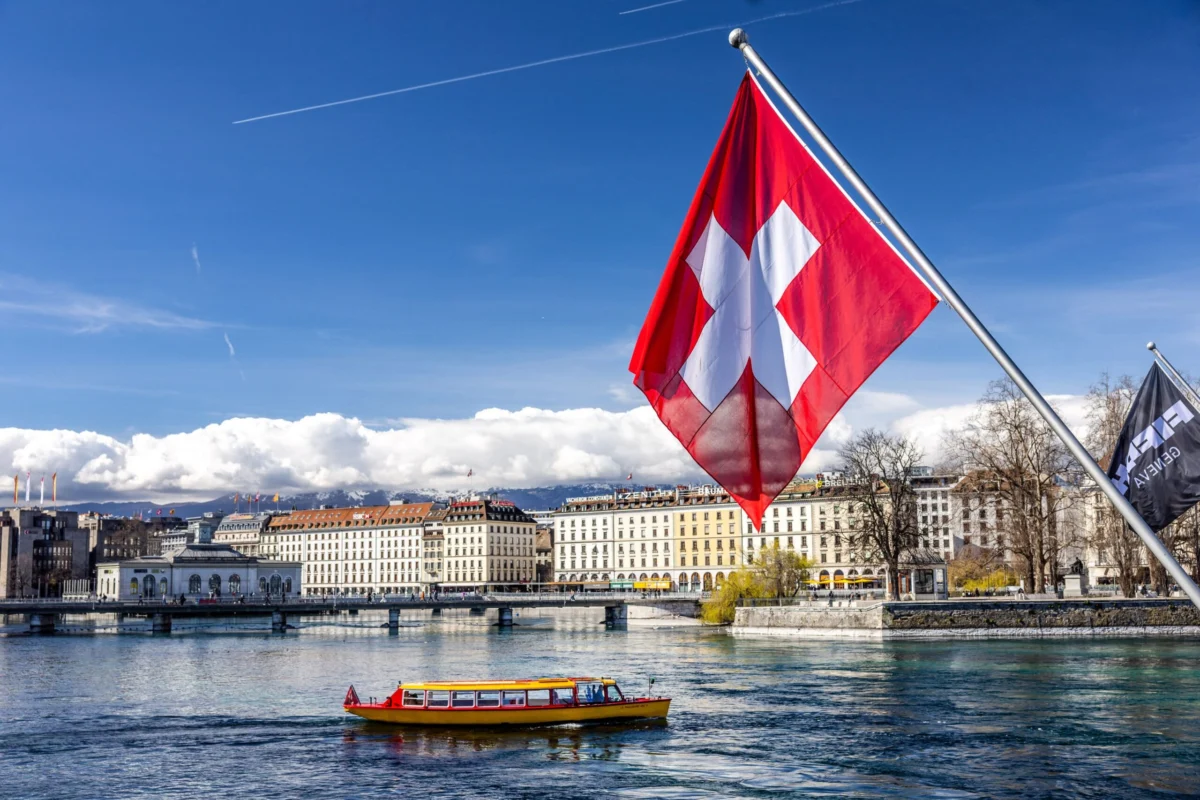
Geneva, Switzerland – In a move that underscored its unique economic insulation, the Swiss National Bank (SNB) announced on Thursday its decision to hold its benchmark policy rate steady at 0%. This significant divergence from the aggressive monetary tightening cycles observed across most major global economies has positioned Switzerland as a notable outlier, even as market analysts increasingly anticipate that the SNB will eventually be compelled to follow its international counterparts in raising borrowing costs. The decision, delivered in a climate of escalating global inflation and concerted efforts by central banks worldwide to rein in price pressures, highlights Switzerland’s distinct economic characteristics and the SNB’s commitment to its specific mandate.
Global Central Banks Tighten While SNB Holds Steady
The SNB’s choice to maintain its 0% interest rate stands in stark contrast to the prevailing policy trends among the central banks of Switzerland’s primary trading partners. Over the past year and a half, institutions such as the European Central Bank (ECB), the U.S. Federal Reserve (Fed), and the Bank of Japan (BoJ) have initiated or continued to implement significant interest rate hikes. The rationale behind these aggressive measures has been universal: to combat stubbornly high inflation rates that have surged to multi-decade highs, driven by a confluence of post-pandemic demand, supply chain disruptions, and the geopolitical shockwaves impacting energy and commodity markets.
For instance, the U.S. Federal Reserve, having embarked on its tightening cycle in March 2022, has raised its federal funds rate target from near zero to a range of 5.25%-5.50% by mid-2024, the highest in over two decades. The European Central Bank, after years of negative rates, began its hiking cycle in July 2022, bringing its main refinancing operations rate to 4.50% and its deposit facility rate to 4.00% by late 2023, subsequently holding it there. Even the Bank of Japan, long a proponent of ultra-loose monetary policy, surprised markets in March 2024 by ending its negative interest rate policy, raising its short-term policy rate target to a range of 0% to 0.1%. Meanwhile, the Bank of England and the Bank of Canada, also key trading partners, have similarly raised their benchmark rates to combat inflation, with further adjustments anticipated later in the year. This synchronized global effort to curb inflation makes the SNB’s continued adherence to a zero-rate policy particularly noteworthy.
Switzerland’s Unique Inflation Landscape
A primary factor enabling the SNB’s distinct policy path is Switzerland’s remarkably subdued inflation environment. While neighboring nations and economic peers have grappled with annual inflation rates often exceeding 3%, 5%, or even 10% at their peaks, Switzerland has largely remained insulated. In August, the country’s annual inflation rate gently nudged up to 0.8%, primarily influenced by increases in the cost of gasoline, diesel, and heating oil. However, this figure remains significantly below the inflation levels experienced in the U.S., the U.K., and the euro zone, which have seen their central banks scramble to bring price growth back towards their respective 2% targets.
The SNB’s own inflation target is notably stringent, aiming to keep inflation between 0% and 2%. This narrower band reflects a historical preference for price stability and a deep-seated economic structure that naturally dampens inflationary pressures. This structural advantage allows the SNB greater flexibility compared to central banks operating under more acute inflationary duress.
The Indispensable Role of the Swiss Franc’s Safe-Haven Status
Central to Switzerland’s ability to maintain low inflation is the enduring strength and safe-haven status of the Swiss franc. The franc’s consistent appreciation, particularly during periods of global economic uncertainty and geopolitical instability, exerts a powerful deflationary force on the domestic economy. As the currency strengthens against major trading partners, imports — which constitute a substantial portion of Switzerland’s economic activity — become significantly cheaper. This direct reduction in the cost of imported goods and services acts as a natural buffer against external inflationary shocks.
The SNB actively monitors exchange rates as part of its broader mandate to ensure "appropriate monetary conditions," recognizing the franc’s potential to curb both inflation and overall economic activity if its appreciation is sudden or excessive. In 2022 and early 2023, as investors sought refuge from widespread market volatility stemming from the war in Ukraine, energy crises, and banking sector jitters, the Swiss franc notably appreciated, gaining more than 12% against the U.S. dollar at one point. While the greenback has since clawed back some ground, recovering approximately 4% against the franc over the past year, the currency’s fundamental safe-haven appeal persists. The SNB has a well-documented history of intervening in foreign exchange markets, both to prevent excessive appreciation that could harm Swiss exporters and to stem depreciation that could fuel inflation. This proactive stance on currency management remains a key tool in its monetary policy arsenal.
SNB’s Official Outlook and Chairman’s Remarks
During his press conference on Thursday, SNB Chairman Martin Schlegel reiterated that the decision to maintain unchanged rates was firmly anchored in the central bank’s inflation outlook. SNB policymakers project that inflation will "continue to rise somewhat in the fourth quarter [of the current year], before declining again over the course of 2025." This anticipated decrease is largely attributed to the expected normalization of energy inflation, which, despite recent spikes, is forecast to abate in the coming quarters. Beyond this near-term fluctuation, the conditional inflation forecast indicates a slight upward trajectory, though remaining well within the SNB’s target range. Average annual inflation is projected to reach 0.7% in 2026, 0.8% in 2027, and 0.8% in 2028, underscoring the central bank’s confidence in long-term price stability.
Schlegel acknowledged the persistent high level of global uncertainty, noting that a weaker Swiss franc was also a factor in the SNB’s considerations. He referenced the SNB’s explicit statement in early March regarding an "increased willingness to intervene in the FX market." This declaration, made amidst escalating global tensions and heightened safe-haven flows, was crucial in preventing the Swiss franc from appreciating too "strongly and abruptly," which could have stifled the economy. Schlegel clarified that while the franc has since weakened, the SNB retains its "willingness to intervene in the FX market if necessary," signaling a readiness to act should currency movements threaten its monetary policy objectives.
Despite the global tightening trend, Schlegel firmly asserted, "We make monetary policy for Switzerland." However, he conceded that given Switzerland’s status as a small, open economy, "what happens abroad really matters quite a lot for Switzerland." He assured that external developments are always factored into the SNB’s decisions, concluding that a 0% rate was "appropriate at the moment." This nuanced position reflects the SNB’s commitment to domestic conditions while remaining acutely aware of international economic forces.
Market Expectations and Analyst Insights
Despite the SNB’s current stance, a consensus is building among market watchers and economists that a rate hike is an inevitability, if not an immediate one. Traders are actively pricing in the odds of a hike versus a hold, with expectations for December showing a near 50-50 split. Looking further ahead, there’s a more than 90% chance that the SNB will commence its hiking cycle by early 2027. Data from LSEG indicates that traders are betting on the SNB’s key rate rising to at least 0.75% by September of next year, reflecting a clear expectation of future tightening.
UBS, a prominent Swiss lender, had initially projected a preliminary hike from the SNB in June 2027. However, a recent note from its economists indicated a shift in their outlook, suggesting an earlier-than-expected move. The falling value of the franc, coupled with elevated oil prices and the unexpected resilience of the U.S. and euro zone economies, has increased the likelihood of the SNB acting sooner. UBS analysts observed that "Swiss franc depreciation of more than 2% against the euro and more than 1% against the US dollar since the last SNB meeting in June could increase concerns that inflation will accelerate more than previously anticipated." While acknowledging that inflation is "quite unlikely to exceed 2% over the next 12-18 months," they cautioned that "the SNB has a history of surprising markets."
The "Safe Haven Dividend" and Structural Advantages
Gedeon Tumong, head of finance specialization at Switzerland’s HIM Business School, elaborated on the unique economic advantage Switzerland enjoys, often termed a "safe haven dividend." He noted that "Unlike the U.S., the U.K. and the euro zone, Switzerland imports credibility as much as it imports goods." This strong international trust translates into sustained foreign capital inflows, which in turn bolster the Swiss franc. A robust franc, by extension, acts as a natural curb on imported inflation, providing the SNB with ample justification to maintain lower interest rates compared to its counterparts like the Fed, the Bank of England, or the European Central Bank.
Tumong further highlighted the SNB’s "highly flexible monetary policy that actively boosts the Swiss Franc." He explained that when global energy and commodity prices surge, the franc’s natural appreciation effectively "absorbs the shock," making imported goods significantly cheaper for Swiss consumers. This structural resilience is complemented by Switzerland’s energy mix, where energy costs account for only about 3.5% of the consumer inflation basket, significantly less than the approximately 7% in the euro zone. Switzerland’s substantial reliance on alternative energy sources, particularly hydropower and nuclear power, further insulates it from regional energy price volatility.
Beyond monetary policy and currency dynamics, Switzerland’s strict fiscal "debt brake" also plays a crucial role. This constitutional requirement mandates balanced budgets over the economic cycle, preventing excessive government borrowing. As Tumong explained, "the country does not force higher yields to attract bond investors. This would also account for lower rates," as the government’s borrowing costs remain contained, reducing overall systemic interest rate pressure.
Antonio Fatás, a professor of economics at INSEAD business school and an external consultant for the IMF, underscored Switzerland’s long-standing history of low inflation, which has effectively anchored inflation expectations among economic actors. "When a shock hits, a central bank that can rely on low inflation expectations will have an easier time managing inflation and keeping it low — that’s the case [for the likes of] Switzerland or Japan," he stated.
However, Fatás also offered a crucial perspective on Switzerland’s real interest rate, which adjusts the nominal rate for inflation. He pointed out that while the nominal rate is 0%, with inflation at around 0.8%, Switzerland’s real interest rate stands at approximately -0.8%. This figure, he noted, is "very similar" to the euro area’s real interest rate (e.g., a 2.5% nominal rate with 3.2% inflation yields a real rate of -0.7%). The U.K. and U.S. also exhibit comparable, if slightly higher, real rates. "So overall this is a story of low inflation that persists through the years and anchors the expectations of all economic players," Fatás concluded, emphasizing that in real terms, Switzerland’s monetary stance is not as radically different as nominal rates might suggest.
Implications and Future Outlook
The SNB’s continued zero-rate policy carries several implications. For Swiss consumers, it means lower borrowing costs on mortgages and consumer loans compared to their international peers, supporting domestic demand. However, savers face negligible returns on deposits, a persistent challenge in a low-interest-rate environment. For businesses, particularly exporters, a strong franc can make Swiss goods more expensive abroad, potentially impacting competitiveness, though the SNB’s readiness to intervene mitigates extreme appreciation. Importers, conversely, benefit from cheaper goods.
For global investors, Switzerland remains an attractive destination for capital seeking stability and a strong currency, reinforcing its safe-haven appeal, especially during times of market turbulence. The SNB’s unique position underscores the resilience of the Swiss economy, built on a foundation of political stability, fiscal discipline, and a robust currency.
Looking ahead, the SNB faces a delicate balancing act. While its current policy is justified by domestic inflation dynamics, sustained global tightening and a potential weakening of the franc could eventually exert upward pressure on Swiss inflation, forcing the central bank to adjust its stance. The "history of surprising markets" attributed to the SNB suggests that while a gradual approach is expected, policymakers retain the flexibility to act decisively if conditions warrant. The global economic landscape, fraught with geopolitical uncertainties and evolving inflationary pressures, will undoubtedly continue to shape the SNB’s strategic decisions, ensuring that its every move remains under intense scrutiny by markets and policymakers worldwide.