Putri Inara
The Evolution of the Headline: From Print to Digital SERPs
The principles of headline construction find their roots in traditional print journalism and the mid-20th-century advertising boom. David Ogilvy, often cited as the "Father of Advertising," famously posited in his seminal work Ogilvy on Advertising that the sole purpose of a headline is to compel the reader to engage with the first line of the body copy. In the digital era, this objective remains unchanged, though the environment has become significantly more complex. Today, a blog post title must perform multiple functions simultaneously: it must appeal to human psychology, satisfy the algorithmic requirements of search engine crawlers, and remain legible across a variety of devices and platforms.
Titles are no longer confined to the top of a page; they are distributed through RSS feeds, social media "shares," search engine results pages (SERPs), and automated email newsletters. In many of these contexts, the title is the only piece of information available to the user. Consequently, a title that is overly cryptic, linguistically dense, or lacking a clear value proposition will result in high bounce rates and diminished return on investment (ROI) for content creators.
A Chronological Approach to Title Construction
Professional content workflows have evolved to treat title creation as a distinct, multi-stage process rather than an afterthought. The typical chronology of high-performance title development involves several key phases:
- Drafting the Working This occurs during the ideation phase, focusing on the core topic.
- Keyword Integration: After the initial draft, SEO specialists identify high-volume, low-competition keywords to anchor the post in search rankings.
- Psychological Refinement: The title is then adjusted to include emotional triggers or "power words" that increase the likelihood of a click.
- Length Optimization: The title is trimmed to ensure it fits within the 60-character limit typical of Google’s desktop search results.
- A/B Testing: For high-stakes content, organizations often run multiple versions of a headline through social media testing to determine which variation yields the highest click-through rate (CTR).
Eight Strategic Pillars of Headline Success
To navigate the complexities of modern digital engagement, experts have identified eight specific techniques that consistently drive traffic.

1. The Explicit Communication of Benefit
The most effective headlines often address the "What’s In It For Me" (WIIFM) factor. By identifying a specific pain point or need within the target audience, a title can promise a solution. For example, instructional content such as "How to Secure Your Remote Network" or "10 Methods for Improving Site Speed" provides a clear, utilitarian reason for the user to click. Data suggests that headlines promising a "how-to" solution or a list of benefits see a 30% higher engagement rate than purely descriptive titles.
2. The Use of Controversy and Debate
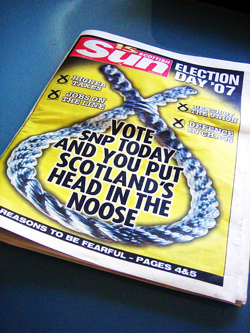
While riskier, titles that challenge the status quo or invite debate can generate significant social signals. Controversy piques curiosity and encourages users to click to see if their own views align or clash with the author’s premise. However, industry analysts warn that the content must substantively support the controversial claim to avoid damaging the brand’s credibility or being labeled as "clickbait."
3. The Interrogative Approach
Asking a question directly involves the reader in a mental dialogue. When a title poses a question, the human brain is neurologically wired to seek the answer. This technique is particularly effective when the question is personalized, using the word "you" to create a sense of direct address.
4. Personalization and Direct Address
Personalization in headlines, specifically through the use of second-person pronouns, fosters an immediate connection. Titles like "21 Ways to Make Your Website More Interactive" perform better than "21 Ways to Make a Website More Interactive" because they frame the content as a bespoke resource for the reader’s specific situation.
5. Strategic Keyword Placement
Keywords serve a dual purpose: they tell search engine algorithms what the post is about and they provide immediate context to the reader. Research into SEO best practices suggests that "front-loading" keywords—placing them at the beginning of the title—can improve search rankings and help users scan results more efficiently.

6. The Integration of Power Words
Certain words are known to evoke stronger emotional responses than others. Terms such as "Proven," "Secret," "Essential," "Ultimate," and "Instant" act as psychological triggers. However, practitioners must use these with caution; over-reliance on "power words" can lead to audience fatigue and skepticism if the content fails to live up to the hyperbolic language.
7. The Big Claim and Guarantee
Similar to the benefit-driven title, the "big claim" makes a bold promise of transformation or high-value insight. This approach is designed to capture the attention of even those who were not actively seeking the information. The caveat remains that the integrity of the post is tied to its ability to fulfill the promise made in the headline.
8. Humorous and Creative Wordplay
In niches where the brand voice allows for it, humor can be a powerful differentiator. A witty or pun-based title can stand out in a sea of dry, technical headlines. The risk, however, is that humor is subjective and often fails to translate well across different cultures or search engine algorithms, which generally prefer literal descriptions.
Quantitative Data and Technical Constraints
Data from the Nielsen Norman Group indicates that users typically read only the first two words of a headline before deciding whether to continue. This "scanning" behavior necessitates brevity. Most SEO experts recommend keeping titles between 50 and 60 characters. Titles exceeding this length are often truncated in SERPs, which can hide the most compelling part of the message or the primary keyword.
Furthermore, the exclusion of terminal punctuation, such as periods, is a widely accepted practice among copywriters. A period acts as a visual and psychological "stop" sign, potentially halting the reader’s momentum. Conversely, question marks and exclamation points are used strategically to denote tone and urgency.
Industry Reactions and Expert Analysis
Digital marketing analysts have noted a shift in how audiences perceive headlines. "The era of the ‘curiosity gap’—where titles were intentionally vague to force a click—is being replaced by an era of ‘radical clarity,’" says one senior content strategist. "Users are busier than ever. They don’t want to be tricked; they want to know exactly what value they are getting before they commit their time."
This shift is also reflected in the policies of major social media platforms. Algorithms on sites like Facebook and X (formerly Twitter) have been adjusted to de-prioritize headlines that use "engagement baiting" tactics. Consequently, the modern professional standard focuses on titles that are provocative yet honest, and optimized yet readable.
Broader Implications for the Content Economy
The mastery of blog post titles has implications beyond individual site traffic. In a broader sense, it influences the "findability" of information on a global scale. As Artificial Intelligence (AI) begins to play a larger role in content generation, the human element of "crafting" a headline—understanding nuance, irony, and deep emotional resonance—becomes a premium skill.
The failure to invest time in title development is increasingly viewed as a failure of the entire content strategy. If a post represents hours of research and writing, but the title is rushed in seconds, the labor is essentially lost to the "archives" of the internet. Therefore, the pause to "craft" a title is not merely a stylistic choice but a fundamental business requirement for any entity seeking to maintain a presence in the digital sphere. As the internet continues to expand, the few words that make up a blog post title will remain the most powerful tools in a writer’s arsenal, dictating the destiny of every word that follows.