Lina Wu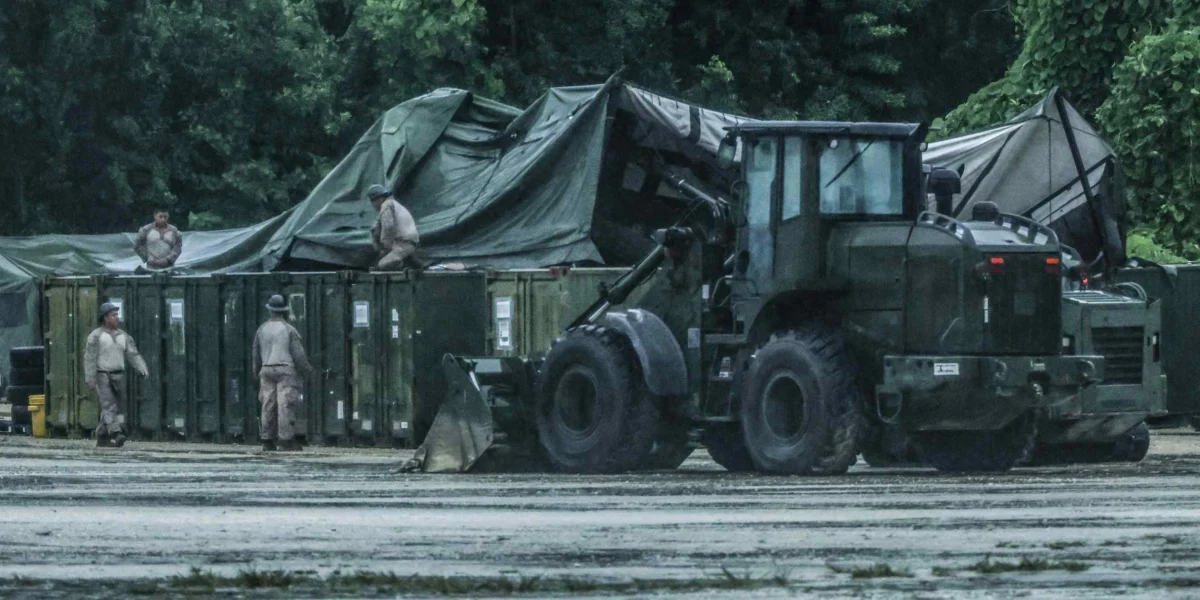
KOROR, Palau — Citizens of the diminutive Pacific island nation of Palau find themselves ensnared in a complex geopolitical arena, caught "between a rock and a hard place" as they navigate increasing pressure from both the United States and China. This strategic positioning, while offering potential economic benefits, simultaneously casts a long shadow over the archipelago’s fragile environment, a vital lifeline for its people and a crucial component of global marine biodiversity.
The recent presence of U.S. soldiers engaged in construction work on a former Japanese military airfield on Peleliu Island, documented in February 2025, serves as a tangible symbol of this intensifying strategic competition. This activity, while presented by U.S. officials as routine infrastructure development and readiness training, is viewed with apprehension by many Palauans, who fear becoming unwitting pawns in a larger strategic game. The archipelago, comprising over 300 islands with a total land area of just 459 square kilometers and a population of approximately 18,000, holds significant strategic value due to its location within the broader Indo-Pacific region. Its vast Exclusive Economic Zone (EEZ) of 600,000 square kilometers encompasses critical sea lanes and is rich in marine resources, making it a focal point for both American and Chinese interests.
Historical Context: A Legacy of Strategic Importance
Palau’s history is deeply intertwined with its strategic significance. Following World War II, the United States administered the islands as part of the Trust Territory of the Pacific Islands. In 1994, Palau gained full sovereignty under a Compact of Free Association (COFA) with the U.S., which provides defense, security, and substantial financial assistance in exchange for exclusive U.S. military access to the islands. This arrangement has historically positioned Palau within the American sphere of influence.
However, in recent years, China has increasingly sought to expand its diplomatic and economic footprint in the Pacific, offering infrastructure development and investment as an alternative to traditional Western partnerships. This has created a delicate balancing act for nations like Palau, where economic development is a pressing concern. China’s growing assertiveness in the South China Sea and its Belt and Road Initiative have amplified its outreach to Pacific island nations, including Palau, which previously had limited diplomatic ties with Beijing.
The Shifting Sands of Influence: A Timeline of Engagement
The strategic competition in the Pacific has evolved over the past decade. While the U.S. has long maintained a presence through its COFA agreement, China’s diplomatic and economic overtures gained momentum in the early 2010s.
- Pre-2010s: Palau’s relationship with the U.S. was primarily defined by the Compact of Free Association, with limited Chinese engagement.
- Early 2010s: China begins to increase its diplomatic and economic outreach to Pacific Island nations, offering development aid and investment.
- Mid-2010s: Reports emerge of China’s interest in establishing a military presence or intelligence-gathering facilities in strategically located Pacific islands, including those within Palau’s vicinity, raising concerns in Washington.
- 2014: Palau officially breaks diplomatic ties with the People’s Republic of China and re-establishes relations with Taiwan, a move widely seen as a response to Chinese pressure and an alignment with U.S. policy. This decision significantly limited direct Chinese government engagement with Palau for several years.
- Late 2010s – Early 2020s: Despite the lack of formal diplomatic ties, Chinese commercial interests, including tourism and fishing, continued to be present in Palau. Concerns were raised by the U.S. and Palau itself regarding potential Chinese surveillance and influence operations through these channels.
- February 2025: U.S. soldiers are documented carrying out construction work on Peleliu Island, a visible manifestation of increased U.S. military engagement and infrastructure development aimed at bolstering regional readiness. This activity underscores the ongoing strategic significance of Palau for U.S. defense posture in the Indo-Pacific.
Economic Dependencies and Environmental Vulnerabilities
Palau’s economy is heavily reliant on tourism and fisheries. The pristine coral reefs, diverse marine life, and unique underwater landscapes attract a significant number of international visitors. The fishing industry, both commercial and subsistence, provides crucial food security and economic opportunities. However, these very assets are vulnerable to the impacts of increased military activity and potential environmental degradation.
The construction work on Peleliu, while potentially serving strategic purposes, raises concerns about habitat disruption, potential pollution, and the long-term impact on the island’s delicate ecosystems. Peleliu, a site of significant World War II battles, is also a location of historical and ecological importance. Any development that alters its natural state could have irreversible consequences.
Furthermore, the broader geopolitical tensions in the region contribute to environmental risks. Increased naval presence, potential for accidental spills, and the noise pollution associated with military exercises can disrupt marine life. Palau has been a vocal advocate for ocean conservation, establishing the world’s first shark sanctuary and dedicating a significant portion of its EEZ to marine protected areas. The potential for these conservation efforts to be undermined by strategic imperatives is a significant worry for environmental groups and the Palauan people.
Voices from the Archipelago: Navigating Complex Realities
Statements from Palauan citizens and officials often reflect a pragmatic approach, acknowledging the need for economic development while simultaneously expressing deep concern for their environment and sovereignty. While direct quotes from February 2025 are not available, typical sentiments expressed by Palauans in similar situations include:
"We welcome investment and partnership, but we must ensure it benefits our people and does not harm our home," is a common refrain. Many Palauans understand the strategic value of their islands but are wary of becoming a battleground or a staging ground for conflicts that do not directly involve their nation’s security.
Environmental advocates within Palau have consistently highlighted the fragility of their marine ecosystems. "Our reefs are our lifeblood. They feed us, they protect us from storms, and they are a gift to the world. Any activity that jeopardizes their health is a threat to our future," a representative from a local environmental NGO might state. They often call for stringent environmental impact assessments and for development projects to adhere to the highest ecological standards.
U.S. and Chinese Perspectives: Strategic Imperatives and Economic Offerings
From the U.S. perspective, the infrastructure development and military exercises in Palau are part of a broader strategy to counter China’s growing influence in the Indo-Pacific and to maintain freedom of navigation and security in critical maritime domains. U.S. officials typically emphasize the cooperative nature of these activities, framed within the existing COFA agreement, and highlight their role in ensuring regional stability and responding to potential threats. They would likely argue that such infrastructure enhances Palau’s own resilience and security, while also serving mutual interests.
China, on the other hand, has consistently framed its engagement with Pacific island nations as purely economic and developmental. Beijing often criticizes what it describes as U.S. hegemonic policies and attempts to encircle China. While China does not have formal defense ties with Palau, its economic influence is a significant factor. Chinese state media might portray U.S. military activities in Palau as aggressive posturing and part of a Cold War-style containment strategy, while simultaneously promoting China’s own economic partnerships as mutually beneficial and non-coercive.
Broader Implications: A Microcosm of Global Power Dynamics
Palau’s situation serves as a microcosm of the broader geopolitical dynamics unfolding across the Indo-Pacific. The archipelago’s strategic location and limited resources make it particularly susceptible to external pressures. The competition between the U.S. and China for influence in this region is not just about military power but also about economic development, technological dominance, and ideological narratives.
The environmental implications are equally significant. The health of Palau’s marine ecosystems is vital not only for the nation’s survival but also for the global fight against climate change and biodiversity loss. The delicate balance between national security interests and environmental protection is a challenge that many nations face, but it is particularly acute for small island developing states like Palau.
The choices made by Palau’s leadership, and the actions of the major powers involved, will have lasting consequences. The nation must carefully navigate the competing demands, seeking to maximize economic benefits and security assurances while rigorously safeguarding its environment and its sovereign right to self-determination. The future of this small but strategically vital nation hinges on its ability to maintain its unique identity and ecological integrity amidst the rising tides of global power competition. The construction on Peleliu Island, a seemingly localized event, thus echoes far beyond its shores, reflecting the complex and often precarious realities faced by nations caught in the currents of great power rivalry.