Ena Muazin
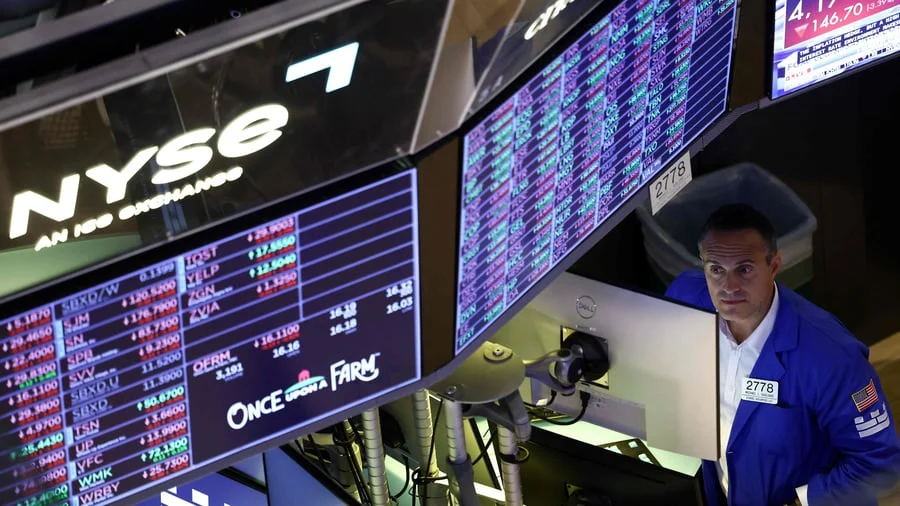
New York, NY – The major U.S. stock indices concluded Monday’s trading session on a downward trajectory, reflecting persistent investor caution fueled by a confluence of escalating oil prices and rising yields on U.S. Treasury bonds. Market participants are now keenly awaiting key economic data and policy signals scheduled for release throughout the week, which are expected to provide further clarity on the economic outlook and potential future market movements.
The Dow Jones Industrial Average, the S&P 500, and the Nasdaq Composite all experienced declines, indicating a broad-based sentiment of risk aversion across the market. This downturn occurred despite an initial surge in oil prices, which typically can be a positive indicator for energy-sector stocks, but the broader market sentiment proved more sensitive to the inflationary pressures and interest rate concerns associated with higher energy costs.

The Weight of Rising Oil and Treasury Yields
The initial catalyst for market unease stemmed from the ongoing geopolitical tensions surrounding the Strait of Hormuz. Reports indicated that U.S. President Donald Trump had rejected a recent Iranian proposal to reopen the strategic waterway. This development, coupled with the persistent supply concerns in the global oil market, initially propelled both North Sea Brent crude and U.S. West Texas Intermediate (WTI) oil prices to gains exceeding four percent.
However, this upward momentum in oil prices began to recede as diplomatic efforts gained traction. News emerged that mediators from Qatar were expected to engage in discussions with both the United States and Iran. While this suggested a potential de-escalation of immediate conflict, the underlying inflationary implications of higher energy prices continued to weigh on investor minds.
The sustained rise in oil prices has direct implications for inflation. Higher energy costs translate into increased transportation expenses for businesses and higher utility bills for consumers. This can lead to a broader increase in the cost of goods and services across the economy, potentially eroding purchasing power and dampening economic growth.
Concurrently, the market witnessed a significant uptick in the yields of U.S. Treasury bonds. The yield on ten-year U.S. Treasuries climbed to levels exceeding 5.2 percent, marking the highest point in nearly two decades. The yield on thirty-year Treasury bonds surpassed 5.5 percent. This surge in yields is often interpreted as a signal of rising inflation expectations and a potential increase in future interest rates by the Federal Reserve.
When Treasury yields rise, fixed-income investments become more attractive relative to equities. This can lead investors to shift capital from the stock market to bonds, thereby reducing demand for stocks and putting downward pressure on their prices. Furthermore, higher borrowing costs associated with increased Treasury yields can impact corporate profitability, as companies with significant debt may face higher interest expenses.
Market Reaction and Investor Strategy
The dual pressure of rising oil prices, with their inflationary implications, and increasing Treasury yields, which signal higher borrowing costs and potentially tighter monetary policy, created a challenging environment for equity investors. The "risk-off" sentiment dominated trading, prompting a sell-off in equities as investors sought safer havens or reallocated their portfolios.
Analysts noted that the market’s sensitivity to these factors highlights a prevailing concern about the sustainability of economic growth in the face of inflationary headwinds. The Federal Reserve’s monetary policy stance is a key focus, as any indication of an interest rate hike to combat inflation could further dampen economic activity and corporate earnings.
The initial optimism surrounding potential diplomatic breakthroughs in the Middle East was ultimately overshadowed by the entrenched concerns about energy security and the broader economic implications of persistent inflation. The market’s reaction suggests that investors are prioritizing the longer-term risks associated with an inflationary environment and the potential for monetary policy tightening over short-term geopolitical developments.
Broader Economic Context and Historical Parallels
The current economic climate is characterized by a complex interplay of factors, including supply chain disruptions, geopolitical instability, and evolving monetary policy. The rise in oil prices, in particular, evokes memories of past energy crises that have significantly impacted global economies.

Historically, sharp increases in oil prices have been correlated with periods of economic slowdown and, in some instances, recessions. The "oil shock" of the 1970s, for example, led to stagflation – a period of high inflation and stagnant economic growth – in many developed countries. While the current situation has its unique characteristics, the potential for similar inflationary pressures remains a significant concern for policymakers and market participants alike.
The Federal Reserve faces a delicate balancing act. On one hand, it must address inflationary pressures to maintain price stability. On the other hand, aggressive interest rate hikes could stifle economic growth, leading to a recession. The central bank’s forward guidance and actions in response to incoming economic data will be closely scrutinized in the coming weeks and months.
Upcoming Economic Calendar and Market Expectations
The trading week ahead is punctuated by several key economic releases that are expected to influence market sentiment. Investors will be paying close attention to data on inflation, employment, and consumer spending, which will provide a clearer picture of the underlying health of the U.S. economy.

Among the most anticipated events are:
- Inflation Data: Consumer Price Index (CPI) and Producer Price Index (PPI) reports will offer insights into the trajectory of inflation.
- Employment Figures: Weekly jobless claims and monthly non-farm payroll data will indicate the strength of the labor market.
- Consumer Confidence and Retail Sales: These indicators will shed light on consumer spending patterns, a crucial driver of economic growth.
The market’s reaction to these data points will likely dictate the short-term direction of equity indices. A stronger-than-expected economic performance could provide some relief, while weaker data could exacerbate concerns about a potential slowdown.
Outlook and Analyst Perspectives
Financial analysts remain cautious, emphasizing the heightened uncertainty in the current market environment. Many are advising investors to maintain a diversified portfolio and to be prepared for continued volatility. The interplay between global supply dynamics, geopolitical events, and central bank policies will be critical determinants of market performance in the coming months.

Some strategists suggest that the current market conditions may favor sectors that are less sensitive to interest rate hikes and inflationary pressures, such as consumer staples and healthcare. Conversely, growth-oriented technology stocks, which are often more sensitive to rising borrowing costs, may face continued headwinds.
The sustained rise in Treasury yields, particularly the ten-year yield reaching multi-decade highs, is a significant development that investors cannot afford to ignore. It signals a fundamental shift in the cost of capital and could have long-lasting implications for asset valuations across the financial landscape. The market will be watching closely to see if this trend continues and how it impacts corporate investment decisions and overall economic expansion.
The events of Monday’s trading session underscore the fragility of market sentiment in the face of persistent economic challenges. As investors navigate this complex landscape, their focus will remain firmly fixed on the forthcoming economic data and any policy pronouncements that could shape the future trajectory of the global economy and financial markets. The "Wall Street schließt niedriger" (Wall Street closes lower) headline serves as a stark reminder of the ongoing headwinds that equity markets are currently confronting.