Clara Shinta
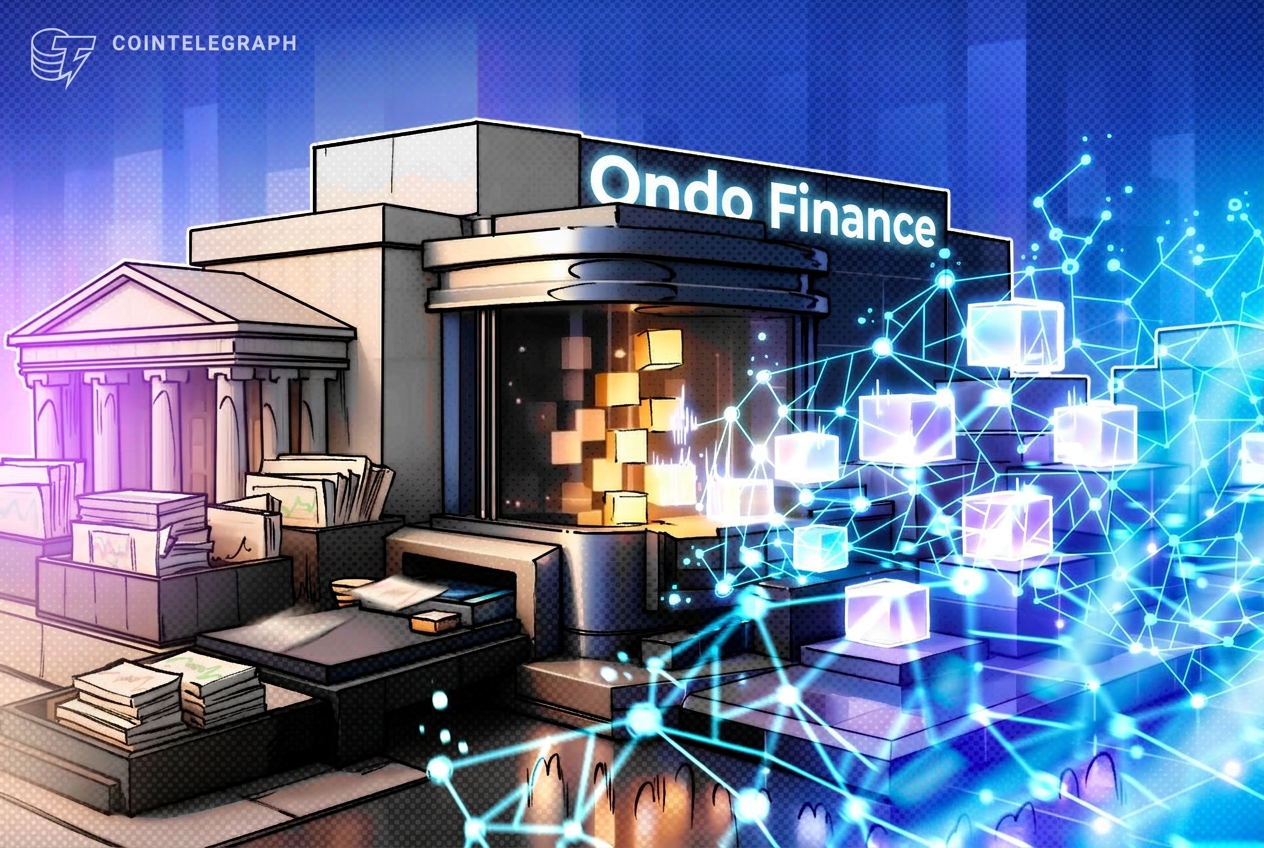
Ondo Finance, a prominent player in the tokenization of real-world assets (RWA), has unveiled a groundbreaking mechanism allowing eligible institutional clients to directly convert traditional stocks and exchange-traded funds (ETFs) into their tokenized equivalents, and vice versa, without the need for separate cash funding. This innovative "in-kind" conversion system, developed in partnership with the regulated brokerage Alpaca, marks a significant evolution in bridging the gap between conventional finance and the burgeoning blockchain ecosystem, addressing key friction points that have historically hindered institutional adoption of digital assets.
Under the newly implemented framework, approved financial institutions can now seamlessly transfer shares from their existing Alpaca accounts to Ondo through a secure internal book transfer. Upon successful transfer, corresponding Ondo Stocks tokens are then issued directly on-chain, representing ownership of the underlying traditional securities. The system is designed for complete reversibility, enabling institutions to redeem these tokenized assets for the underlying shares, facilitating a fluid two-way flow between traditional and blockchain-based asset management. This new pathway dramatically enhances capital efficiency and operational flexibility for institutional investors looking to integrate tokenized securities into their portfolios.
This "in-kind" option represents a substantial upgrade from Ondo’s previous, and still available, cash-funded model. Historically, institutions seeking to mint tokenized assets on Ondo’s platform, even if they already held the underlying shares in their traditional brokerage accounts, were required to provide separate cash capital to facilitate the minting process. This often led to inefficiencies, including the tying up of additional capital, increased financing costs, and potential timing mismatches between the traditional asset settlement cycles and the rapid pace of blockchain transactions. The introduction of in-kind conversions directly tackles these challenges, promising to reduce the amount of additional capital needed to create and manage tokenized inventory, thereby lowering overall financing costs and mitigating timing discrepancies.
Currently, these direct conversion capabilities are accessible on both the Ethereum and BNB Chain networks, two of the most widely adopted blockchain platforms for decentralized finance (DeFi) and enterprise applications. Access to this advanced functionality is strictly limited to institutional clients who have undergone a rigorous approval process by Alpaca and maintain active, verified accounts with both Alpaca and Ondo Finance. This multi-layered vetting ensures compliance with regulatory standards and maintains the integrity of the ecosystem, underscoring Ondo’s commitment to a secure and regulated environment for institutional participation.
The Expanding Landscape of Real-World Asset (RWA) Tokenization
The introduction of in-kind conversions by Ondo Finance arrives at a pivotal moment for the real-world asset (RWA) tokenization sector, which has rapidly emerged as one of the most compelling narratives in the broader blockchain and digital asset space. RWA tokenization involves representing tangible or intangible assets from the traditional financial world—such as real estate, commodities, private equity, bonds, and now publicly traded stocks and ETFs—as digital tokens on a blockchain. This process imbues these traditional assets with the inherent benefits of blockchain technology, including enhanced liquidity, fractional ownership, increased transparency, immutable record-keeping, and programmatic capabilities through smart contracts.
The motivations behind the surge in RWA tokenization are multifaceted. For institutions, it offers a pathway to unlock capital efficiency, reduce operational costs, and access a global, 24/7 market that is characteristic of digital assets. For the broader market, it promises to democratize access to previously illiquid or exclusive asset classes, potentially fostering greater financial inclusion. The ability to fractionalize high-value assets, for instance, allows smaller investors to participate in markets that were once out of reach. Furthermore, the transparency and auditability inherent in blockchain transactions can significantly streamline compliance and reporting processes, reducing administrative burdens and enhancing trust among participants.
Ondo Finance has been at the forefront of this movement, steadily growing its footprint to become one of the largest tokenization platforms by on-chain value. According to data from RWA.xyz, a leading analytics platform tracking tokenized assets, Ondo currently boasts approximately $3.63 billion in distributed assets across 441 diverse products. This impressive figure positions Ondo as the second-largest platform in the RWA tokenization sector, trailing only Securitize, another prominent player. Ondo’s existing offerings primarily include tokenized versions of U.S. Treasuries and money market funds, which have seen significant institutional uptake due to their stability and yield opportunities within the DeFi ecosystem. The expansion into tokenized stocks and ETFs signals a strategic move to broaden its product suite and capture a larger segment of the traditional finance market seeking blockchain integration.
Ondo Finance’s Evolution: From Cash-Funded to Capital-Efficient In-Kind Models
Ondo Finance’s journey in the RWA space began with a clear vision: to bridge the vast chasm between traditional financial markets and the innovative potential of blockchain technology. Early iterations of its platform, while pioneering, faced inherent limitations common to the nascent stages of RWA tokenization. The original "cash-funded" model, which has served as the backbone for many tokenization efforts, required institutions to provision separate cash to mint corresponding tokens, even if they already possessed the underlying physical assets.
Consider a scenario where an institutional investor holds $10 million worth of a specific stock in their traditional brokerage account. Under the cash-funded model, to acquire $10 million worth of the tokenized equivalent of that stock, the institution would need to provide an additional $10 million in cash. This meant effectively doubling the capital outlay for a period, locking up significant liquidity, and potentially incurring additional financing costs for the temporary cash provision. This operational hurdle, while manageable for smaller transactions or experimental use cases, presented a substantial barrier to entry for large-scale institutional adoption where capital efficiency is paramount. The process could also introduce timing mismatches; while traditional stock settlements typically adhere to a T+2 cycle (trade date plus two business days), blockchain transactions are often near-instantaneous. Managing these disparate timelines, particularly for large volumes, added complexity and risk.
The strategic pivot to an "in-kind" conversion mechanism directly addresses these inefficiencies. By allowing institutions to use their existing shares as collateral for minting, Ondo eliminates the need for redundant capital provision. This not only reduces the immediate capital outlay but also streamlines the entire process. The internal book transfer system with Alpaca ensures that the traditional assets are securely held and managed within a regulated environment, while their tokenized counterparts gain the benefits of blockchain’s speed and programmability. This seamless integration means institutions can now unlock the value of their existing asset holdings within the digital realm without incurring significant additional costs or operational friction.
The Mechanics of In-Kind Conversion: A Closer Look at the Alpaca Partnership
The operational elegance of Ondo’s new in-kind conversion system lies in its symbiotic relationship with Alpaca, a leading API-first brokerage platform. Alpaca plays a critical role as the regulated bridge, handling the traditional custody and transfer of shares, thereby ensuring compliance with existing securities regulations.
Here’s a breakdown of the process:
- Institutional Approval and Account Setup: Before initiating any conversions, an institution must be fully approved by Alpaca and maintain active accounts with both Alpaca and Ondo Finance. This involves standard KYC (Know Your Customer) and AML (Anti-Money Laundering) procedures, along with institutional vetting, to meet stringent regulatory requirements.
- Internal Book Transfer Request: When an approved institution wishes to tokenize a portion of its traditional stock or ETF holdings, it initiates a request within the Ondo platform. This request triggers an internal book transfer instruction to Alpaca.
- Secure Asset Transfer (Off-Chain): Alpaca, acting as the custodian, processes the internal book transfer, moving the specified shares from the institution’s primary trading account into a segregated account managed in conjunction with Ondo Finance. This transfer occurs entirely within Alpaca’s regulated infrastructure, ensuring the securities remain within a secure and compliant environment.
- On-Chain Token Issuance: Once Alpaca confirms the successful transfer and segregation of the underlying shares, Ondo Finance’s smart contracts on Ethereum or BNB Chain are triggered. These smart contracts then mint and issue the corresponding quantity of Ondo Stocks tokens directly to the institution’s designated on-chain wallet. The number of tokens issued is directly proportional to the value of the underlying shares transferred, maintaining a 1:1 backing.
- Redemption Process (Reverse): The redemption process works in reverse. An institution initiates a request to redeem its Ondo Stocks tokens for the underlying shares. The tokens are then burned on-chain, and a corresponding instruction is sent to Alpaca. Alpaca then transfers the physical shares from the segregated account back into the institution’s primary trading account, completing the cycle.
This integrated approach leverages Alpaca’s robust and regulated infrastructure for traditional asset handling, while Ondo provides the innovative blockchain layer for tokenization and on-chain management. This partnership is crucial for institutional adoption, as it addresses concerns around regulatory compliance, asset security, and the reliable transfer of traditional securities.
Strategic Implications and Benefits for Institutional Investors
The implications of Ondo’s in-kind conversion are far-reaching, particularly for institutional investors navigating the complex landscape of traditional and digital finance.
-
Unprecedented Capital Efficiency: The most immediate and significant benefit is the dramatic improvement in capital efficiency. Institutions no longer need to allocate additional capital for minting tokenized assets if they already possess the underlying securities. This frees up capital that can be deployed elsewhere, optimizing portfolio management and investment strategies. For large financial entities dealing with billions in assets, this translates into substantial savings and greater flexibility.
-
Reduced Financing Costs: By eliminating the need to source and temporarily hold separate cash, institutions can significantly reduce associated financing costs. Borrowing costs, interest expenses, and the administrative overhead of managing short-term cash positions are minimized, directly impacting the bottom line and improving the overall profitability of tokenized asset strategies.
-
Mitigation of Timing Mismatches: The traditional financial system operates on a T+X settlement cycle (e.g., T+2 for equities), which can create significant delays and operational challenges when interacting with the near-instantaneous settlement of blockchain transactions. The in-kind conversion streamlines this process, as the on-chain tokens are issued only after the off-chain shares are securely transferred, creating a more synchronized and predictable flow. This reduces settlement risk and allows for more agile asset management strategies.
-
Enhanced Liquidity and Market Depth for Tokenized Assets: Easier and more cost-effective minting mechanisms are likely to encourage more institutions to tokenize their holdings. This influx of tokenized assets on-chain can lead to increased liquidity and greater market depth for these digital securities, making them more attractive for trading, lending, and other DeFi protocols.
-
Seamless Integration with Decentralized Finance (DeFi): For institutions looking to leverage the yield opportunities, lending protocols, or other innovative financial instruments available in DeFi, the in-kind conversion provides a more direct and efficient entry point. They can convert their traditional holdings into tokenized assets, deploy them within DeFi protocols, and then redeem them back into traditional shares when desired, all with greater capital efficiency.
-
Diversification of Product Offerings: For Ondo Finance, this move represents a significant expansion of its product offerings beyond tokenized treasuries and money market funds. By including publicly traded stocks and ETFs, Ondo is tapping into a much larger market segment, potentially attracting a new cohort of institutional clients who are keen to explore tokenization for their equity portfolios.
Broader Industry Impact and Future Outlook
Ondo Finance’s latest innovation is more than just a product update; it’s a significant milestone for the broader RWA tokenization industry and the ongoing convergence of traditional finance (TradFi) and decentralized finance (DeFi). This move is poised to act as a powerful catalyst for institutional adoption of blockchain technology.
The primary hurdle for many large financial institutions has been the operational complexity and capital inefficiency associated with interacting with digital asset markets. By simplifying the conversion process and making it more capital-efficient, Ondo is effectively lowering the barrier to entry for these players. As more institutions tokenize their existing assets, it will further legitimize the RWA sector and accelerate the development of robust, regulated infrastructure around digital securities.
Looking ahead, this development could pave the way for a truly hybrid financial system where traditional assets are seamlessly integrated with blockchain rails. Such a system could offer unprecedented levels of efficiency, transparency, and global accessibility. However, the path to widespread adoption is not without its challenges. Regulatory clarity remains a paramount concern across various jurisdictions. While Ondo and Alpaca operate within existing frameworks, the broader regulatory landscape for tokenized securities is still evolving. Further guidance and harmonization from global regulators will be essential to unlock the full potential of RWA tokenization.
Moreover, continued innovation in areas such as scalability, interoperability between different blockchains, and enhanced security measures will be crucial. Ondo’s support for both Ethereum and BNB Chain demonstrates an understanding of the need for multi-chain capabilities to cater to diverse institutional preferences and to ensure broad market reach. As the technology matures and regulatory frameworks become clearer, we can expect to see even more sophisticated financial products emerge, further blurring the lines between traditional and digital asset markets.
In conclusion, Ondo Finance’s introduction of direct in-kind conversion for stocks and ETFs is a transformative step, effectively dismantling one of the most significant barriers to institutional engagement with tokenized real-world assets. By prioritizing capital efficiency and operational seamlessness through its partnership with Alpaca, Ondo is not only solidifying its position as a leader in the RWA space but also charting a clearer, more accessible course for the future of finance, where traditional assets and blockchain technology converge to create a more integrated, efficient, and innovative global market.