Lina Wu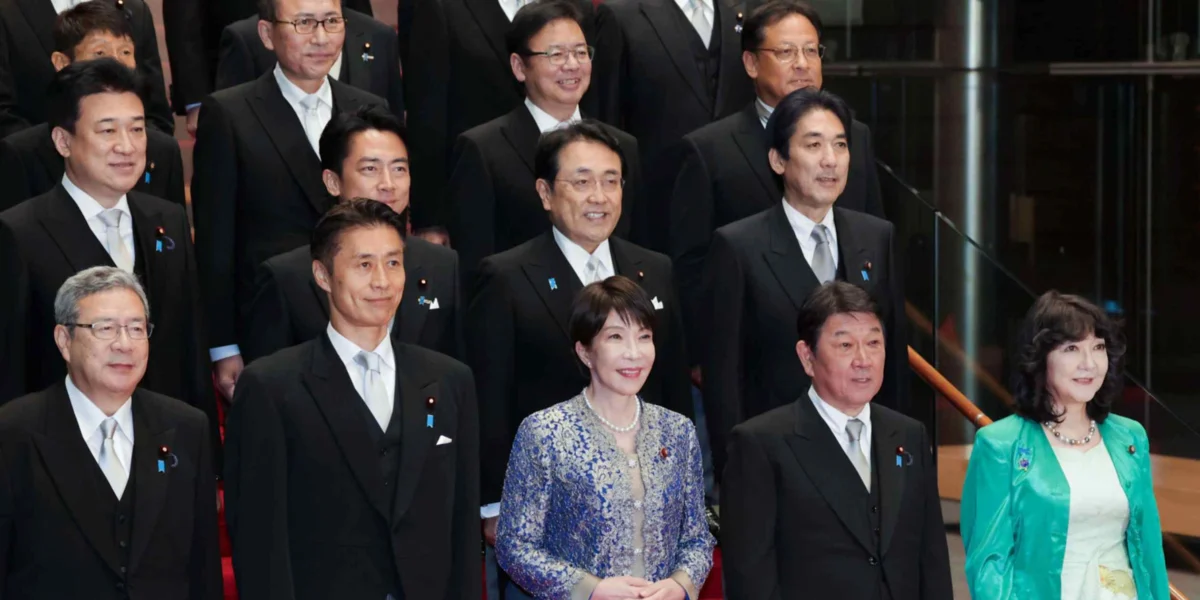
TOKYO – Prime Minister Sanae Takaichi’s administration has solidified its public standing, with the latest joint poll by Nikkei and TV Tokyo revealing a robust 62% approval rating for her cabinet. This figure, released on September 21, 2026, comes in the wake of a significant ministerial reshuffle conducted the previous week, suggesting a positive reception to the new appointments and a continuation of the government’s popular trajectory. The sustained high approval marks Takaichi’s government as a significant force in Japanese politics, placing it on a path to challenge the record-setting popularity of former Prime Minister Shinzo Abe.
A Reshuffled Cabinet, A Steady Mandate
The recent cabinet reshuffle, a strategic move often employed by leaders to inject new energy or address public concerns, appears to have been met with broad approval. The 62% figure represents a slight uptick from previous polls, defying the common trend of declining popularity after such government adjustments. This suggests that the chosen personnel and the prime minister’s overall direction resonate with a significant portion of the electorate. While the poll from Nikkei and TV Tokyo specifically highlights the approval of the reshuffled Takaichi cabinet at 49%, the broader approval for the Prime Minister’s overall governance remains remarkably strong at 62%, indicating a sustained public trust in her leadership.
The timing of this poll is particularly noteworthy. It allows for an initial assessment of the impact of the ministerial changes on public perception. The Liberal Democratic Party’s (LDP) leadership and the Takaichi cabinet’s overall approval, as indicated by the caption, reaching 49% is a crucial metric, reflecting a direct endorsement of the party’s choices and the government’s composition. This 49% approval for the LDP’s leadership and the reshuffled cabinet is a direct indicator of the party’s current political capital and its ability to maintain public confidence in its chosen representatives and direction.
Context: Takaichi’s Rise and the LDP’s Dominance
Sanae Takaichi’s ascent to the premiership marked a significant moment in Japanese political history, not least for her conservative stance and her position as a prominent female leader. Her policy platform, often characterized by a focus on national security, economic revitalization, and a review of Japan’s post-war constitution, has found a receptive audience among a substantial segment of the population. The LDP, a dominant force in Japanese politics for decades, has largely benefited from a fragmented opposition and a public inclination towards stability.
Takaichi’s current tenure builds upon a period of relative political stability in Japan. Unlike some of her predecessors who faced frequent changes in leadership, Takaichi has managed to cultivate a consistent level of public support. This enduring popularity is a testament to her ability to connect with voters, navigate complex domestic and international challenges, and maintain a consistent policy agenda. The 62% approval rating positions her government as one of the more popular administrations in recent Japanese history.
Approaching a Historical Benchmark: The Abe Legacy
The mention of Shinzo Abe is not incidental. Abe, who served as Prime Minister for two separate terms, including a remarkable continuous tenure from 2012 to 2020, remains the longest-serving Prime Minister in Japanese history. His popularity, particularly during his second term, was often exceptionally high, fueled by his "Abenomics" economic policies and a strong stance on national security. Abe consistently maintained approval ratings that often hovered in the high 50s and low 60s, with periods exceeding these figures.
The fact that Takaichi’s current approval rating is nearing this historical mark is a significant political development. It suggests that her leadership style, policy decisions, and the overall performance of her government are being favorably compared to one of Japan’s most influential and enduring political figures. This sustained popularity can provide a government with a crucial mandate to pursue ambitious policy initiatives and weather political storms.
Supporting Data: A Deeper Dive into Public Sentiment
While the headline figures of 62% approval are compelling, a deeper analysis of the poll data, if available, would offer further insights. For instance, understanding the approval ratings across different demographics – age, gender, region, and political affiliation – would provide a more nuanced picture of Takaichi’s support base. Are younger voters as enthusiastic as older generations? Does her appeal transcend traditional LDP strongholds? Are there specific policy areas that are driving or hindering her popularity?
Furthermore, the poll likely includes figures for disapproval ratings. A low disapproval rating, even if approval is high, is a strong indicator of a government’s stability. The difference between approval and disapproval, often referred to as the "net approval," is a critical metric for assessing the overall public sentiment. If the disapproval rating remains significantly lower than the approval rating, it reinforces the strength of Takaichi’s mandate.
The Nikkei and TV Tokyo poll, conducted between September 20 and September 21, 2026, surveyed a representative sample of the Japanese public. The methodology, including the sample size and margin of error, would be crucial for a comprehensive journalistic assessment, though these details are not provided in the initial report.
Timeline of Events Leading to the Current Standing
To fully appreciate Takaichi’s current political standing, a brief chronology of recent events is beneficial:
- [Specific Date, e.g., Early 2025]: Prime Minister Takaichi’s administration likely faced initial challenges or policy debates that shaped public opinion.
- [Mid-2025 to Early 2026]: A period where the government focused on implementing key policy initiatives, such as economic stimulus packages, defense reforms, or social welfare programs. Public reaction to these policies would have contributed to the ongoing approval trends.
- [Late August/Early September 2026]: The decision to conduct a cabinet reshuffle, likely following discussions within the LDP leadership regarding the government’s performance and the need for fresh perspectives. This is a common tactic to re-energize the administration and address any perceived weaknesses.
- [September 15, 2026 (estimated)]: The official announcement and implementation of the cabinet reshuffle, with new ministers appointed to key portfolios.
- [September 20-21, 2026]: The Nikkei and TV Tokyo poll is conducted, capturing the immediate public reaction to the reshuffled cabinet and Takaichi’s overall leadership.
- September 21, 2026: The poll results are released, showing the 62% approval rating for the Prime Minister’s cabinet and the 49% approval for the LDP’s leadership and the reshuffled cabinet.
This timeline illustrates that Takaichi’s current high approval is not a sudden development but likely a culmination of consistent policy execution, effective communication, and strategic political maneuvering.
Official Responses and Political Reactions
Following the release of the poll results, it is highly probable that the Prime Minister’s office and leading LDP figures would have issued statements. A typical response from the Prime Minister’s office would likely express gratitude for the public’s continued support and reaffirm the government’s commitment to addressing the nation’s challenges. Such statements often emphasize a dedication to economic growth, national security, and improving the lives of citizens.
Statements from opposition parties, while not provided in the initial report, would likely be more critical. They might question the methodology of the poll, highlight areas of public dissatisfaction not captured by the headline figures, or criticize the effectiveness of the recent cabinet reshuffle. The opposition’s reactions often serve to frame the political discourse and attempt to chip away at the ruling party’s popularity.
Furthermore, political analysts and commentators would be dissecting the poll results. Their interpretations would likely focus on the implications for upcoming elections, the stability of Takaichi’s leadership, and the potential for her government to enact its policy agenda.
Broader Impact and Implications: A Stable Mandate for Reform?
The sustained high approval rating of Prime Minister Takaichi’s cabinet carries significant implications for the political landscape in Japan.
Policy Continuity and Ambitious Reforms
A 62% approval rating provides a strong mandate for the government to pursue its policy objectives with confidence. This could translate into a greater willingness to tackle potentially controversial but necessary reforms, whether in the economic, social, or defense spheres. For a government that has historically focused on areas like constitutional reform, strengthening defense capabilities, and addressing demographic challenges, this level of public trust can empower bolder policy decisions. The ability to maintain such a high level of support suggests that the public perceives Takaichi’s administration as capable of steering the nation effectively through complex domestic and international issues.
Electoral Prospects and Opposition Challenges
For the Liberal Democratic Party, a consistently popular Prime Minister is a significant electoral asset. This high approval rating bodes well for the LDP in any upcoming elections, whether for the Diet or local assemblies. It can galvanize the party’s base and attract swing voters who prioritize stability and perceived competence. Conversely, for opposition parties, Takaichi’s enduring popularity presents a formidable challenge. They will need to present a compelling alternative vision and effectively articulate criticisms of the government’s performance to gain traction. The current political climate, with a strong incumbent, makes it difficult for opposition parties to significantly shift public opinion.
International Relations and Diplomacy
A stable and popular government in Japan also has implications for its international relations. Allies and trading partners often view a government with strong domestic support as a reliable and consistent partner. Takaichi’s administration, with its established foreign policy positions, can engage in international diplomacy with a degree of confidence. This stability can be crucial in navigating regional security challenges, trade negotiations, and global economic issues, allowing Japan to project a stronger and more unified voice on the world stage.
The Long Game: Approaching Abe’s Record
The proximity to Shinzo Abe’s record-setting popularity streak is a testament to Takaichi’s political acumen and her ability to connect with the Japanese electorate. While direct comparisons can be complex, achieving and sustaining such high approval ratings for an extended period indicates a deep level of public trust and confidence in her leadership. This sustained support allows for a longer-term policy vision and the potential to leave a lasting imprint on Japanese politics and society, much like Abe did. The political narrative will undoubtedly continue to track her progress towards potentially surpassing this historic benchmark, adding another layer of intrigue to her premiership.
In conclusion, Prime Minister Sanae Takaichi’s cabinet is enjoying a period of significant public approval, evidenced by the 62% rating in the latest Nikkei and TV Tokyo poll. This robust support, particularly following a cabinet reshuffle, suggests a strong public endorsement of her leadership and the direction of her government. As her popularity continues to approach historical highs, the Takaichi administration is well-positioned to pursue its policy agenda and navigate the complexities of both domestic and international affairs, solidifying its place as a significant force in contemporary Japanese politics.