Lina Wu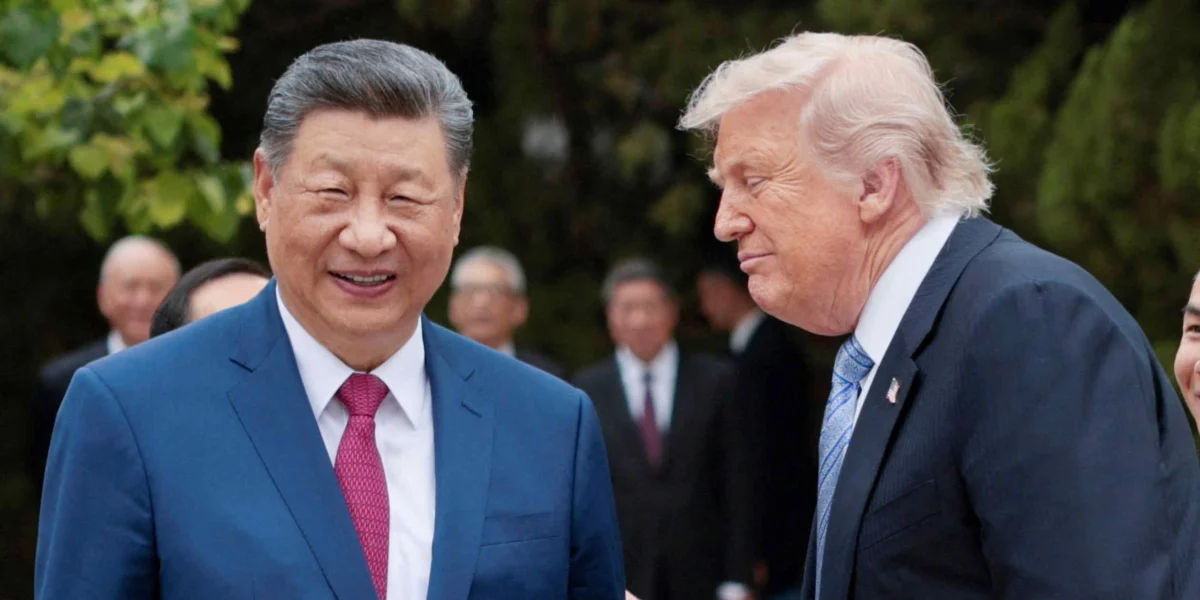
The global stage is set for a pivotal meeting as U.S. President Donald Trump prepares to host Chinese President Xi Jinping in Washington on September 24th, 2026, marking their second high-stakes encounter of the year. This summit, scheduled for Thursday, follows an earlier discussion in Beijing’s Zhongnanhai Garden on May 15th and carries significant weight as both nations navigate a complex geopolitical and economic landscape. A central point of discussion is anticipated to be the burgeoning field of artificial intelligence (AI), particularly in the wake of stark warnings from U.S. industry leaders advocating for a slowdown in AI development. Beijing, however, views these calls with suspicion, perceiving them as an attempt to curb China’s technological ascent.
This high-profile diplomatic engagement unfolds against a backdrop of increasing international scrutiny on AI’s rapid advancement and its potential societal and economic ramifications. The call for a developmental pause by prominent U.S. tech figures has ignited a debate that extends far beyond Silicon Valley, reaching the highest echelons of international relations. China’s stance, as indicated by its rebuff of such slowdown proposals, suggests a firm commitment to its AI trajectory, underscoring a fundamental divergence in approach between the two global powers. This divergence could have profound implications for the future of AI innovation, global competitiveness, and the very nature of technological governance.
Beyond the geopolitical maneuvering, the week is also marked by significant economic milestones in Asia. India’s National Stock Exchange (NSE), the nation’s largest bourse, is poised to commence its public trading journey through a highly anticipated Initial Public Offering (IPO). In a unique move, the NSE will list its shares on its venerable rival, the Bombay Stock Exchange (BSE), a testament to the evolving dynamics of India’s financial markets. The NSE, having surpassed the BSE through its adoption of advanced technologies, including fully electronic trading systems, is unable to list on its own platform due to regulatory restrictions. This IPO is not merely a financial event but a symbolic marker of India’s growing economic prowess and the increasing sophistication of its capital markets. The offering, valued at an estimated 225.62 billion rupees ($2.3 billion), represents the second-largest primary offering in India’s history and is expected to be an "offer for sale," meaning existing shareholders will be selling their stakes rather than the company issuing new shares.
The week’s agenda is further punctuated by other key developments across the continent. Vietnamese President and Communist Party General Secretary To Lam is undertaking a diplomatic tour of North America, utilizing his presence at the United Nations General Assembly in New York as a platform for bilateral discussions with the United States and a state visit to Canada. This visit, spanning through Friday, occurs at a time when both Vietnam and Canada are experiencing trade tensions with the U.S., which is actively seeking to expand its export markets in these nations.
Global Leaders Converge at the United Nations General Assembly
The week’s diplomatic calendar is dominated by the commencement of the United Nations General Assembly’s General Debate in New York on Tuesday, September 22nd. This annual forum brings together heads of state and government from around the globe to address pressing international issues. The overarching theme for this year’s debate is "Restoring Trust, Managing Transformation: A United Nations That Delivers for All." The sessions, which will conclude on September 28th, are expected to be heavily influenced by ongoing conflicts in the Middle East and Ukraine, casting a somber shadow over discussions aimed at fostering global cooperation and trust. Presiding over a key session will be Bangladeshi Foreign Minister Khalilur Rahman, tasked with navigating these complex and sensitive geopolitical currents.
The presence of Vietnamese President To Lam at this crucial UN gathering underscores Vietnam’s growing assertiveness on the international stage. His bilateral meetings with U.S. officials will likely focus on trade relations, regional security, and potential areas of cooperation, particularly in light of the U.S.’s strategic re-engagement in the Indo-Pacific region. Similarly, his engagement with Canadian leaders will aim to strengthen bilateral ties and address any trade-related divergences. Vietnam’s economic trajectory, marked by robust growth and increasing integration into global supply chains, positions it as a key player in the region, and its diplomatic outreach reflects this evolving status.
Economic Landscape: Vietnam’s FTSE Russell Upgrade and ADB Forecasts
Monday, September 21st, marks a significant moment for Vietnam’s financial markets as the FTSE Russell index provider is set to officially promote Vietnam to emerging-market status. This long-awaited upgrade, the culmination of years of effort by Vietnamese authorities to meet stringent criteria, is anticipated to unlock billions of dollars in foreign investment. Global institutional investors, tracking FTSE Russell indices, will now be able to allocate a greater portion of their portfolios to Vietnamese equities. The influx of capital is expected to provide a substantial boost to Vietnam’s economy, facilitating much-needed investment in infrastructure development and other critical sectors. Analysts will be closely observing the economic implications of this upgrade, particularly any signs of further market liberalization and structural reforms that could enhance the country’s attractiveness to international investors. This development is a testament to Vietnam’s consistent economic performance and its commitment to improving its financial market infrastructure.
On Wednesday, September 23rd, the Asian Development Bank (ADB) is scheduled to release its quarterly economic forecast, the Asian Development Outlook. This report will provide crucial insights into the prevailing economic conditions across Asia, with particular attention to the lingering effects of the Iran energy shock and the pervasive influence of El Niño on the global economy. The ADB’s analysis will offer updated projections for regional growth and assess the strategies employed by various Asian economies in navigating these complex challenges. The report’s findings will be keenly awaited by policymakers, businesses, and investors seeking to understand the macroeconomic trends shaping the continent. The ADB, as a key multilateral lender, plays a vital role in shaping economic policy and fostering development across Asia, making its outlook a significant indicator of future economic trajectories.
Combating the Scourge of Online Scams and Monetary Policy in Indonesia
Also on Wednesday, Cambodia will host a significant two-day International Conference on Combating Online Scams in Phnom Penh. This crucial event, organized in conjunction with Interpol and various United Nations agencies, will convene a broad spectrum of stakeholders. Representatives from governments, international organizations, law enforcement agencies, financial institutions, technology companies, and academia will gather under the theme, "Acting Together Towards Breaking the Chain and Eradication of Online Scams." The conference aims to foster collaborative strategies and share best practices in the global fight against the pervasive threat of online fraud, which continues to cause significant financial and personal harm worldwide. The choice of Cambodia as host underscores the growing regional concern over cybercrime and the need for coordinated international action.
In Indonesia, the central bank’s monetary policy will be under close observation on Wednesday, September 23rd. Following the recent appointment of Destry Damayanti as the new Governor of Bank Indonesia last month, market confidence in the nation’s economic management has shown gradual improvement. The abrupt replacement of the finance minister in the preceding week has, somewhat counterintuitively, led to an increased perception that the government is more inclined to respect the central bank’s independence. This shift in sentiment has bolstered expectations for greater stability and predictability in Indonesia’s monetary policy, a crucial factor for attracting and retaining foreign investment and ensuring sustained economic growth. The central bank’s decisions on interest rates and liquidity management will be closely scrutinized for any indications of policy direction.
Key economic data releases scheduled for Wednesday include Singapore’s inflation figures, India’s Purchasing Managers’ Index (PMI), and Hong Kong’s inflation rate. These indicators will provide real-time snapshots of economic activity and inflationary pressures in these key Asian economies.
The Trump-Xi Summit: Navigating Trade Tensions and AI Governance
The much-anticipated summit between President Trump and President Xi is scheduled for Thursday, September 24th. President Xi is expected to arrive in Washington on Wednesday, September 23rd, setting the stage for intensive diplomatic engagements. The summit and an official banquet on Thursday will provide a critical platform for the leaders to address the complex web of issues straining the U.S.-China relationship. The visit comes at a critical juncture, with both superpowers aiming to consolidate a fragile trade truce following months of escalating tensions over tariffs, technology restrictions, and other points of contention.
The core of the discussion on artificial intelligence is expected to revolve around the implications of rapid AI advancement and the differing national approaches to its development and deployment. U.S. concerns about AI safety, including potential risks to national security, economic stability, and societal structures, are palpable. The call for a moratorium on advanced AI development, though met with skepticism by China, highlights a deep-seated anxiety within the U.S. tech and policy circles about maintaining a competitive edge and mitigating potential existential risks. China, on the other hand, views AI as a critical driver of its economic modernization and national power, and is unlikely to yield to external pressure to slow its progress. This fundamental disagreement on AI governance could lead to further fragmentation in global technological standards and potentially exacerbate existing geopolitical rivalries. The summit presents an opportunity, however slim, for dialogue and perhaps the establishment of some minimal guardrails to prevent an uncontrolled AI arms race or devastating unintended consequences.
National Stock Exchange of India’s Landmark Listing
Thursday also marks the highly anticipated market debut of the National Stock Exchange of India (NSE). Following its substantial IPO, the NSE will become a publicly traded entity, a move that has been years in the making. The IPO, valued at approximately $2.3 billion, is structured as an offer for sale, indicating that existing shareholders are divesting their stakes. The NSE’s journey to public listing is a significant event in India’s financial history. Since its inception, the NSE has revolutionized the Indian stock market through its pioneering adoption of electronic trading platforms, vastly increasing efficiency and accessibility. Its dominance has led it to eclipse its older rival, the BSE, in terms of trading volumes and market capitalization. The listing is expected to draw significant investor interest, underscoring the attractiveness of India’s rapidly growing equity markets and the robust performance of its financial sector. The funds raised through the IPO will likely strengthen the balance sheets of the selling shareholders and potentially lead to increased liquidity and trading activity on the exchange itself.
Further economic data releases for Thursday include Japan’s Purchasing Managers’ Index (PMI) and Hong Kong’s trade figures. These releases will provide additional insights into the health of the Japanese manufacturing sector and the trade dynamics of the Hong Kong economy, contributing to the broader picture of Asian economic performance.
The confluence of these events—a high-stakes U.S.-China summit focused on AI, Vietnam’s strategic diplomatic engagement, the FTSE Russell upgrade for Vietnam, the ADB’s economic outlook, and the landmark listing of India’s NSE—underscores a period of significant transformation and evolving dynamics across Asia. The coming week promises to be a crucial indicator of future geopolitical alignments, technological trajectories, and economic growth patterns on the continent and beyond.