Lina Wu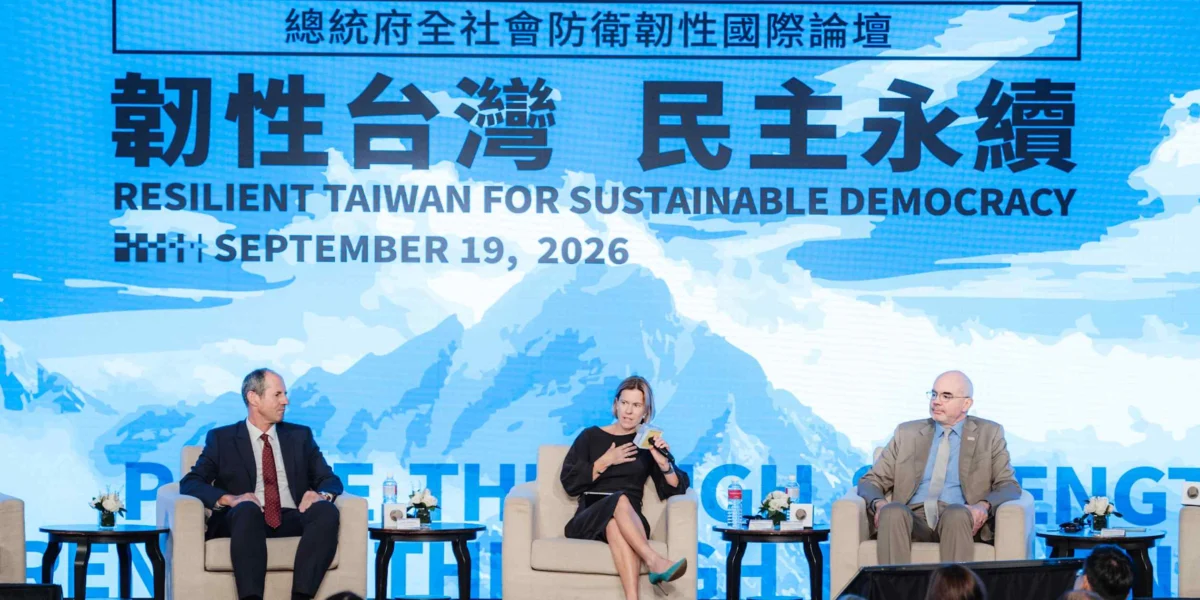
TAIPEI — Senior foreign diplomats stationed in Taipei have issued a stark warning, asserting that China’s intensifying maritime activities around Taiwan represent a calculated effort to fundamentally alter the established norms and legal frameworks governing the seas. This assessment was articulated during a high-profile resilience forum held in the Taiwanese capital on September 19, 2026. Concurrently, the top U.S. diplomat in Taiwan challenged the prevailing narrative of pessimism surrounding the island democracy’s capacity to withstand a potential blockade scenario, suggesting that the focus on negativity might be overshadowing Taiwan’s inherent strengths and preparedness.
The forum, attended by de facto ambassadors from key democratic nations, provided a critical platform for assessing the evolving geopolitical landscape in the Indo-Pacific, with a particular focus on China’s assertive posture. Lutz Guellner from the European Union, Ruth Bradley-Jones from the United Kingdom, and Raymond Greene from the United States were among the prominent figures who shared their perspectives on the escalating tensions and their implications for regional stability and international law.
China’s Maritime Strategy: A Calculated Challenge to the Status Quo
The diplomats’ shared concern centers on a pattern of Chinese actions that extend beyond routine naval exercises. These include the frequent incursions of Chinese coast guard and maritime militia vessels into Taiwan’s claimed waters, the establishment of unofficial blockades during periods of heightened political tension, and the increasingly sophisticated maneuvers that blur the lines between civilian law enforcement and military operations.
"What we are witnessing is not merely an increase in activity, but a deliberate attempt to normalize actions that would have been considered escalatory and unacceptable just a few years ago," stated one diplomat, speaking on condition of anonymity due to the sensitive nature of the discussions. "Beijing is meticulously constructing a new reality at sea, one where its unilateral interpretations of maritime boundaries and rights are gradually accepted by default, thereby eroding the existing international order."
This sentiment was echoed by others who highlighted the strategic implications of such a shift. The ability to control or significantly disrupt maritime traffic in the Taiwan Strait, a vital artery for global trade, would grant China immense leverage, not only over Taiwan but also over nations heavily reliant on the region’s shipping lanes. Taiwan’s Ministry of National Defense has been meticulously tracking these incursions, with data indicating a significant year-on-year increase in the number of Chinese naval and coast guard vessels operating within Taiwan’s contiguous zone and exclusive economic zone (EEZ). For instance, official Taiwanese reports from early 2026 showed a 30% rise in unauthorized maritime incursions compared to the same period in 2025, with specific attention drawn to the increased presence of large coast guard cutters engaging in persistent shadowing and interdiction-style maneuvers.
Questioning the Pessimism: Taiwan’s Resilience in Focus
Raymond Greene, the highest-ranking U.S. diplomat in Taiwan, offered a counterpoint to the predominantly bleak outlook often presented in analyses of a potential Taiwan blockade. While acknowledging the significant challenges such a scenario would present, Greene emphasized the need to avoid succumbing to a narrative of inevitable defeat or overwhelming Taiwanese vulnerability.
"There’s a tendency, both within and outside Taiwan, to focus disproportionately on the potential negative outcomes of any contingency," Greene remarked at the forum. "While it is crucial to be realistic about the risks, it is equally important to recognize Taiwan’s inherent strengths, its technological prowess, its democratic resilience, and its strategic importance to the global economy. We must not underestimate the island’s capacity to adapt, to resist, and to receive support."
Greene’s remarks are particularly significant given the United States’ long-standing commitment to Taiwan’s security under the Taiwan Relations Act. The U.S. has been a leading provider of defensive weaponry to Taiwan and has consistently underscored the importance of peace and stability in the Taiwan Strait. The U.S. diplomat’s call to reframe the discussion suggests a strategic imperative to bolster Taiwanese morale and international confidence by highlighting its robust civil defense preparations, its advanced technological sector’s ability to sustain critical infrastructure, and its extensive network of international partnerships.
Historical Context: A Shifting Balance of Power
The current maritime tensions are not an isolated phenomenon but are rooted in decades of evolving cross-strait relations and China’s steady military modernization. Following the Chinese Civil War, Taiwan, under the Republic of China (ROC) government, retreated to the island, establishing a distinct political entity from the People’s Republic of China (PRC) on the mainland. For much of the Cold War, the Taiwan Strait was a heavily militarized zone, with occasional shelling and naval skirmishes.
However, the past two decades have witnessed a significant shift in the military balance. China’s economic growth has fueled a rapid expansion and modernization of its People’s Liberation Army (PLA), including its navy and coast guard. This has enabled Beijing to project power further into the Indo-Pacific and to assert its territorial claims with greater confidence.
The period leading up to 2026 has seen a discernible escalation in China’s maritime assertiveness. Following key political events in Taiwan, such as presidential elections or significant international engagements, China has frequently responded with large-scale military exercises and increased maritime patrols around Taiwan. For example, the August 2022 military drills conducted by China in the waters surrounding Taiwan, in response to then-U.S. House Speaker Nancy Pelosi’s visit, were unprecedented in their scale and scope. These drills saw Chinese forces simulate a blockade and conduct missile firings that landed within Taiwan’s EEZ, actions that were widely condemned internationally as provocative and destabilizing. The persistence of similar, albeit sometimes less overt, actions in the years since has solidified the diplomatic community’s concerns.
Data and Analysis: The Economic and Strategic Stakes
The strategic importance of Taiwan and the Taiwan Strait cannot be overstated. Taiwan is a critical hub in global supply chains, particularly for advanced semiconductors. Companies like Taiwan Semiconductor Manufacturing Company (TSMC) produce the vast majority of the world’s most advanced chips, which are essential for everything from smartphones and computers to advanced military hardware. Any disruption to Taiwan’s production or export capabilities would have catastrophic global economic consequences.
The Taiwan Strait is also one of the world’s busiest shipping lanes, with an estimated 50% of global container traffic passing through it annually. A blockade, even a partial one, would cripple global trade, leading to widespread shortages and economic recession. The value of goods transiting the strait is estimated to be in the trillions of dollars each year, a figure that underscores the immense economic stakes involved.
The diplomats’ warnings about China redefining maritime rules are also grounded in legal and geopolitical realities. International maritime law, as codified by the United Nations Convention on the Law of the Sea (UNCLOS), delineates rights and responsibilities of nations in their territorial waters, contiguous zones, and EEZs. China’s actions, by consistently pushing the boundaries of what is considered acceptable within these zones, appear designed to test and ultimately rewrite these established norms. This could have far-reaching implications for maritime freedom of navigation globally, potentially emboldening other nations to assert similar expansive claims.
Broader Impact and Implications
The concerns raised by the diplomats at the Taipei forum have significant implications for regional security and the global international order.
- Erosion of International Law: If China’s assertive maritime actions succeed in normalizing new definitions of maritime rights, it could set a dangerous precedent, encouraging other nations to disregard international law and pursue their own territorial ambitions through coercive means. This would fundamentally undermine the stability that has underpinned global trade and security for decades.
- Increased Risk of Miscalculation: The persistent presence of Chinese vessels and their assertive maneuvers in disputed waters heighten the risk of accidental encounters and subsequent escalation. Without clear communication channels and established de-escalation protocols, a minor incident could quickly spiral into a larger conflict.
- Impact on Democratic Alliances: The forum highlighted the united front presented by democratic nations in Taiwan. Their shared concern and coordinated diplomatic messaging are crucial for deterring further aggression and for signaling to Beijing that its actions are being closely monitored and are not being accepted. However, the effectiveness of these alliances hinges on continued political will and coordinated action.
- Taiwan’s Defense Posture: The discussions underscore the critical importance of Taiwan’s own defense capabilities and its strategy for resilience. As the U.S. diplomat suggested, a focus on preparedness, deterrence, and the ability to sustain critical functions during a crisis is paramount. This includes not only military readiness but also economic security, infrastructure resilience, and public preparedness. Taiwan has been actively investing in asymmetric warfare capabilities and strengthening its civil defense network, recognizing the need to present a formidable challenge to any potential aggressor.
In conclusion, the resilience forum in Taipei served as a crucial moment for international diplomats to articulate their grave concerns regarding China’s maritime assertiveness. The warnings that Beijing is attempting to redraw the rules of the sea, coupled with a more optimistic assessment of Taiwan’s potential to withstand a blockade, paint a complex picture of the geopolitical dynamics at play. As tensions continue to simmer in the Indo-Pacific, the world watches closely to see how these assertive actions and the international response will shape the future of maritime security and the global rules-based order.