Gilang Muhammad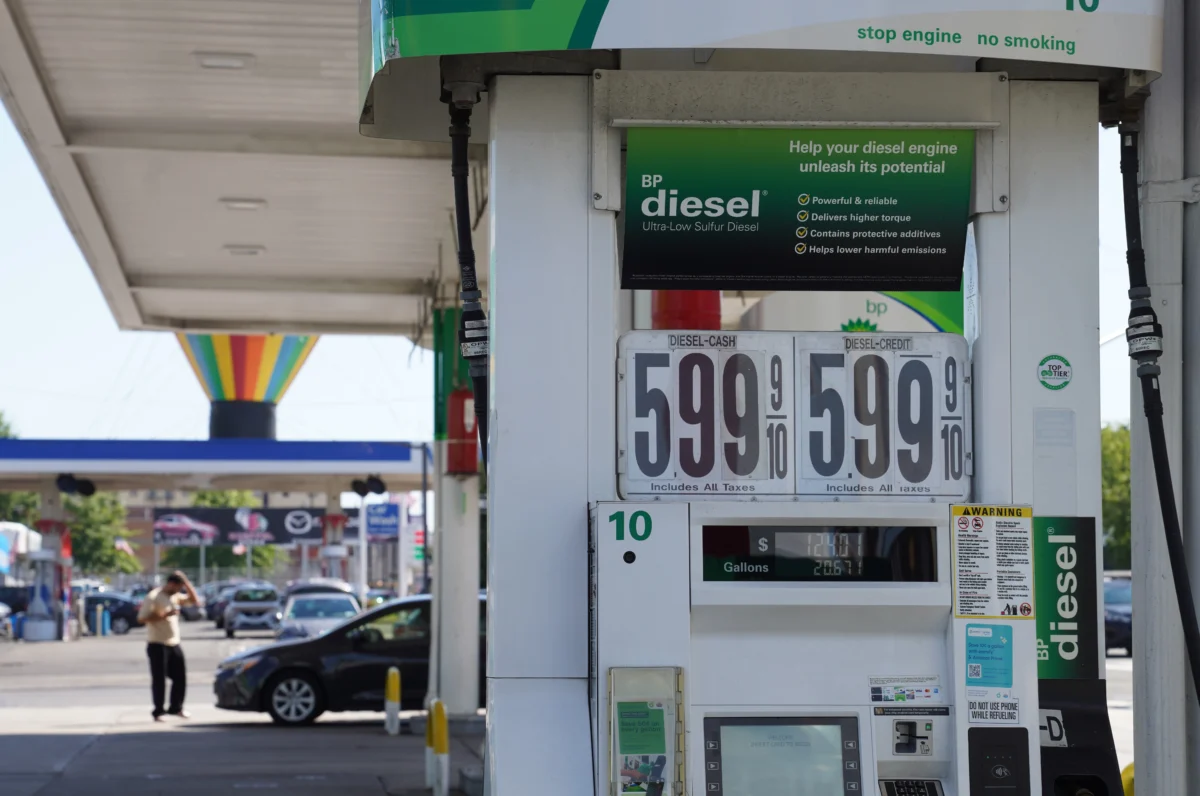
New York, NY – A convergence of adverse economic indicators and escalating geopolitical tensions has significantly heightened the probability of an interest rate hike by the Federal Reserve at its upcoming meeting, with market sentiment on Thursday also pointing to a strong likelihood of another increase before the close of the year. This aggressive posture underscores the central bank’s growing concern over persistent inflationary pressures that show little sign of abating.
Market traders, utilizing tools such as the CME Group’s FedWatch gauge, pushed the chances of a rate increase at the next Federal Open Market Committee (FOMC) meeting to a commanding 70% in morning trading. This shift in expectations followed the release of a critical report detailing a rise in wholesale prices for August, compounded by a concurrent and significant surge in U.S. crude oil prices, which breached the psychologically important $100 per barrel threshold. Furthermore, the likelihood of an additional rate increase in December edged close to 60%, reflecting a widespread acknowledgment that current inflation dynamics are proving far more resilient than previously anticipated, compelling a more assertive response from the nation’s central bank.
The Confluence of Inflationary Pressures
The primary catalysts driving this hawkish shift in market outlook are multifaceted, stemming from both domestic economic data and international geopolitical developments. The Producer Price Index (PPI), a key barometer of wholesale and "pipeline" cost pressures, registered a 0.4% increase in August. While this figure largely aligned with consensus forecasts, its impact was amplified by an upward revision to July’s PPI, which now stands at a 0.1% increase. Cumulatively, these adjustments propelled the annual PPI level to 5.4%, a figure slightly exceeding initial projections and signaling entrenched inflationary forces upstream in the supply chain. This measure is particularly crucial as it often serves as an early indicator of future consumer price movements.
Simultaneously, the global energy market experienced a significant jolt, with intensified hostilities in the Middle East sparking fears of supply disruptions. This geopolitical instability sent U.S. crude oil prices soaring by 4%, pushing them just above the $100 per barrel barrier. Such a substantial increase in energy costs directly impacts transportation, manufacturing, and ultimately, consumer prices, adding another layer of complexity to the inflation narrative. The image of diesel prices displayed at a New York gas station on September 4, 2026, serves as a stark visual reminder of the direct impact these global forces have on everyday costs for businesses and consumers alike.
Further solidifying the global inflationary trend, the European Central Bank (ECB) recently announced its own quarter-percentage-point rate hike. The ECB also revised its inflation forecasts upwards, explicitly citing concerns that the ongoing conflict in Iran would exert deeper and more protracted economic impacts, leading to a longer-term hit on consumer prices across the Eurozone. This synchronized tightening by major central banks underscores a shared global challenge in taming inflation amidst a volatile international landscape.
David Russell, global head of market strategy at TradeStation, articulated the immediate implications: "More pressure is coming because crude and refined products have kept rising since the August data was collected. The ongoing spike in oil, combined with low jobless claims, make it hard for the Fed to not hike next week." Russell’s observation highlights the lag in economic data, suggesting that even the latest PPI figures might not fully capture the current intensity of cost pressures, especially in the energy sector.
Geopolitical Undercurrents: The Iran Conflict’s Economic Shadow
The "conflict with Iran," referenced by economists, represents a critical geopolitical flashpoint that has permeated global economic stability, particularly impacting energy markets. While the precise details of this conflict within the article’s implied timeline are left to inference, its persistent nature and escalation are explicitly linked to the "unfriendly factors for inflation." Historically, any significant tension or military engagement in the Middle East, a region pivotal for global oil production and transit, invariably triggers volatility in energy prices. The Strait of Hormuz, a narrow waterway off the coast of Iran, is a prime example; a significant portion of the world’s seaborne oil passes through it daily. Any threat to this choke point immediately translates into a risk premium on crude oil prices, irrespective of actual supply disruptions.
Jeffrey Roach, chief economist at LPL Financial, noted, "As the conflict with Iran drags on longer than many expected, inflation pressures are becoming increasingly entrenched, leaving investors in search of a catalyst strong enough to change the inflation narrative." This statement encapsulates the broader economic anxiety. Beyond the immediate impact on oil, prolonged geopolitical instability can disrupt intricate global supply chains, increase shipping costs due to higher insurance premiums and altered routes, and foster a general climate of uncertainty that deters investment and dampens economic activity, all while fueling inflationary expectations. The perception of an enduring conflict suggests that its inflationary effects are not transient but are rather becoming embedded within the economic structure, demanding a more forceful monetary policy response.
Market Response and Fed Expectations: A Hawkish Turn
The Federal Reserve operates under a dual mandate from Congress: to achieve maximum employment and maintain price stability. In the current environment, with inflation proving persistent and employment remaining robust (as evidenced by "low jobless claims" cited by Russell), the Fed’s focus has decisively shifted towards combating inflation. This shift is what economists refer to as a "hawkish" stance – prioritizing inflation control even if it means potentially slowing economic growth.
The CME FedWatch tool, which tracks the probability of FOMC rate changes based on fed funds futures prices, serves as a real-time barometer of market expectations. The jump to 70% for an imminent hike and nearly 60% for December indicates a significant repricing of risk by traders. This repricing is not merely speculative; it reflects a detailed analysis of economic data, Fed communications, and geopolitical developments. Traders are essentially betting that the Fed will act decisively to prevent inflation from becoming even more deeply ingrained, a phenomenon that could lead to wage-price spirals and long-term economic instability.
The Fed’s Data Dependency: A Look Ahead
Central bank policymakers will receive their final, critical piece of inflation data before their upcoming meeting: the consumer price index (CPI), set to be released by the Bureau of Labor Statistics on Friday. This report is eagerly awaited by analysts and policymakers alike, as it provides a direct measure of the cost of goods and services purchased by urban consumers. The Dow Jones consensus forecast anticipates a headline annual CPI reading of 3.4%. However, the core CPI, which excludes volatile food and energy components, is projected to come in at a more moderate 2.4%. While the core reading offers a glimpse into underlying inflationary trends, the headline number, particularly with recent energy price spikes, often captures public attention and influences broader inflation expectations.
Despite the widespread focus on CPI, the Federal Reserve’s preferred inflation gauge is the Commerce Department’s personal consumption expenditures (PCE) price index. Fed Chairman Kevin Warsh recently reemphasized that the PCE price index is the central bank’s official yardstick for inflation. In July, the core PCE stood at 3.3%, with the headline PCE at 3.7%. The PCE index is generally considered a broader measure of consumer spending than the CPI, as it encompasses a wider range of goods and services and accounts for shifts in consumer behavior (e.g., substituting cheaper goods for more expensive ones).
Stephen Juneau, a senior U.S. economist at Bank of America, offered a specific projection. Accounting for the August PPI reading, Juneau estimated that core PCE is tracking at a 0.26% monthly rate, which would likely be rounded up to 0.3%. "This could move significantly tomorrow after CPI, but if we are correct, it should greenlight a hike at next week’s Fed meeting," Juneau noted. Bank of America has maintained one of the most hawkish Fed forecasts on Wall Street, anticipating three rate increases at upcoming meetings. While this outlook might currently be more aggressive than the broader market consensus reflected in futures pricing, recent economic developments and geopolitical shifts are lending increasing credence to a more forceful stance from the Fed in its battle against inflation.
Perspectives from Economic Analysts
The consensus among economists points to the challenging environment facing the Federal Reserve. Peter Boockvar, chief investment officer at OnePoint BFG Wealth Partners, cautioned against an overly narrow focus on consumer prices alone. "Those who just look at consumer prices for their inflation information and interest rate predictions are not looking at the complete picture, and today’s PPI is evidence still of an inflation problem throughout the supply chain," Boockvar stated. His remarks underscore the importance of examining the entire spectrum of inflationary pressures, from raw materials and wholesale costs to the final consumer product. A soft CPI reading, in Boockvar’s view, might merely indicate that companies are struggling to pass through higher input costs to consumers, rather than a genuine easing of inflationary pressures within the production pipeline.
This holistic view is critical for the Fed, as it seeks to understand the root causes and persistence of inflation. If businesses are absorbing higher costs, it could eventually lead to reduced profit margins, slower investment, or delayed layoffs, creating a different set of economic challenges even if consumer prices temporarily stabilize.
Broader Economic Implications of Sustained Tightening
An aggressive stance by the Federal Reserve, involving multiple interest rate hikes, carries significant implications for the U.S. and global economies.
For consumers, higher interest rates translate directly into increased borrowing costs for everything from mortgages and car loans to credit card debt. This can dampen demand for big-ticket items, potentially slowing economic growth. Savings, however, might see higher returns, offering a silver lining for some. The overall impact could be a contraction in discretionary spending as households prioritize debt servicing.
Businesses will also face a higher cost of capital, making it more expensive to borrow for expansion, investment in new equipment, or even day-to-day operations. This could lead to a slowdown in hiring, a re-evaluation of investment projects, and potentially a contraction in corporate profits. Sectors heavily reliant on borrowing, such as real estate and technology, could be particularly vulnerable.
Globally, a hawkish Fed typically leads to a stronger U.S. dollar, as higher interest rates make dollar-denominated assets more attractive to international investors. While this can make U.S. imports cheaper, it simultaneously makes U.S. exports more expensive, potentially hurting American companies that sell goods abroad. A stronger dollar can also create headwinds for emerging markets, which often have dollar-denominated debt, making it more costly to service those obligations. This could trigger capital outflows from these economies, exacerbating financial instability.
The delicate balance the Fed must strike is to curb inflation without inadvertently triggering a recession. Overtightening monetary policy risks stifling economic activity too severely, leading to job losses and a broader economic downturn. Conversely, failing to act decisively against entrenched inflation risks allowing it to become a permanent feature of the economic landscape, eroding purchasing power and creating long-term instability. This balancing act is further complicated by the unpredictable nature of geopolitical events, which can quickly alter economic fundamentals.
Historical Context of Inflationary Battles
The current inflationary environment, exacerbated by supply chain disruptions, robust demand, and now geopolitical conflict, echoes periods in economic history where inflation became a dominant challenge. The 1970s, for instance, saw "stagflation" – a toxic combination of high inflation and stagnant economic growth – partly fueled by oil price shocks. The Federal Reserve, under Chairman Paul Volcker in the late 1970s and early 1980s, implemented extremely aggressive interest rate hikes, pushing the federal funds rate into double digits to break the back of inflation, albeit at the cost of a significant recession. While the current economic backdrop differs in many respects, the historical precedent underscores the Fed’s willingness to take strong action when price stability is severely threatened. Chairman Warsh, arriving to hold a press conference in Washington D.C. on June 17, 2026, as depicted in the Reuters image, stands at a pivotal moment, navigating challenges that resonate with those faced by his predecessors.
The decisions made by the Federal Reserve in the coming weeks and months will undoubtedly shape the trajectory of the U.S. economy for years to come. With stubborn inflation, a volatile global energy market, and escalating geopolitical tensions, the path ahead for monetary policy remains fraught with challenges, demanding vigilance and decisive action from the central bank.